Window Robots Outdoors: Weather, Anchoring & Safe Access
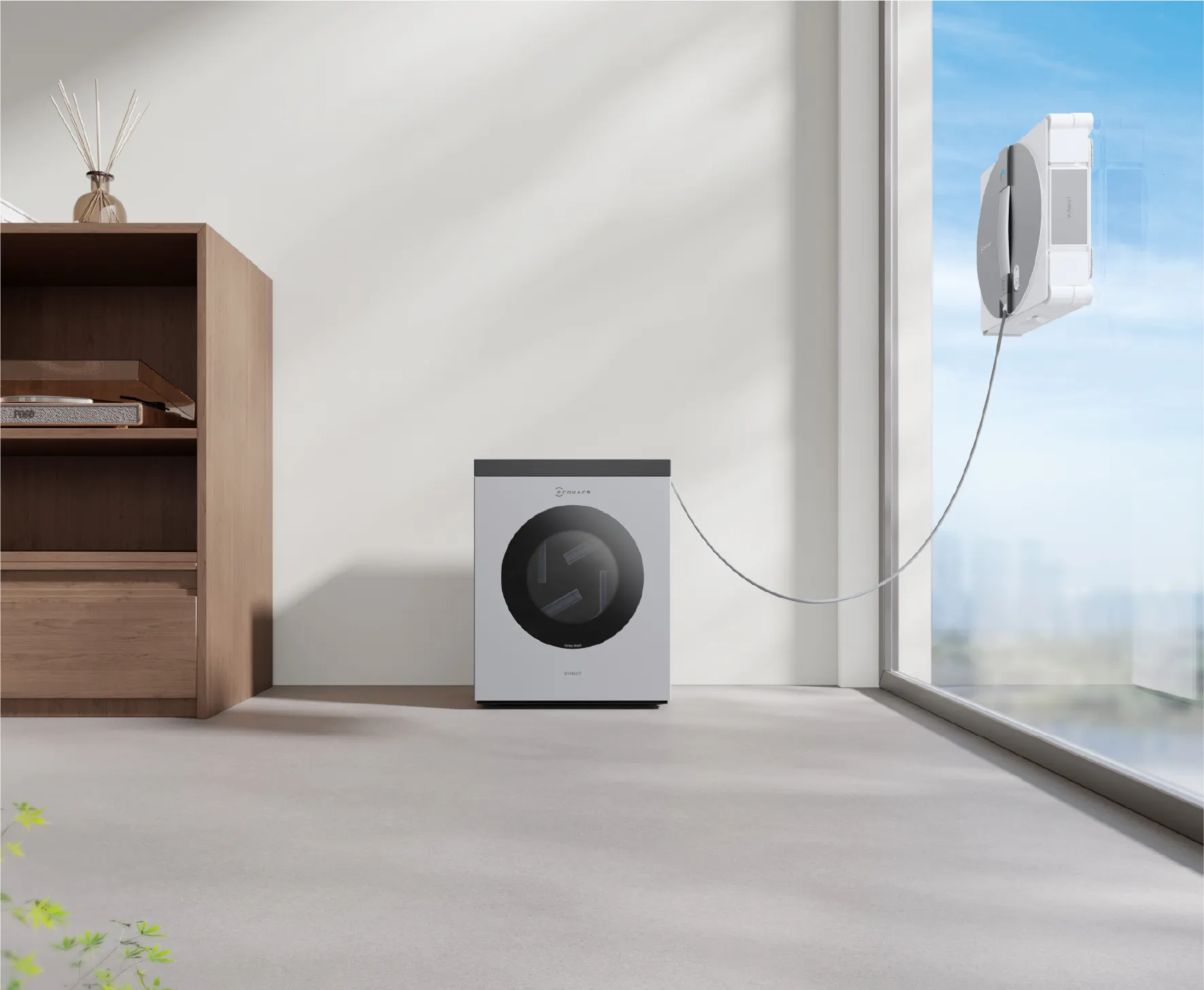
Exterior cleaning needs a permitted surface, calm weather and a safe way to attach, secure and retrieve the robot. The reviewed W3 OMNI and C1 Station EU manuals allow exterior windows under conditions. That is not permission to leave a robot working outside unattended or to place its station outdoors.
Model-specific rules to check together
| Check | W3 OMNI / C1 Station — reviewed EU manuals | HOBOT SP10 — reviewed manual |
|---|---|---|
| Weather | Calm wind; no rain or snow | No rainy or >85% humidity conditions |
| Temperature | 0–40°C operating range | 0–40°C operating range |
| Restraint | Carabiner to a strong indoor anchoring point as specified | Secure the safety rope before use |
| Area below | Keep people, animals and valuable/fragile objects clear | Warning and control of the area for upper-floor work |
A maximum wind value mentioned elsewhere in a manual must not be used to override its requirement for calm exterior conditions. Likewise, ambient temperature alone does not establish a suitable glass surface: condensation, dirt, unevenness and the approved working path still matter.
Assess placement and recovery before pressing start
- Can you reach the starting position without leaning out or defeating a window safety feature?
- Is the specified anchoring point strong, accessible and positioned for the full route?
- Can the cable move without being trapped by the sash or rubbing against a sharp edge?
- Can you retrieve the robot from an unexpected stopping point while staying in a safe position?
If any answer is no, choose another permitted method for that pane. The robot’s suction rating cannot solve access or retrieval. Do not plan to reach an otherwise inaccessible exterior pane by relying on the safety rope as a routine handling system.
During the session
Stay available for the supervision required by the manual. If weather changes, the contact deteriorates or an alarm appears, follow the model’s stop-and-recovery procedure. Keep station and mains connection indoors where required. A backup holding battery is an emergency reserve, not a reason to delay retrieval after power loss.
Record one exterior pane before expanding the session
Note the pane dimensions, exposed surface, anchoring position, cable path, weather and recovery route. Keep this separate from cleaning quality. A clear finish confirms neither a safe setup nor compatibility with a coating. Recheck the plan for each different window opening.
Next step
- Best Window Cleaning Robots 2026: Picks by Use Case, Not Hype
- Window-cleaning robots on film and coated glass: checks first
- How long does a window robot take? Count the whole job
Sources and method
Checked on 5 October 2026. Manufacturer specifications and seller offers; this is editorial analysis, not a RoboMorrow hands-on test.
Where to buy models from this article
We show only exact verified Amazon product pages. Before purchase, confirm the variant, seller, warranty and box contents.
Exact Amazon links. Where a verified RoboMorrow marketplace tracking ID is active, the link is an affiliate link and we may earn from qualifying purchases. Price and availability can change after you click.