12 common mistakes when choosing a robot mower
BUYING IN YOUR MARKET
Availability in your country
Sales, delivery and support can differ by country and exact model. Choose your market to see the evidence we have checked.
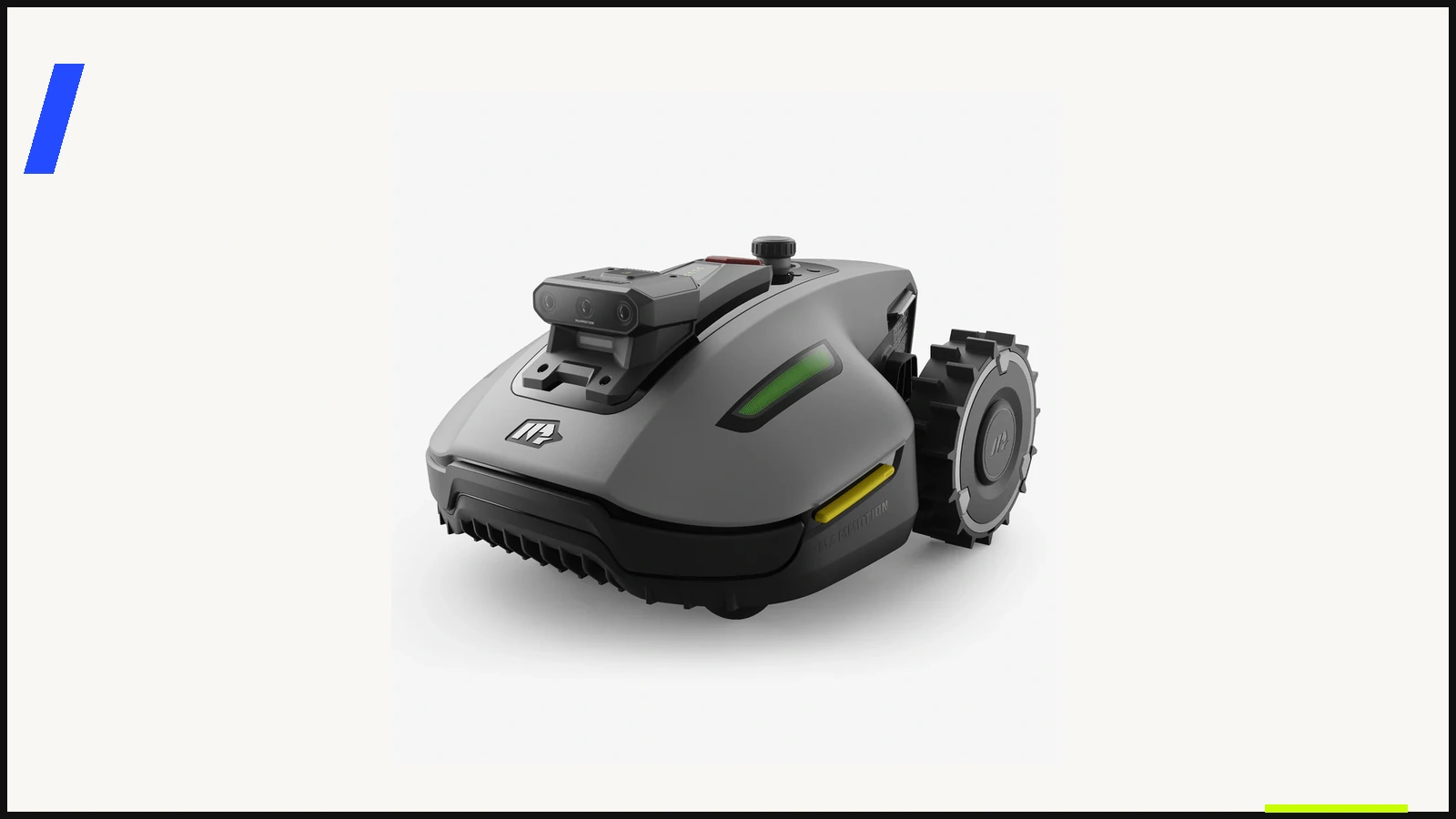
MAMMOTION YUKA mini 2 800
Germany
Local store offer — check checkout availability
- Seller / sales channel
- Mammotion Germany
- Price
- See the local offer for the current price and exact bundle
- Delivery
- Confirm stock and the delivery date for your address with the seller
- Warranty and service
- Confirm written warranty terms, parts and service coverage for your address
Mammotion Germany lists this exact model for this market. A listing is evidence of a buying route, not a delivery commitment.
Evidence checked: · Not a live stock feed
Mammotion Germany: check local offer ↗No verified local offer in this dataset
No country-specific offer for this exact model has been established in our current sources. This is a gap in our research, not a statement that the robot cannot be bought here. Use the manufacturer’s sales contact to request a supplier serving your address; confirm configuration, imports, warranty and service.
- Price
- No verified local price in this dataset
- Delivery
- No confirmed date for your address
- Warranty and service
- Local coverage not verified
Segway Navimow i210 LiDAR Pro
Germany
Local store offer — check checkout availability
- Seller / sales channel
- Navimow Germany
- Price
- See the local offer for the current price and exact bundle
- Delivery
- Confirm stock and the delivery date for your address with the seller
- Warranty and service
- Confirm written warranty terms, parts and service coverage for your address
Navimow Germany lists this exact model for this market. A listing is evidence of a buying route, not a delivery commitment.
Evidence checked: · Not a live stock feed
Navimow Germany: check local offer ↗No verified local offer in this dataset
No country-specific offer for this exact model has been established in our current sources. This is a gap in our research, not a statement that the robot cannot be bought here. Use the manufacturer’s sales contact to request a supplier serving your address; confirm configuration, imports, warranty and service.
- Price
- No verified local price in this dataset
- Delivery
- No confirmed date for your address
- Warranty and service
- Local coverage not verified
DREAME A2 2000
No verified local offer in this dataset
A current local sales offer, exact regional variant, delivery date and service coverage have not been verified for this country in the regional dataset. This does not mean that the robot is unavailable.
- Price
- No verified local price in this dataset
- Delivery
- No confirmed date for your address
- Warranty and service
- Local coverage not verified
GARDENA smart SILENO free 800
Germany
Local manufacturer catalogue — ask about ordering
- Seller / sales channel
- GARDENA Germany
- Price
- See the local offer for the current price and exact bundle
- Delivery
- Confirm stock and the delivery date for your address with the seller
- Warranty and service
- Confirm written warranty terms, parts and service coverage for your address
GARDENA Germany lists this exact model for this market. A listing is evidence of a buying route, not a delivery commitment.
Evidence checked: · Not a live stock feed
GARDENA Germany: check local offer ↗No verified local offer in this dataset
No country-specific offer for this exact model has been established in our current sources. This is a gap in our research, not a statement that the robot cannot be bought here. Use the manufacturer’s sales contact to request a supplier serving your address; confirm configuration, imports, warranty and service.
- Price
- No verified local price in this dataset
- Delivery
- No confirmed date for your address
- Warranty and service
- Local coverage not verified
“Listed” confirms a product page or sales route, not stock, delivery to every address or local service. “Pre-order” is not immediate availability. Unverified means we lack evidence; it does not mean unavailable. Prices belong to the named market and currency. Confirm the exact version, tax, shipping and support before ordering.
Most disappointments with a robotic mower are not due to completely faulty technology, but to the model not matching the garden or incorrect installation. The following list includes problems that most often appear before the first full week on the job.
1. Counting the entire plot instead of the lawn
The robot handles grass surfaces, but patios, house, flower beds and driveways contribute to the complexity of the route. Measure each zone and passage separately.
2. Buying exactly at the limit of the declared square footage
Maximum area is achieved under specified conditions. Leave room for obstacles, zones, grass growth and limited operating hours.
3. Skipping slope at boundary
The robot can drive up a steep slope in the middle of a lawn, but may not be able to safely turn around a slope, wall or water. Check the inside and border limits separately.
4. Choosing RTK for a garden without a view of the sky
Large trees, tall buildings and narrow patios can weaken satellites. In such a garden, you need a hybrid system, LiDAR or vision.
5. Vision selection to unreadable limits
The camera may have a problem when the grass smoothly transitions into similar vegetation, the border is missing or the border is constantly shaded and wet.
6. Wrong station location
A station on soft ground, a sharp bend, a slope, or under a tight roof may cause docking problems. Requirements vary between models, especially in satellite systems.
7. Lack of lawn preparation
Tall grass, branches, toys, ropes, stones and deep holes lead to stops or damage. Do the first mowing traditionally and remove obstacles.
8. Altitude too low from day one
The grass may be weakened and the shield may hit the ground. Start high and lower gradually.
9. Night schedule
Night increases the risk to hedgehogs and other animals. The camera may also need good lighting. It's safer to mow during the day.
10. No hardest places test
Before accepting the installation, observe the passage through narrow corridors, slopes, wet areas and the water area. This is where the limitations come in.
11. Ignoring service and parts
The application and attractive price will not help if there are no blades, station, wheel or local repair point during the season.
12. Map update and copy missing
Updates may improve navigation and security. Save the map or settings if the manufacturer provides such a function, and monitor the robot after a major update.
Checklist before purchasing
- actual lawn square footage and inventory;
- maximum slope and slope at the boundary;
- narrowest passage and highest threshold;
- number of zones and route;
- sky view, trees and network coverage;
- local service, warranty and parts;
- safe working hours and presence of animals.
Verdict
A good purchase starts with a garden map, not with a ranking. The better you describe difficult areas before selecting, the less risk the robot will require daily rescuing.
Errors after first month
No sensor cleaning
Camera and LiDAR may gradually lose effectiveness before the user notices a clear error. A short check once a week is better than waiting for a series of arrests.
Ignoring worn blades
Blunt blades increase drag, tug at the grass and may reduce operating time. Replacement is usually simple, but must be done as a complete set and in accordance with the instructions.
Over-map correction
Any small adjustment can create overly complex boundaries. Simplify the map instead of guiding the robot around each stone. It is better to physically protect small elements or include them in one prohibited zone.
Errors when comparing offers
- Compare the promotional price of one model with the list price of another.
- Skipping the cost of antenna, garage, transmission and installation.
- Treat slope percentage as degrees.
- Compare different regional versions with the same name.
- Assumes feature announced on OTA works on date of purchase.
How to collect the installation from the seller
Request a map save, a display of prohibited zones, a return to station test, passage through the narrowest corridor and manual stop instructions. Write down the serial number, warranty conditions and how to report the failure. Don't sign for acceptance only after seeing one straight pass.
Red flag in advertising
Beware of claims like "works everywhere", "zero support" and "no signal at all". Every technology has requirements. A reliable offer describes restrictions, test conditions and elements that need to be checked on the plot.
FAQ: what to check before payment
Are online reviews enough?
No. The same model may perform great in an open lawn and poorly under trees. Reviews help find common problems, but the decision requires reference to your own garden.
Is it worth buying the first delivery model?
You can, but you have to accept a higher risk of software errors and limited parts availability. Please check the return policy and do not base your purchase on features promised in a future update.
Is the installer responsible for the map?
The scope of the service must result from the contract. Determine if it includes weekly corrections, station relocations and remapping after garden changes.
Related Tabs in Robot Database
- MAMMOTION YUKA mini 2 800
- SEGWAY NAVIMOW i210 LiDAR Pro
- DREAME A2 2000
- GARDENA smart SILENO free 800
See the entire RoboMorrow Robot Database.
Related guides
Sources and verification date
The article was prepared based on manufacturer data and institutional materials available on August 3, 2026. Software parameters, prices, availability and functions may change.
- Segway Navimow – Setup and Maintenance
- Segway Navimow – typical cable errors
- Husqvarna – selecting a robot for a large garden
Where to buy models from this article
We show only exact verified Amazon product pages. Before purchase, confirm the variant, seller, warranty and box contents.
Exact Amazon links. Where a verified RoboMorrow marketplace tracking ID is active, the link is an affiliate link and we may earn from qualifying purchases. Price and availability can change after you click.