Robot mowers 2026: complete buying guide
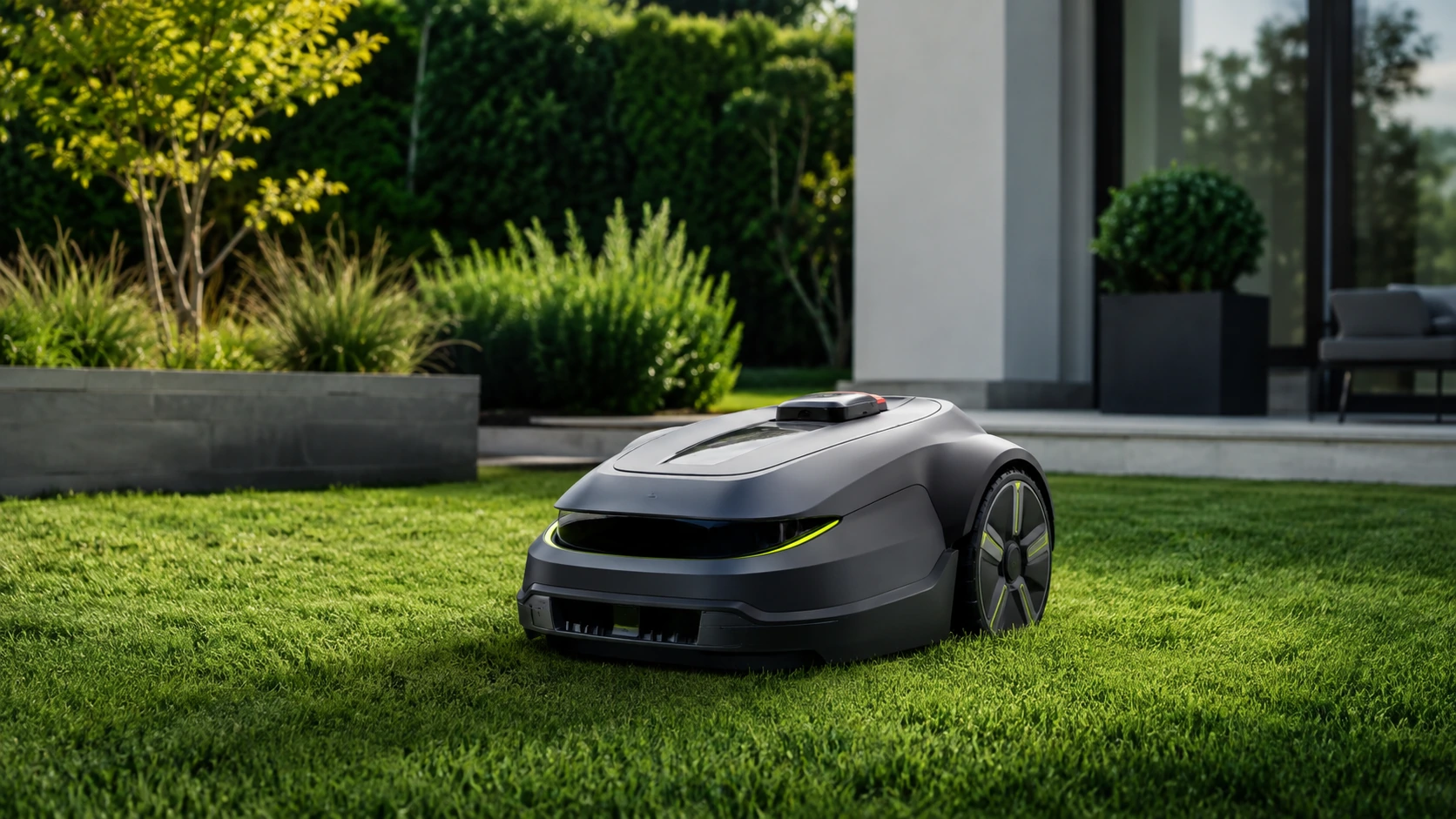
A robotic mower is no longer just a small lawn mower that randomly drives across the lawn. In 2026, the market includes both simple models working with a boundary wire, as well as devices that build a garden map using RTK, cameras, LiDAR or several technologies at the same time.
This is good news, but also a source of confusion. The slogan "without a cable" does not yet say whether the robot will be able to operate under trees. The declaration "up to 1000 m²" does not mean that the model will be perfect for every lawn of this size. In turn, the high ability to overcome slopes does not guarantee that the device will run smoothly on wet, uneven turf.
This guide helps you match your robot to real-world conditions, not just one parameter out of the box.
Short answer: which robotic mower is good?
A good robot mower should have a reserve of performance, navigation adapted to the environment, sufficient traction, sensible zone management and available service. For a simple, open lawn, a wired model may still be the most rational choice. For a garden that is changing, divided into many zones or requiring frequent border adjustments, a system without a cable will be more convenient.
The most important thing is to count lawn area, not the entire plot. The house, driveway, terrace, flower beds and buildings should not be included in the calculation.
How does the robotic mower work?
The robot regularly cuts a very small part of the blades. Fine clippings remain on the turf and decompose quickly. Instead of one intensive mowing once a week, the device makes more frequent, lighter passes.
A typical cycle looks like this:
- robot leaves charging station;
- moves in the designated area;
- avoids obstacles or stops on contact with them;
- returns to station after battery level drops;
- after charging, resumes on schedule.
The differences between the models mainly concern the method of defining boundaries, location accuracy, route planning, response to obstacles and the ability to work in difficult terrain.
Four main ways of navigation
1. Boundary wire
The cable is laid around the lawn and most often also around selected obstacles. The robot detects the generated signal and does not cross the border.
This solution is mature, predictable and often cheaper. A well-done installation can last for years. The disadvantage is the installation time and the need to repair the cable after it is cut during gardening.
The cable still makes sense when:
- lawn boundaries are fixed;
- the garden is very shaded;
- you don't want to depend on satellite visibility;
- you want a system that is as simple and proven as possible;
- you accept one-time installation.
2. RTK and virtual borders
RTK improves satellite positioning accuracy with correction data. Depending on the system, corrections may come from a local reference station or a web service. Boundaries and zones are set in the application.
The advantage is that you can easily change the map without digging up the garden. Poor visibility of the sky near tall buildings, dense trees and in narrow spaces may be a limitation. That's why more and more manufacturers are combining RTK with cameras or other sensors.
More: RTK or boundary wire?
3. Vision AI
The robot uses cameras and image recognition algorithms to read lawn boundaries, obstacles and the surroundings. The system can operate independently or support RTK.
Vision AI can be very convenient in well-defined gardens, but its effectiveness depends on the quality of the algorithms, lighting, the contrast between the grass and the flower bed and seasonal changes. A camera is not automatically better than RTK - often the best result comes from combining several data sources.
4. LiDAR and hybrid systems
LiDAR measures the distance to environmental elements using laser light. It can build a map and help the robot locate under trees, in the shade or in places where the satellite signal itself is weak.
New designs combine LiDAR, cameras, odometry and RTK. Such a system is more resistant to a single source of error, but can be more expensive and complex.
How to choose a robot for the surface?
The declared square footage is a starting point, not a final answer. Catalog efficiency usually assumes regular work, an appropriate schedule, and conditions less demanding than a garden full of obstacles.
Up to 500 m²
On a small lawn, more important than a huge battery are:
- precision maneuvering;
- working in narrow aisles;
- easy installation;
- good edge cutting;
- reasonable noise level;
- possibility to limit working hours.
See: Robot mowing up to 500 m²
From 500 to 1000 m²
In this class, the importance of systematic mowing, management of several zones and reserve performance is increasing. If the lawn is realistically 900–1000 m², a model with a declaration of exactly 1000 m² may work close to its limit. A reasonable reserve becomes especially important on slopes, numerous obstacles and quickly growing grass.
See: Robot mowing up to 1000 m²
Over 1000 m²
On a larger surface, the most important factors are cutting width, operating time, charging speed, number of zones served, resistance to loss of positioning and drive quality. It is also worth checking whether the manufacturer actually has a local service and available consumable parts.
Top questions before purchasing
Is the terrain flat?
Check not only the maximum slope of the entire garden, but also the slope at the border. Some robots can cope with a greater slope in the center of the area than directly at the edge.
On slopes the following are important:
- two or four wheel drive;
- tread type;
- weight distribution;
- behavior on wet grass;
- way of turning;
- slope limits at boundary.
Are there narrow passages?
It is not enough to compare the width of the housing. The manufacturer may require additional margin for location and turning. A narrow passage between walls is more difficult than a passage of the same width on an open lawn.
How many separate zones are there?
Two lawns connected by a path may be easier than two completely separate parts of the garden. Check:
- maximum number of maps and zones;
- ability to move the robot manually;
- storing separate schedules;
- cube traversal support;
- ability to designate temporary prohibited zones.
What do the edges look like?
The robot will not always cut the grass perfectly next to a wall, fence or raised flower bed. Edge cutting features reduce manual corrections, but their effectiveness depends on the disk design and shape of the border.
The easiest way for the robot is a flat edge that it can partially drive onto. The most difficult one - a high wall placed directly next to the grass.
Is the garden very shaded?
Dense treetops and high walls can make it difficult for satellite systems to maintain a precise position. In such a place, it is worth looking for a hybrid system or considering a proven wired model.
Are there children and pets in the garden?
The robot should not work when children or animals are running on the lawn. The camera and obstacle detection are a layer of security, not permission to leave the device unattended in any situation.
The safest practice is to schedule mowing when the garden is empty and to regularly check the guards, disc and sensors.
Robot without cord or wired model?
There is no one answer for everyone.
Select model without cord if:
- you change the discount layout frequently;
- you want to easily create zones and bans in the application;
- you don't want to install the cable;
- the garden has conditions suitable for the selected location system;
- you accept greater software dependency.
Select cable if:
- limits are fixed;
- the garden has many trees or high walls;
- predictability is a priority;
- you want to reduce the purchase cost;
- professional installation is not a problem.
More: Robot mowing without a cord - technologies, advantages and limitations
How much performance headroom is worth having?
For a straight, open lawn, a small supply may be enough. For a garden with many obstacles, slopes and narrow passages, it is reasonable to aim higher than the nominal area.
RoboMorrow Rule of Thumb:
- simple garden: about 15-20% stock;
- compound garden: about 25-40% stock;
- difficult terrain or limited mowing hours: even more reserves.
This is not a manufacturer parameter, but a safe selection method. A robot constantly working at its limits has less time to make up for delays after rain, failure or intense grass growth.
Features worth paying extra for
Good zone management
The ability to set the height, schedule and direction of travel separately for each part of the garden is more useful than a spectacular animation in the application.
Obstacle detection
It is worth checking not only the number of declared object classes, but also the minimum size of the detected obstacle and the robot's behavior after noticing it.
Systematic mowing
Equal lanes usually reduce operating time and provide a more predictable result than random crossings.
Local Service and Parts
The knives are easy to replace. Access to batteries, wheels, motors, seals and electronics is more difficult. A brand with real service may be a better purchase than a more impressive model without facilities.
Software Updates
In cordless robots, software is part of the product. Updates can improve mapping and obstacle recognition, but they can also change the way things work. It's worth checking the manufacturer's support history.
How to prepare the garden?
Before first run:
- remove branches, wires, toys and loose objects;
- protect ponds and steep drop-offs;
- refill deep holes;
- check crossing width;
- choose a stable place for the charging station;
- provide power according to instructions;
- set the schedule outside the activity hours of household members and pets.
Robot mowing does not repair a poorly designed garden. Minor adjustments to edges and runs often improve the effect more than purchasing a more expensive model.
Utilization costs
In addition to the price of the device, please include:
- installation of cable or reference station if required;
- knives and consumables;
- possible battery replacement;
- inspections and repairs;
- cellular connectivity after free period if manufacturer limits it;
- garage or cover if recommended;
- time needed for cleaning and preparation for winter.
Energy consumption is usually not the largest part of the cost. Durability, service and the correct selection of performance are much more important.
Maintenance
Regular:
- turn off the device as instructed;
- remove grass from under the housing;
- control knives and their holders;
- clean cameras and sensors with a soft cloth;
- check wheels and tread;
- observe the condition of wires and connectors;
- install the updates after reviewing the changes.
Before winter, charge and store the robot and battery according to the manufacturer's recommendations. Do not assume that any station can be left outside unprotected.
RoboMorrow assessment
In 2026, there is no single technology that wins in every garden. The best robot is not the one with the longest list of functions, but the one that maintains precision and reliability in a specific environment.
For a small, permanent and shady garden, a simple corded model may still be the best investment. For a multi-zone garden, often modified or with cables that are difficult to install, a wireless system gives a real advantage. On slopes and unevenness, it is worth paying more attention to the drive and traction than to the mapping method itself.
FAQ
Does the robotic mower collect grass?
Usually not. Cuts very fine pieces that remain on the lawn as natural organic material.
Can the robot work in the rain?
Some models are rain-resistant, but wet grass may impair grip, dirty the device and reduce the quality of cutting. Please follow the instructions for your specific model.
Does a robot without a cable need the Internet?
It depends on the system. Some mapping or RTK corrections use the network, others work with a local reference station. It's worth checking what happens when you lose Wi-Fi or cellular connectivity.
Should the manufacturer's square footage be larger than the lawn?
Mostly yes. Stock is especially important in a complex garden, with limited working hours and on difficult terrain.
Can the robot handle several lawns?
Many models support multiple zones, but you need to check whether the zones are connected, how many maps the application saves, and whether the robot can drive between them on its own.
Is the boundary wire obsolete?
No. It is less flexible than the map in the application, but it is still a very stable solution in places difficult for satellite or visual navigation.
How often are knives replaced?
It depends on the model, surface, type of grass and number of obstacles. Knives should be checked regularly and replaced according to the instructions and the state of wear.
Official sources and technology examples
- Husqvarna – robot mowers and model selection
- Husqvarna - Models Without Cable
- Segway Navimow - Robots Without a Cord
- GARDENA smart SILENO free 600 m²
- Mammotion YUKA mini 2 1000
- ECOVACS GOAT O500 Panorama
Specifications, availability and features may vary depending on regional version and software updates. Before purchasing, please check the specific model card and local service conditions.
Related tabs in Robot Database
Check the verified model cards associated with this advisory. Product price, availability and status are updated separately in the Robot Database.
- MAMMOTION YUKA mini 2 800
- MAMMOTION LUBA 3 AWD 3000
- SEGWAY NAVIMOW i210 LiDAR Pro
- HUSQVARNA Automower 410VE NERA
- GARDENA smart SILENO free 800
- ECOVACS GOAT O800 RTK
- DREAME A2 2000
- EUFY Robot Lawn Mower E15
- WORX Landroid Vision AI M600 WR206E
- ROBOROCK RockMow Z1
See the entire Robot Database →
Where to buy models from this article
We show only exact verified Amazon product pages. Before purchase, confirm the variant, seller, warranty and box contents.
Exact Amazon links. Where a verified RoboMorrow marketplace tracking ID is active, the link is an affiliate link and we may earn from qualifying purchases. Price and availability can change after you click.