This robot climbs stairs and drives screws. Meet the new All3 Mantis
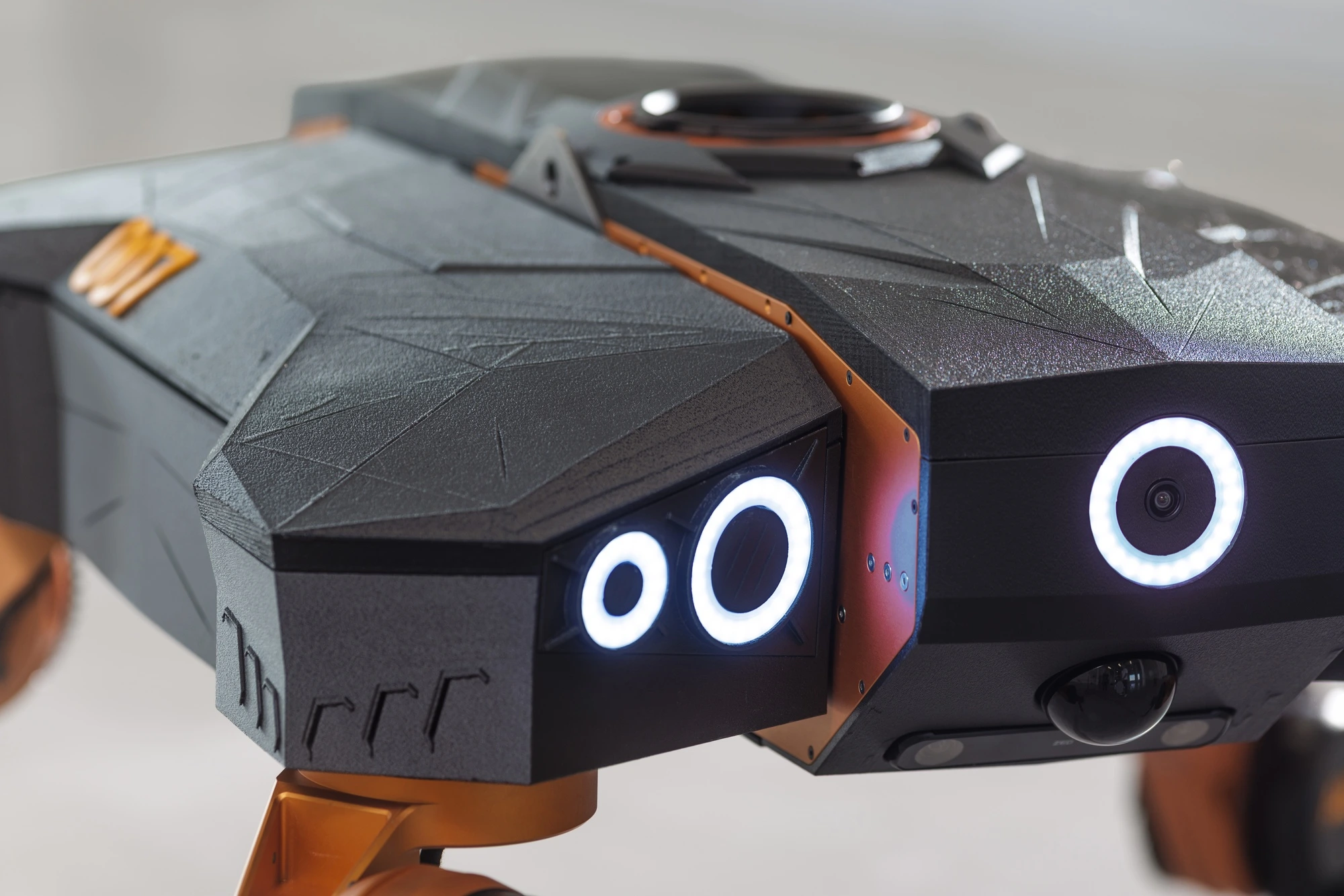
In the power-tools business, the conversation often starts with batteries, torque and the next generation of motors. All3 raises a different product question: what changes when a robot becomes the tool's operator?
On 7 October 2026, the company introduced the next generation of Mantis. The four-legged machine can negotiate stairs and perform a screwdriving operation. For power-tool companies, it is a useful signal: value could increasingly sit in a complete, measurable work process.
Development stage: manufacturer demonstrations. All3 plans the first Mantis deployment on a live construction project for early 2027. RoboMorrow has not tested the robot.
What has All3 actually demonstrated?
The team reports autonomous travel on a 35° staircase with the working arm attached. Across repeated demonstrations, Mantis identified eight prepared pilot holes, aligned its tool and drove screws into all eight. All3 reports tool-tip alignment within 0.5 mm. This describes a particular demonstration, not a field reliability statistic.
For a tools-industry audience, the combination of reaching a work location and performing an operation is already significant. Mobility increases the number of places a tool can access. The commercial test, however, concerns repeatability across the complete task, including setup and exception handling.
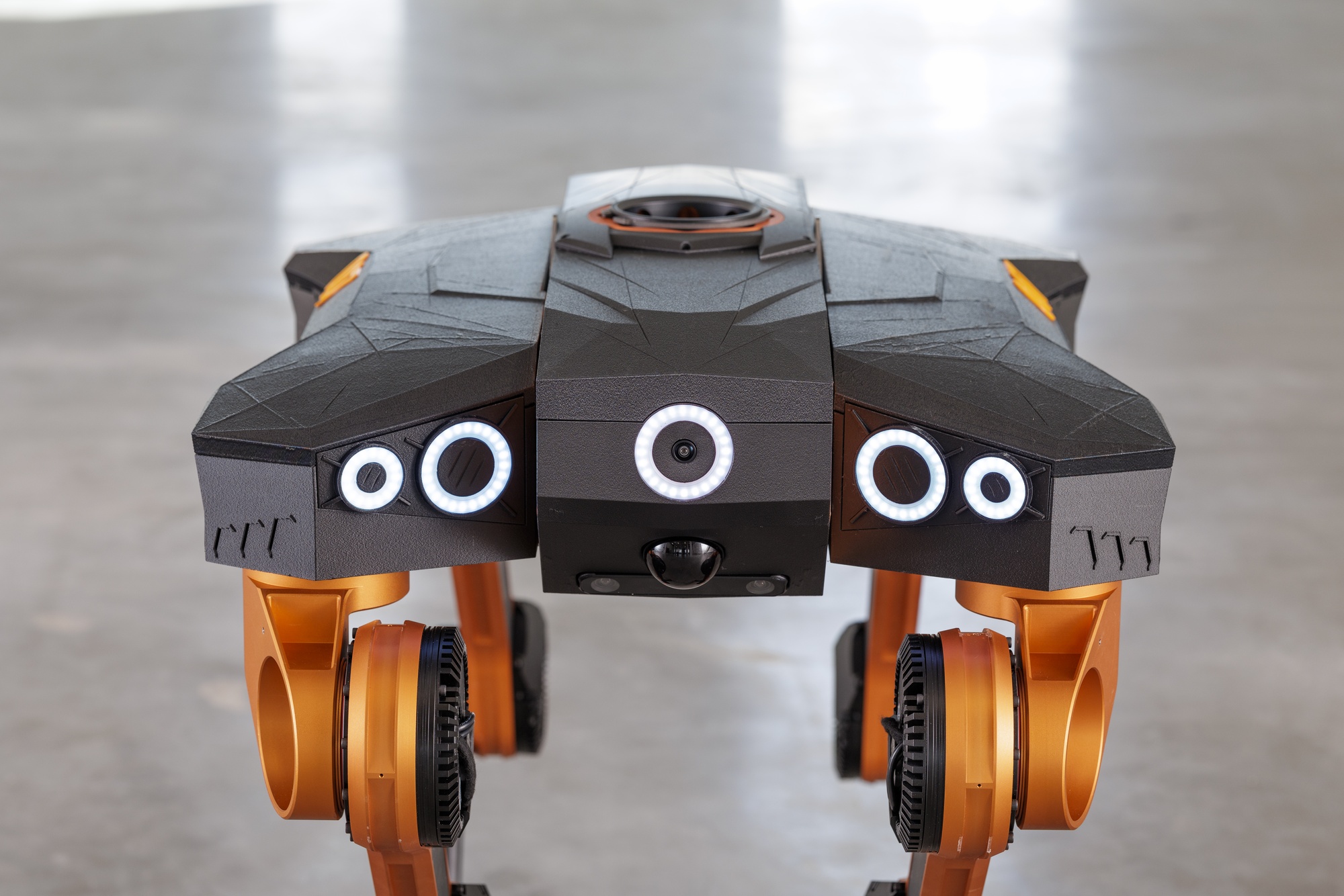
Four legs, substantial mass and an arm-mounted tool
Mantis uses electric drive. The platform alone weighs 135 kg; with its current arm, the total is around 180 kg. That distinction matters when comparing machines: the lower figure does not describe the complete working configuration.
All3 designs the platform around the forces involved in physical work. When a tool pushes into material, the reaction acts on the machine. Tool manufacturers will recognise the challenge. The stabilising job moves from the operator's hands and body to the robot's base.
| Item | All3's reported position | How to interpret it |
|---|---|---|
| Mass | 135 kg platform; around 180 kg with arm | Compare complete configurations. |
| Arm | Six axes; approximately 1.8 m reach | A 4 m telescopic arm is in development. |
| Door access | 750 mm narrow stance; 900 mm doorway | Actual clearance and route preparation still matter. |
| Walking payload | Design target: up to 100 kg | This does not establish every carrying scenario. |
| Tools | Screw tool, vacuum gripper, magazine screw tool | A common connector carries mechanical, power and data interfaces. |
Specifications: All3's 7 October 2026 announcement. Performance statements come from the company's own tests; development targets are labelled separately.
The tool's end user is changing
A handheld tool communicates through its grip, trigger, sound and the load the operator feels. A machine-operated tool must convey some of that information to a control system. This creates specific product-development questions.
Mounting: can the tool be attached repeatably without someone adjusting its position? Control: can the robot start and stop a cycle and read its state? Outcome: can the system distinguish a completed connection from a jam, an empty magazine or a worn accessory?
These are our questions about the direction of the market, not a specification of Mantis's interface. Attaching an ordinary cordless driver to an arm does not answer them. There is room for tool, fastener, sensor and automation suppliers to jointly define the entire work cycle.
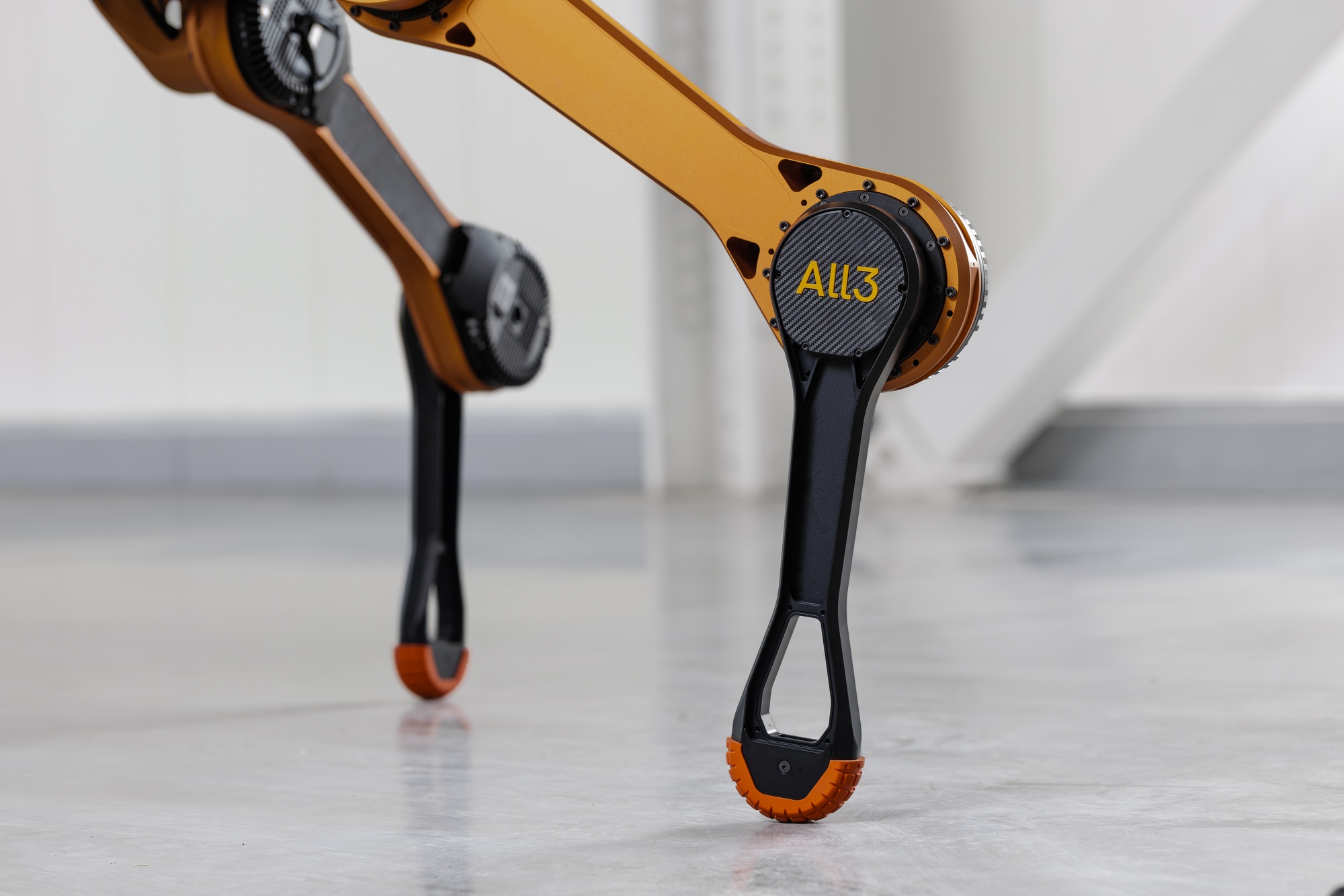
The screw stays small. Its surrounding ecosystem grows
A conventional tool purchase involves hardware price, batteries, accessories and service. A robot adds commissioning, calibration, data integration and downtime costs. That shift may matter as much to a distributor as to a manufacturer.
Consider automatic fastener feeding. If it works only with a particular package and geometry, packaging becomes part of the system. If quality control requires accessory identification, the accessory's documentation gains value. If every tool change requires a technician, that time belongs in any productivity calculation.
These are business scenarios to examine in future deployments. They do not establish Mantis's tool-sales model, a commitment to a particular brand, or an interface open to every supplier.
All3 also designs what the robot will assemble
Mantis belongs to All3's wider construction process. A digital design feeds production, and the factory makes components intended for robotic assembly. The company describes production cells handling tasks including milling, drilling and mounting.
This offers an important lesson for the tools sector. Changing a connection, component or material-feeding method may be more practical than asking a robot to handle every variation in conventional work. The potential product becomes a combination of building element, fastener, tool and inspection procedure.
Designing the process this way may help automation, but it also affects comparisons with an arbitrary construction site. Buyers need to understand how much preparation took place in the factory and how performance changes outside the designed system.
What still needs to be established?
The catalogue of 68 operations describes the platform's development scope, not 68 finished services. The Innovate UK-backed programme covers robot cooperation, autonomous battery exchange and charging, and verification against the building model. These are research-programme objectives.
After the first live-site deployment, we will look for five measurements: completed operations per shift, human intervention rate, setup time, rework rate and cost per correctly completed connection. Stair-climbing footage alone cannot establish a business case.
A useful assessment will also specify the materials and joints for which those results apply. Success on one prepared component does not demonstrate compatibility with any timber, screw or construction tolerance.
Why the power-tools industry should pay attention
Mantis provides a concrete reference point for discussing construction robotics. It shows how a tool can become a module on a mobile machine. The next step is establishing whether that combination maintains quality and throughput outside demonstration conditions.
The interesting question is who will supply and service the robot's toolbox. A power-tool brand, a robot manufacturer, a fastener company, or an integrator responsible for the complete process? The answer could determine who captures the margin and owns the contractor relationship.
Watch Mantis and explore the industry context
All3's official Mantis film shows the machine's design. Our short social video is an editorial photo essay using manufacturer images.
- Power-tool manufacturers and construction robots: the wider industry question
- ZINOVA and Tool Intelligence: another approach to robots using tools
Sources and methodology
Redakcja RoboMorrow • information checked on 13 October 2026. This report uses All3's primary sources. It is not a hands-on review, sales offer or independent validation of performance. The implications for tools, distribution and business models are RoboMorrow's editorial analysis.