The robot from Clarkson’s Farm — what an AgXeed AgBot can do
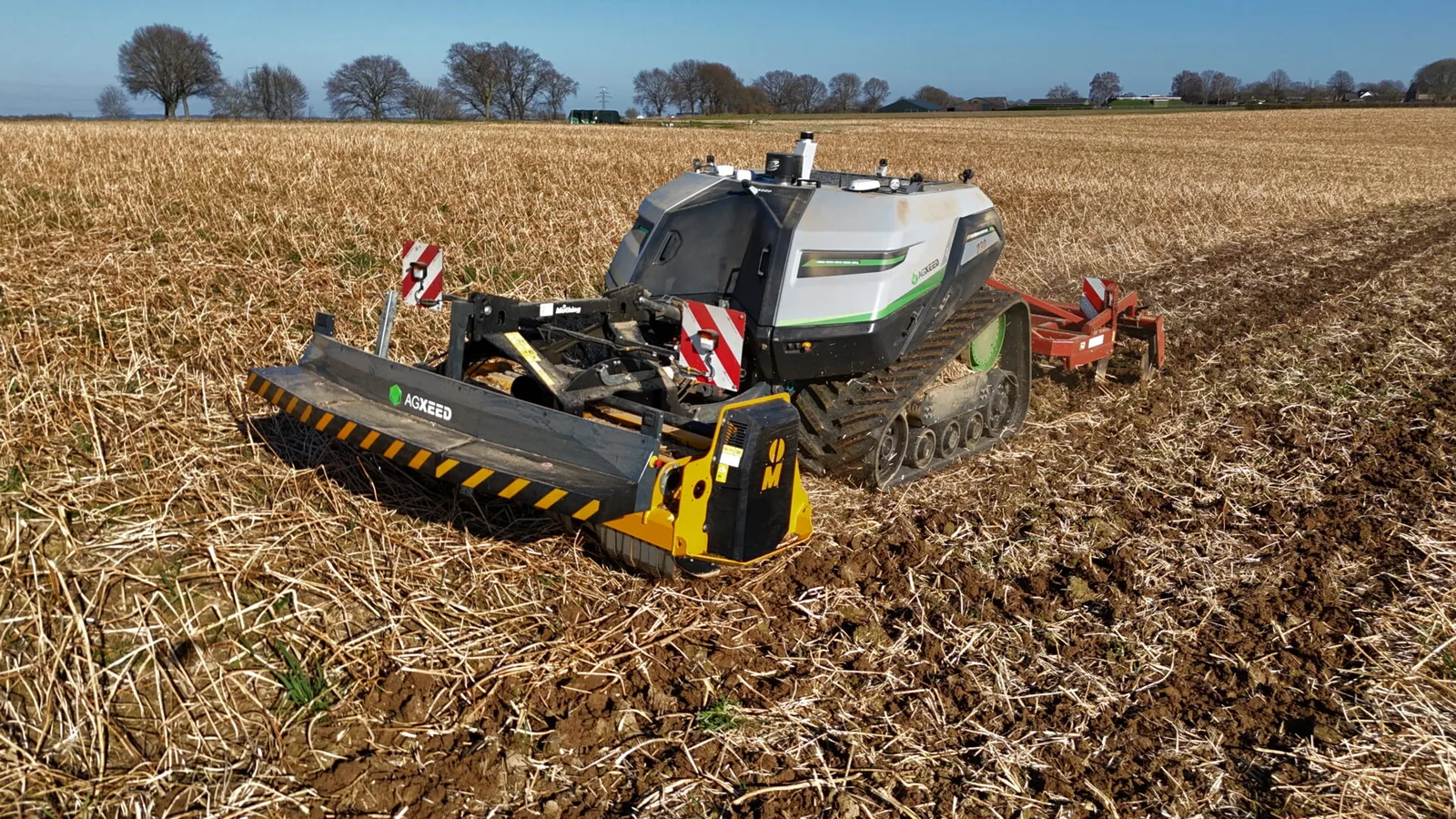
Manufacturer imagery: © AgXeed.
The Dutch AgXeed AgBot featured in Clarkson’s Farm is an autonomous agricultural tool carrier. It can carry out planned operations in a prepared field without a driver sitting in a cab. That does not remove every human task: someone still selects implements, prepares the job, manages transport and deals with exceptions. The useful purchasing question is how much of the farm’s existing workflow the complete system can actually take over. HARTING — TV’s Clarkson’s Farm Showcases Innovative Precision Farming Equipment Agrihandler — AgXeed oferta w Polsce
What has been automated?
A conventional tractor operator drives, monitors the implement and makes decisions at the same time. An autonomous platform can execute an operation within its designed working conditions. It does not automatically assume every agronomic decision or coordinate the whole farm.
Consider a repeatable field operation. The farmer defines the working area and the implement, then the machine follows the prepared task. When an obstacle, implement fault or move to another field interrupts that task, the response process matters. Count those interruptions and the human time needed to resolve them.
AgBot is a range, not one specification
AgXeed offers several platforms under the AgBot name. Its current published figures include 115 kW for T2 5 SERIES, 170 kW for T2 7 SERIES and 55 kW for W3 and W4 2 SERIES. These are current range specifications; they do not identify every detail of the machine shown in a television episode. AgXeed — AgBots and model power specifications
| Comparison item | What the quote should establish |
|---|---|
| Model and generation | Full product name and exact configuration |
| Implement | Hitch, power, weight, controls and compatibility |
| Field | Access, headlands, slope, obstacles and operating boundaries |
| Supervision | Who receives an alarm and how work is restarted |
| Transport | How the machine moves between fields and is prepared again |
| Support | Response time, spare parts, updates and recurring charges |
More power can help with a particular implement. It does not establish better economics if transport, short treatment windows or insufficient annual use are the real constraints. Build the seasonal work schedule before deciding which specification offers useful capacity.
Availability must be checked by country
For Poland, Agrihandler lists the AgXeed brand and several configurations. Its listings also illustrate why names need checking: regional pages may retain earlier model designations. Obtain the full manufacturer specification when requesting a quote. Agrihandler — AgXeed oferta w Polsce
Readers elsewhere in Europe should confirm their own sales and service channel. A supplier covering one country does not establish delivery, commissioning or support for a neighbouring market. This distinction matters particularly when transport, maintenance or remote support crosses borders.
Prepare a list of fields, distances, implements and annual task hours before speaking to a supplier. Ask for a demonstration on comparable ground and a record of stops, preparation time and operator interventions. A productive discussion then starts with your farming operation rather than a generic autonomy claim.
Where is further assessment worthwhile?
Repeated operations and high seasonal utilisation are a sensible starting hypothesis. Contractors may also find opportunities if they can manage transport and support across customers. Scattered fields, incompatible equipment and simultaneous treatment windows require a more demanding schedule assessment.
These are evaluation criteria, not guarantees of profitability. Alternatives include improving the existing tractor workflow, purchasing a service or selecting a specialist robot for one expensive task. Compare the same completed job at the required quality.
Television introduces the idea; a season tests it
This article does not establish that Clarkson purchased the robot or attach a price to the television appearance. The component supplier’s public coverage supports the machine’s appearance in the programme. It cannot replace a sales contract or a full-season performance record. HARTING — TV’s Clarkson’s Farm Showcases Innovative Precision Farming Equipment
For the next step, use the whole-season cost model, including human supervision and downtime. If vegetable weeding is the main problem, explore FarmDroid FD20. Return to agricultural robots to compare other applications.
Map the complete deployment
Describe one job from preparation to completion. Include the implement and task plan, transport to the field, checking the work area, productive passes, acceptance of the result and readiness for the next job. This makes the part performed by the platform visible without overlooking work around it.
Repeat the exercise for every proposed implement. Physical compatibility does not by itself establish automated monitoring of the implement's output. Ask how the quoted configuration handles blockage, incorrect working depth or another execution problem. The answer should concern the complete tool-and-vehicle combination rather than autonomous driving in general.
Compare against the tractor's actual workload
An existing tractor may perform many jobs outside the first robotic project. Establish whether the AgBot would avoid another tractor purchase, reduce driver demand at peak periods or improve access to a particular implement. Do not allocate all the present tractor's costs as savings if it will still be needed.
A shared calendar can expose competing deadlines across fields. Additional autonomous hours matter when transport and attendance allow the required work to finish on time. Request a complete task report with interventions and implement outcomes. The availability and service guide provides a practical structure for checking the supply route and local support.
Verified 13 September 2026. Documentation analysis; no RoboMorrow hands-on test.