FarmDroid FD20 — why recording seed positions changes weeding
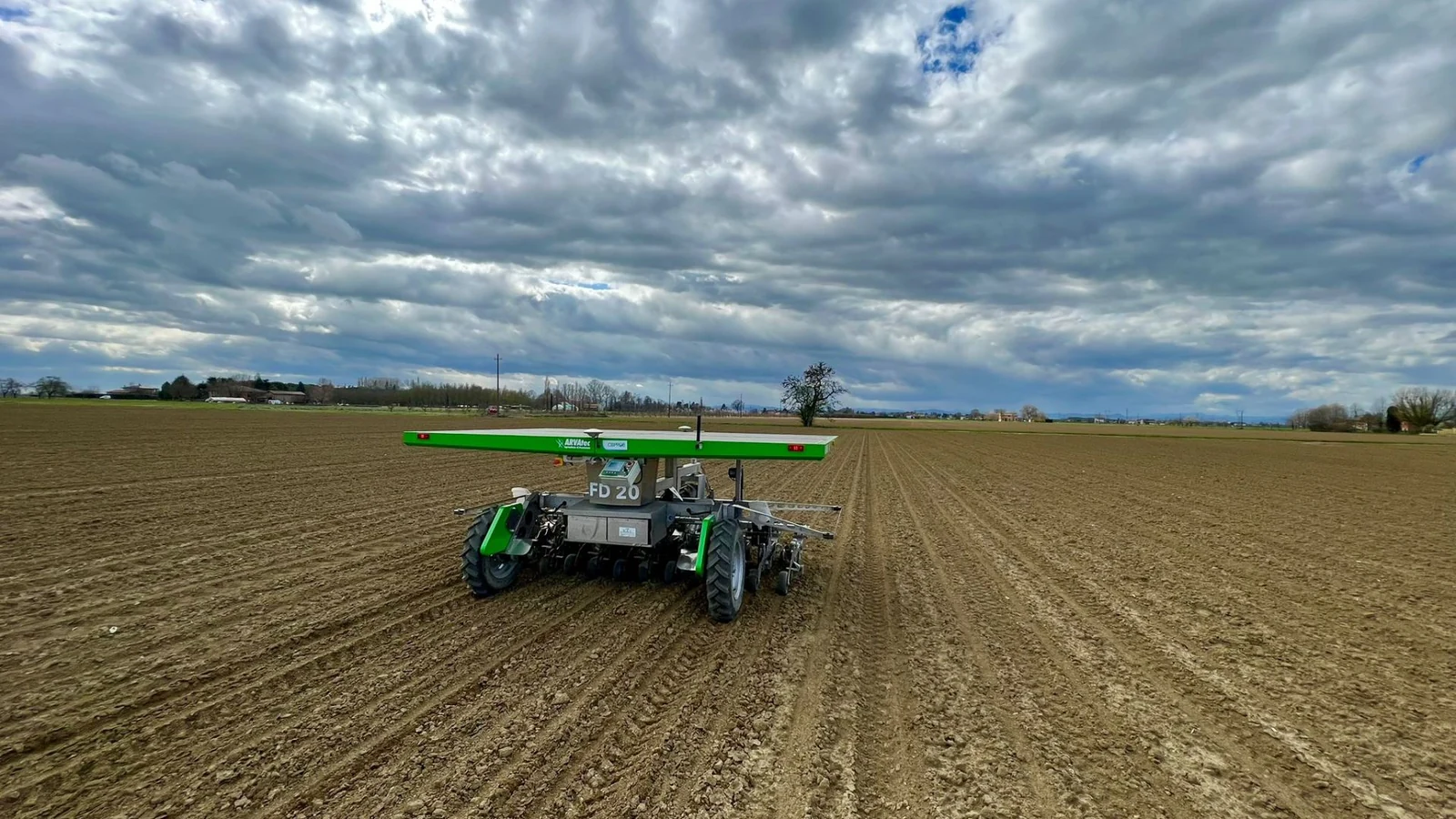
Manufacturer imagery: © FarmDroid.
FarmDroid FD20 combines seeding with mechanical weed control. It records seed positions using RTK during sowing, then returns to that layout to guide tools between rows and plants. The approach does not depend on a camera identifying where each crop plant should be. Farm suitability still depends on crop compatibility, field preparation and completing repeated passes at the right time. FarmDroid — How it works FarmDroid — Mechanical weeding system
Why is seeding part of the system?
The position record is created before the crop emerges. Instead of starting with a visual decision about which plants to retain, the machine uses the layout established during its own sowing operation. That is a different workflow from taking an image-based weeder into an arbitrary existing crop. FarmDroid — Precision seeding system
The farm therefore needs to plan the complete sequence. Confirm seed compatibility, row spacing, turning areas and later crops in the rotation. Altering how the crop is established can matter more than replacing the weeding tool alone.
Daily output and seasonal capacity are different
FarmDroid lists up to 6 hectares per day for the FD20 and suggests roughly 20–30 hectares depending on the crop. Daily output concerns working rate; seasonal capacity concerns how much land can be managed through the required programme. Neither figure promises the same result on every holding of that size. FarmDroid — FarmDroid FD20
Repeated treatments mean covering the same area more than once. Wet soil, energy management, cleaning and operator tasks also belong in the schedule. Count correctly completed treatments within their agronomic windows, rather than extrapolating the best single day.
| Measure | Why it belongs in the assessment |
|---|---|
| Setup time | It remains part of the farm’s workload |
| Successfully treated area | Travel distance alone is not the result |
| Passes required per season | These determine total workload |
| Remaining weeds and follow-up work | These reveal the cost after automation |
| Crop damage and harvest outcome | These keep quality in the comparison |
| Stops and intervention minutes | These establish actual labour savings |
Which farms should consider a demonstration?
A useful starting case is a compatible row crop with expensive or time-sensitive weed control. Larger farm area does not automatically create stronger economics. A smaller intensive crop can have a very different labour bill from a much larger area with low weeding costs.
Treat that as a hypothesis to test with your own records. Compare the current workflow, ownership of a robot and a contracted service where available. Include any corrective treatments that remain necessary after the robot’s passes.
Local support and the larger FD60
Use the manufacturer’s distributor directory to verify the country being considered. For Poland, it lists Farmsystems. A directory entry starts the enquiry; it does not establish a guaranteed demonstration date, installed configuration or service response time. FarmDroid — Find distributors including Farmsystems Poland
The larger FD60 is a separate pre-order product, with deliveries announced from January 2027. FarmDroid does not offer the FD20’s optional +Spray micro-spraying function on the FD60. The launch date matters when distinguishing an announced platform from equipment already delivered during the 2026 season. FarmDroid — FarmDroid FD60 including delivery schedule
Solar power does not eliminate operating costs
The FD20 uses solar energy and a battery. That describes its energy supply, not the complete cost of ownership. Financing, operator time, wearing parts, support and interruptions still need a place in the calculation. FarmDroid — FarmDroid FD20
Before investing, request a demonstration of the full workflow. Record who intervenes, how often and for how long, as well as crop outcomes. Then use the whole-season cost model with your own figures and the supplier’s configured quote.
Explore other tasks in agricultural robots.
Row layout belongs in the purchase decision
Provide the actual crop geometry: row spacing, bed width, traffic plan and headland space. Establish how other equipment will work in a crop planted to that layout. Successful seeding and weeding should remain compatible with harvesting, irrigation and subsequent operations.
Ask for a seed-disc and setup assessment using the intended seed material. A crop name does not describe every difference between seed batches and production requirements. Where several crops are planned, record changeover time and restarting requirements rather than adding their hectares as if they represented identical work.
Plan energy and operating windows together
FD20 uses solar panels and a battery. Assessment should cover weather, parking arrangements and the quoted equipment. Ask how the system operates in less favourable conditions and returns to readiness. A long daily runtime claim is something to examine in the work plan, not a guarantee that every treatment will finish on schedule.
Build a normal-season calendar and a tighter-window alternative. Count how many repeat visits fit in each. This can show whether one robot needs support from another weeding method without assuming that purchasing a second machine is the only response.
Evaluate the link between seeding and weeding
The most useful demonstration examines both stages. Record setup, soil conditions and performance close to the crop, including manual follow-up and crop damage. Compare alternatives in the weeding methods guide, then check the supply and service route. The FD20 database profile separates the product summary from the economics of the whole farm.
Verified 13 September 2026. Documentation analysis; no RoboMorrow hands-on test.