Guangdong signs projects for 600+ embodied-AI robots
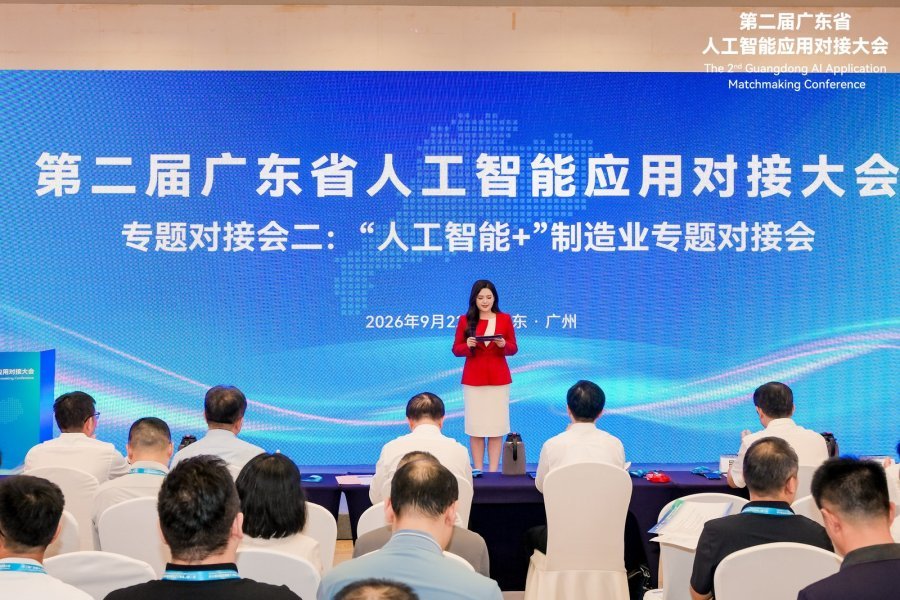
At an event organized by the Guangdong Provincial Department of Industry and Information Technology, eight embodied-intelligence application projects were signed with total stated investment of RMB 75 million. Once fully implemented, they are expected to place more than 600 robots into real operating scenarios. This is a deployment plan from signed projects, not 600 robots already operating.
Guangdong is trying to solve one of embodied AI's hardest commercial problems: moving from an impressive prototype to hundreds of machines working for customers. At an "AI + Manufacturing" matchmaking event in Guangzhou, eight projects covering more than 600 planned robots were signed. The province also reported that more than 2,000 embodied-intelligence robots are already working in industrial scenarios.
Eight projects, RMB 75 million and 600+ planned robots
Guangzhou Daily says the signed projects span industrial manufacturing, warehousing and logistics, libraries, metro systems, community parks, sports and smart housing. The combined stated investment is RMB 75 million. After full implementation, the projects are expected to bring more than 600 robots into frontline operating environments. Organizers describe this as a move from demonstration and validation toward repeatable deployment.
The caveats are essential. The figure should not become "Guangdong deployed 600 humanoids." First, 600+ is the expected scale after the projects are fully implemented. Second, the source describes embodied-intelligence robots broadly, not 600 bipedal humanoids. Third, RMB 75 million is the total investment value of the projects, not the hardware price of 600 machines.
More than 2,000 robots already in industry - according to the province
The event also presented results from Guangdong's "thousands of machines into factories" initiative. Provincial officials say more than 2,000 embodied-intelligence robots are already operating in industrial settings, including sorting, loading and unloading, material movement, inspection and collaborative work. That is a notable reported scale, but RoboMorrow has not seen a public machine-level registry broken down by vendor, factory and uptime.
We therefore treat the figure as the official reported scale of a regional program, not an independently audited market count. Definitions matter. The same methodological issue appears in humanoid shipment data, where the inclusion rules can change the headline dramatically. For readers, operating hours, productivity and post-pilot retention will ultimately matter more than an aggregate unit number.
Opening real scenarios to robotics companies
A second part of the event paired provincial state-owned enterprises with ten regional robotics and humanoid companies. The report names LimX Dynamics, X Square, AI2 Robotics, Leju, EngineAI, Midea, XPENG, Honor, UBTECH and DOBOT. The model is to open genuine operating environments while suppliers bring robot solutions and solve deployment problems together with the customer.
That is particularly relevant alongside XPENG IRON's push toward production. Humanoid robotics has many prototypes but relatively few transparent long-duration deployments. Access to factories, warehouses, metro systems and public facilities can tighten the data and iteration loop. It does not guarantee commercial success: operators still need uptime, task quality and a defensible cost per job.
Why a real operating scenario matters more than another demo
Robots encounter problems in live environments that controlled demonstrations do not capture: changing light, people, dirt, interruptions, unusual objects and time pressure. Every real deployment can therefore generate both training data and reliability evidence. The 600 planned units are interesting not only as potential sales but as an infrastructure for learning and product iteration.
The same pattern appears elsewhere in automation. Richtech's 200-robot DUST-E deal matters because machines enter a repeatable customer workflow rather than because of a new chassis. Gatik's driverless freight expansion similarly shows the distance between a successful demonstration and an ongoing operational service.
What it means for Europe
Guangdong is trying to create scale by actively matching suppliers with large operators and opening deployment scenarios. Europe has deep industrial automation expertise, strong integrators and rigorous safety practice, but embodied-AI trials are often more fragmented. The Chinese model may generate data, feedback and orders faster, although part of the demand is clearly connected to industrial policy.
The lesson for Poland is not to copy the structure literally. A more transferable idea is to let several large factories define specific tasks and common KPIs that multiple robot suppliers can attempt. That produces comparable operational evidence instead of isolated demos. European deployments would also need to meet machinery-safety, data-protection and operator-liability requirements.
What we still do not know
The report does not break the 600+ units across the eight projects, publish the exact robot models or give a full deployment schedule. We do not know how many units will be humanoids versus mobile or other embodied systems. There is no per-robot price, total integration cost, autonomy rate or human-supervision metric.
Those details will determine whether this becomes a durable market or a large wave of trials. A meaningful future update would be named customers, installed unit counts and operating KPIs. A later article from another media outlet repeating the same event would not, by itself, create a new RoboMorrow story.
RoboMorrow take
The correct takeaway is not "China has 600 new humanoids." The stronger signal is that Guangdong has signed multiple projects intended to put more than 600 embodied-intelligence robots into real scenarios while reporting an existing industrial base of more than 2,000 units.
If the signed projects are actually deployed and retained, Guangdong can build an advantage through faster real-world data collection and customer iteration. For Europe, it is a reminder that robotics leadership will be decided less by conference stages and more by thousands of operating hours inside normal processes.