Is a robot mower worth it? Calculating time savings and cost
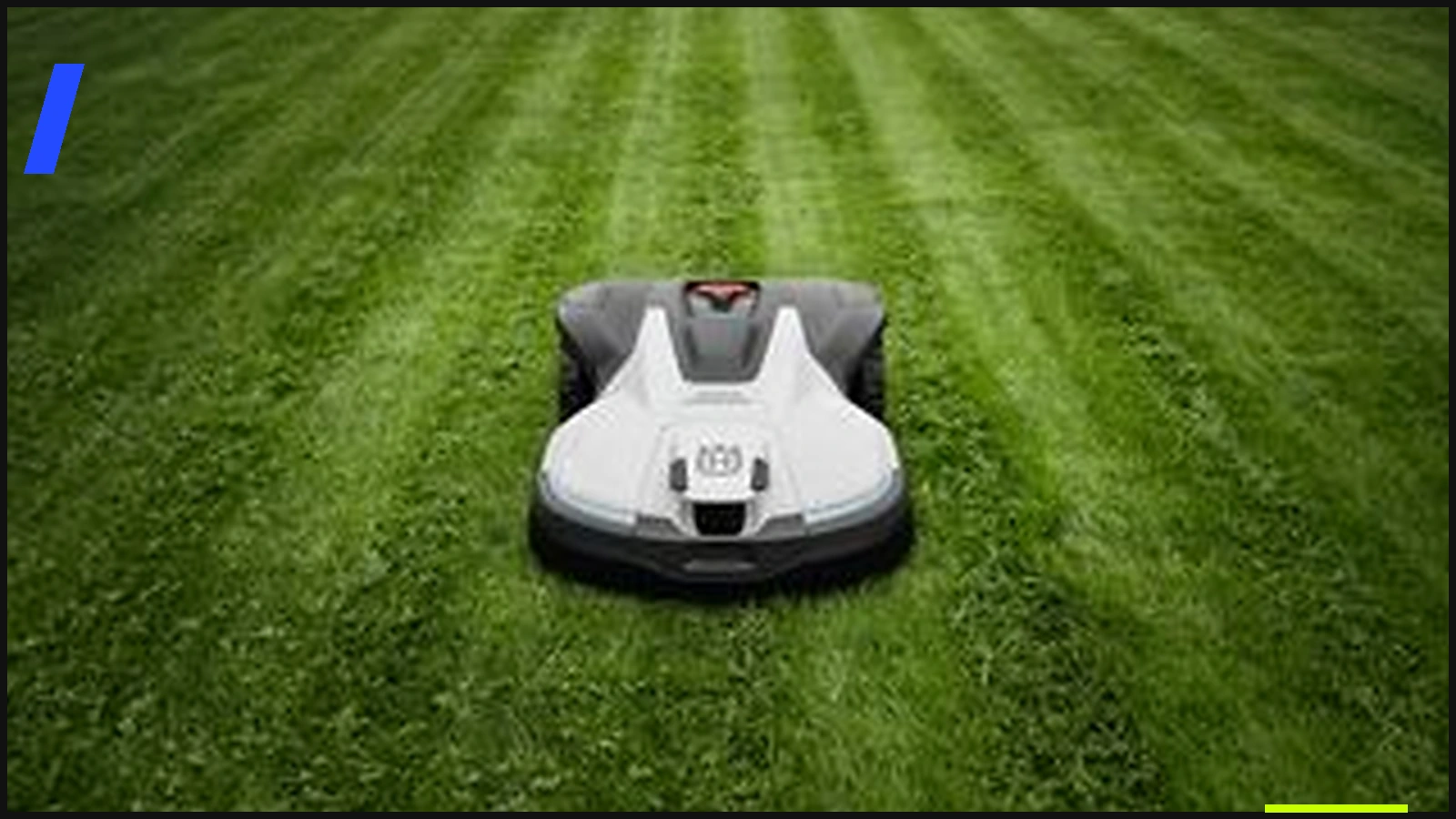
BUYING IN YOUR MARKET
Availability in your country
Sales, delivery and support can differ by country and exact model. Choose your market to see the evidence we have checked.
HUSQVARNA Automower 410VE NERA
Germany
Local manufacturer catalogue — ask about ordering
- Seller / sales channel
- Husqvarna Germany
- Price
- See the local offer for the current price and exact bundle
- Delivery
- Confirm stock and the delivery date for your address with the seller
- Warranty and service
- Confirm written warranty terms, parts and service coverage for your address
Husqvarna Germany lists this exact model for this market. A listing is evidence of a buying route, not a delivery commitment.
Evidence checked: · Not a live stock feed
Husqvarna Germany: check local offer ↗No verified local offer in this dataset
No country-specific offer for this exact model has been established in our current sources. This is a gap in our research, not a statement that the robot cannot be bought here. Use the manufacturer’s sales contact to request a supplier serving your address; confirm configuration, imports, warranty and service.
- Price
- No verified local price in this dataset
- Delivery
- No confirmed date for your address
- Warranty and service
- Local coverage not verified
GARDENA smart SILENO free 800
Germany
Local manufacturer catalogue — ask about ordering
- Seller / sales channel
- GARDENA Germany
- Price
- See the local offer for the current price and exact bundle
- Delivery
- Confirm stock and the delivery date for your address with the seller
- Warranty and service
- Confirm written warranty terms, parts and service coverage for your address
GARDENA Germany lists this exact model for this market. A listing is evidence of a buying route, not a delivery commitment.
Evidence checked: · Not a live stock feed
GARDENA Germany: check local offer ↗No verified local offer in this dataset
No country-specific offer for this exact model has been established in our current sources. This is a gap in our research, not a statement that the robot cannot be bought here. Use the manufacturer’s sales contact to request a supplier serving your address; confirm configuration, imports, warranty and service.
- Price
- No verified local price in this dataset
- Delivery
- No confirmed date for your address
- Warranty and service
- Local coverage not verified
DREAME A2 2000
No verified local offer in this dataset
A current local sales offer, exact regional variant, delivery date and service coverage have not been verified for this country in the regional dataset. This does not mean that the robot is unavailable.
- Price
- No verified local price in this dataset
- Delivery
- No confirmed date for your address
- Warranty and service
- Local coverage not verified
MAMMOTION LUBA 3 AWD 3000
Mammotion EU — supported destinations
Regional store lists this model — delivery country supported
- Seller / sales channel
- Mammotion EU
- Price
- See the linked offer for the current price, configuration and taxes
- Delivery
- Seller lists this country as a delivery destination; confirm postcode, model stock and dispatch at checkout
- Warranty and service
- Confirm warranty territory, local service and return shipping with the seller
Delivery countries: Sweden, Denmark, Austria, Belgium, Bulgaria, Croatia, Czechia, Estonia, Finland, Greece, Hungary, Ireland, Latvia, Lithuania, Luxembourg, Portugal, Romania, Slovakia, Slovenia, Poland, Netherlands, Switzerland
Exact model listing and the store’s delivery policy are linked separately. Supported delivery is not proof of current stock or local service.
Evidence checked: · Not a live stock feed
Mammotion EU: model offer ↗Supported delivery countries ↗No verified local offer in this dataset
No country-specific offer for this exact model has been established in our current sources. This is a gap in our research, not a statement that the robot cannot be bought here. Use the manufacturer’s sales contact to request a supplier serving your address; confirm configuration, imports, warranty and service.
- Price
- No verified local price in this dataset
- Delivery
- No confirmed date for your address
- Warranty and service
- Local coverage not verified
“Listed” confirms a product page or sales route, not stock, delivery to every address or local service. “Pre-order” is not immediate availability. Unverified means we lack evidence; it does not mean unavailable. Prices belong to the named market and currency. Confirm the exact version, tax, shipping and support before ordering.
A robotic mower may save you time for many seasons, but not everyone will pay off in an accounting sense. Profitability depends on the size of your lawn, the price of the device, the cost of the alternative and how much your time is worth. The most common mistake is comparing the price of the robot only with the cost of fuel or electricity of a classic mower.
Cost per hour recovered — often more useful than artificial ROI
Updated 16 September 2026. For a private owner, the cost of recovered time can be more useful than a formal payback period. Calculate five-year mower TCO, subtract avoided conventional mowing costs, then divide the remaining cost by the hours you no longer spend behind a mower.
| Scenario | Calculate separately | Do not mix |
|---|---|---|
| Cash | purchase, electricity, blades, service, parts, subscriptions | the value of your own time as if it were cash expenditure |
| Time | mowing hours, mower cleaning and travel | edge trimming and garden work that still remains |
| Risk | battery, wheels and dock outside warranty | an unrealistic ten years without repairs |
Use your own tariff in the seasonal electricity guide. If the mower is close to its area ceiling, also use the 500 vs 1000 m² capacity guide because insufficient headroom can increase runtime and intervention.
First calculate the cost of your current mowing
Record the number of mows per season, time per mow, cleaning, fuel or energy, mower service and any external service. If you mow yourself, assign an hour of your time a value that you consider fair - but separate it from the actual cash outlay.
Simple Pattern
Annual benefit = avoided service cost + value of time saved + avoided mower costs − robot costs.
| Element | What to include |
|---|---|
| Purchase of robot | device, installation, accessories, possible antenna or garage |
| Annual costs | energy, blades, cleaning, service, data transmission |
| Costs after several years | battery, wheels, station, out-of-warranty repairs |
| Savings | fewer mowing hours, no fuel, less frequent gardening service |
| Costs that remain | edge trimming, branch cleaning, seasonal preparation |
Three sample scenarios
Small garden 300 m²
If traditional mowing takes 25 minutes and takes place once a week, the pure time savings can amount to several hours per season. The financial payback will be long, but the comfort may justify the purchase.
Garden 1000 m²
An hour or more per mowing, more frequent mowing during periods of intense growth, and more difficult edges increase the value of automation. Reliability is important here - a robot requiring frequent rescue will give back some of the savings.
Large lawn 2000–3000 m²
If mowing is outsourced to a company, a robot can replace much of the regular service. There is still work on the borders, repair of the turf, fertilization and seasonal care. When mowing your own, the greatest benefit is regaining several dozen hours during the season.
How many years should the robot work?
The longer the period of use, the lower the annual purchase cost. In the calculation, it is worth conservatively assuming five to seven seasons and assuming the possibility of replacing the battery. Do not assume zero-cost operation for ten years without service and parts data.
When a robot doesn't pay off
- the lawn is very small and mowing takes several minutes;
- the garden requires constant moving of the device;
- most of the surface has dangerous faults or solid mud;
- service and parts are missing for the selected model;
- the robot works on the border of the declared surface and requires constant intervention;
- you buy an expensive model solely for features that your garden doesn't need.
Value that does not appear in the table
Regular cutting of small sections of grass, quiet operation and the ability to maintain the garden while away are real benefits, but it is difficult to assign a single price to them. For many users, convenience, not the formal return period, is the main reason for purchase.
Verdict
A robotic mower is profitable when it solves a costly or time-consuming problem. Calculate your own hours and costs over an entire season, then compare them to the five-year cost of owning the robot. Don't base your decision solely on the purchase price.
Example of five-year cost of ownership
Let's assume a robot costs about €1,250, energy about €15 per year, blades about €25 per year and a service reserve of about €250 over five years. The total cost is then approximately about €1,700, or about €350 per year. This is not the price of a specific model, but an example showing the method.
If traditional mowing takes 30 hours per season, the robot recovers approximately 150 hours over five years. The cost of one hour recovered would be about €10 in this example, before we take into account the remaining value of the device and the costs of a classic lawn mower.
Gardening service as reference
When you pay for each mowing, count the number of visits needed to maintain the expected height. The robot won't replace all services - edging and maintenance are still needed - but it can eliminate most regular mower trips.
Technological risk in the calculation
It's a good idea to add a provision for out-of-warranty repairs and not assume that cloud services will always remain free. A model based on a closed cloud may lose some functions after the manufacturer's policy changes. Maintaining core tasks locally reduces this risk.
When the subsidy for a better model is refunded
The extra charge is justified if the cheaper robot regularly gets stuck, needs to be moved, or doesn't cover all zones. Each intervention reduces the value of automation. There is no point in paying extra just for a larger screen or a feature that does not solve a specific garden problem.
Decision Calculator
- How many hours a year do you spend mowing and cleaning?
- How much does your current lawn mower, fuel, maintenance or service cost?
- How many manual corrections will be left after purchasing the robot?
- How long do you realistically plan to use the device?
- Will service and battery be available after warranty?
FAQ: ROI
Does the robot increase the value of the property?
It is not certain that it will increase the price of the house. However, it can improve the attractiveness of the garden and be an element of equipment, as long as the system can be transferred to a new owner and is still supported.
Can a cheap robot be more profitable?
Yes, if a simple garden does not require advanced navigation. However, if a cheaper model requires frequent interventions, the saving of the purchase quickly becomes irrelevant.
How to value your own time?
You can use the rate at which you would be willing to have your mowing done, or the value of an hour of your free time. It's important to separate this value from the actual cash outlay.
Related Tabs in Robot Database
- HUSQVARNA Automower 410VE NERA
- GARDENA smart SILENO free 800
- DREAME A2 2000
- MAMMOTION LUBA 3 AWD 3000
See the entire RoboMorrow Robot Database.
Related guides
Sources and verification date
The article was prepared based on manufacturer data and institutional materials available on August 3, 2026. Software parameters, prices, availability and functions may change.
Where to buy models from this article
We show only exact verified Amazon product pages. Before purchase, confirm the variant, seller, warranty and box contents.
Exact Amazon links. Where a verified RoboMorrow marketplace tracking ID is active, the link is an affiliate link and we may earn from qualifying purchases. Price and availability can change after you click.