Qualcomm to acquire PickNik as MoveIt stays open source
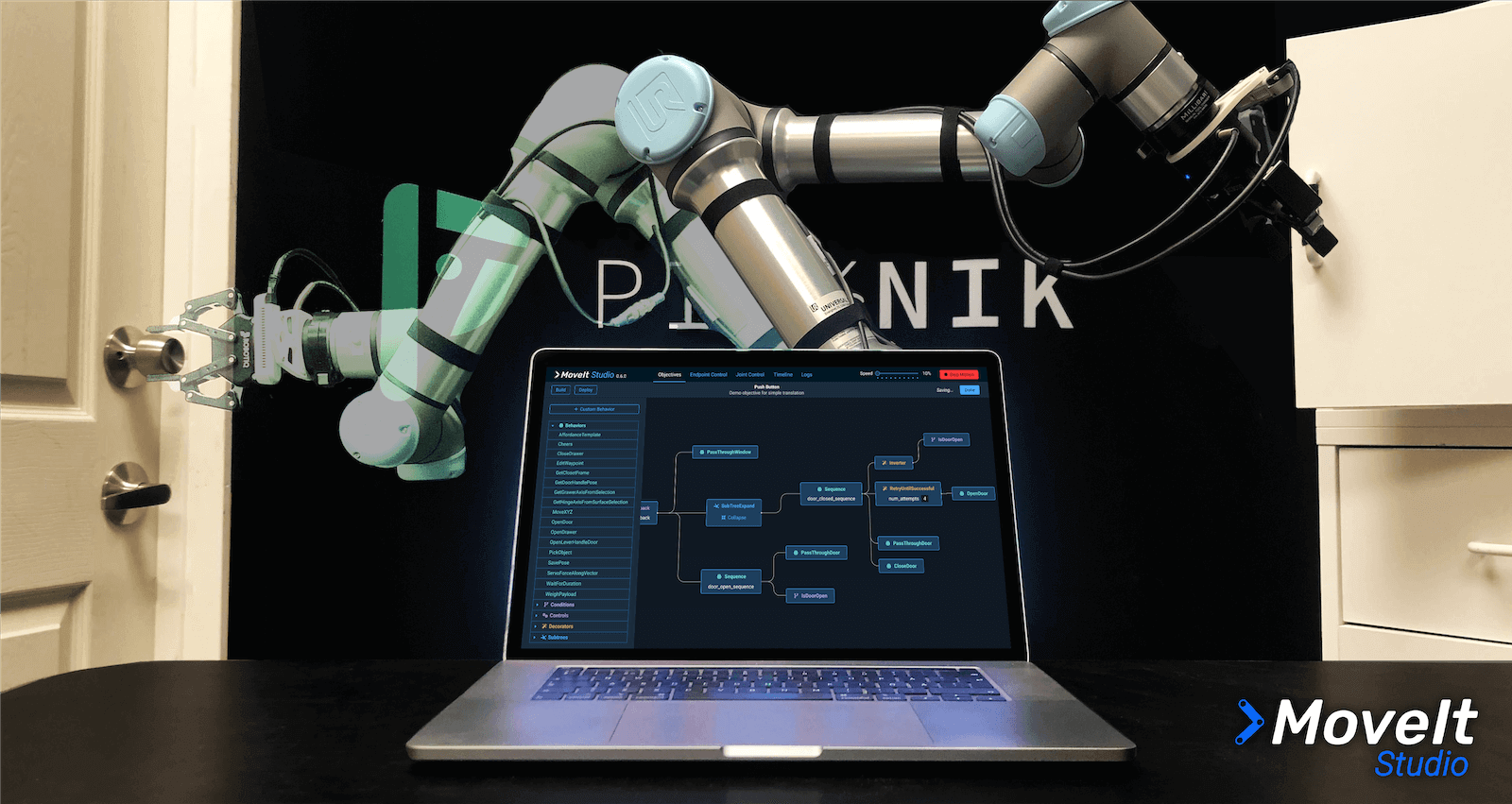
Qualcomm Technologies announced an agreement on September 23 to acquire PickNik Inc., the long-time steward of MoveIt. The transaction has not closed and remains subject to customary closing conditions. Qualcomm says MoveIt 1 and MoveIt 2 will remain open source, community-driven and supported across third-party hardware.
Qualcomm is taking another step from component supplier toward a fuller Physical AI platform. The company has agreed to acquire PickNik Robotics, the team behind commercial MoveIt Pro and a major contributor to the open-source MoveIt ecosystem. This is more consequential than buying a small robotics software vendor: MoveIt is one of the foundational manipulation and motion-planning layers used across ROS research, industrial automation, mobile manipulation and emerging Physical AI systems.
What was actually announced
Qualcomm's release describes an agreement to acquire PickNik, not a completed acquisition. Financial terms were not disclosed and closing is subject to customary conditions. That distinction matters. PickNik is not yet simply a Qualcomm business, and the final organizational structure has not been published. What is public is the intended technical direction and Qualcomm's stated commitments to the open-source project.
The strategic asset is not a single robot. It is a software layer spanning motion planning, kinematics, manipulation and execution. Qualcomm says MoveIt and MoveIt Pro are expected to integrate more closely with Dragonwing Robotics platforms, with Arduino VENTUNO Q named as an early additional target. At ROSCon Toronto, Qualcomm and PickNik are demonstrating MoveIt Pro on Dragonwing and VENTUNO Q hardware.
Why MoveIt matters to Physical AI
A VLA or VLM may interpret a scene and produce an intent, but a robot still has to create a feasible trajectory, avoid collisions, respect kinematic limits and execute a motion on real hardware. That is where MoveIt sits. The acquisition therefore belongs in the same conversation as our coverage of Isaac ROS 5.0 and Intrinsic Core at ROSCon 2026. Robotics competition is moving beyond bodies and actuators into runtimes, planning, simulation and developer tooling.
Qualcomm already brings edge compute, connectivity and AI acceleration. PickNik adds a mature manipulation ecosystem. If tighter integration really shortens the path from an AI model to a deployed manipulator, Qualcomm can build a more complete robotics stack while remaining inside the ROS world. It also complements the broader race around robot foundation models and generalist AI, because a foundation model is only useful when its intent can be translated into reliable physical action.
Open source is both the promise and the test
Qualcomm says MoveIt 1 and MoveIt 2 will remain open under their existing license, with community-driven roadmaps, open resources and continued support for third-party hardware. Qualcomm and PickNik are both founding members of the Open Source Robotics Alliance, and Qualcomm also says it will keep supporting ROS and Space ROS. Those are meaningful commitments in the announcement, but they describe intended future behavior after the deal.
The community will care about more than source-code availability. The practical question is where the best optimizations, integrations and support land. A plausible outcome is a hardware-neutral open core with first-class optimizations for Dragonwing. That can still be healthy, but developers will need to watch whether portability remains genuinely strong and whether governance stays broader than one corporate roadmap.
What we know - and what we do not
The purchase price, expected closing date and detailed organizational plan have not been disclosed. We also do not know whether MoveIt Pro pricing or packaging changes after closing. Qualcomm has not published an independent or reproducible benchmark showing how much integration time a Dragonwing-plus-MoveIt path saves. At this stage, there is a clear architectural direction but no measured production advantage.
MoveIt should not be described as a complete robot "brain" either. It solves a critical manipulation layer, while an autonomous system still needs perception, models, data, safety engineering, sensor integration, low-level drivers and validation. For a company deploying automation, the economics still depend on the whole cell, which is why our small-business cobot cost, safety and ROI guide treats software as one part of a broader deployment problem.
What it means for Europe
For European integrators, the interesting possibility is a better-supported hardware-neutral path across different edge-compute choices. If Qualcomm preserves strong ROS compatibility and real third-party hardware support, smaller teams gain another credible deployment option. More competition at the compute and runtime layer is useful because it reduces the risk of Physical AI becoming dependent on one vertically integrated ecosystem.
Openness also matters over industrial time horizons. Machines often stay in service for years, so European manufacturers value software they can maintain, audit and migrate. MoveIt's strength has historically come from ROS and a broad developer community. More investment without loss of portability could strengthen that model; a drift toward proprietary optimization would change the trade-off.
RoboMorrow take
The deal is a sign that the Physical AI battle is moving deeper into the stack. Qualcomm is not buying a flashy humanoid maker. It is buying stewardship and commercial expertise around one of the practical tools that makes robot manipulation work. That may ultimately matter more to deployment velocity than another staged walking demo.
The next checkpoints are deal closing, project governance, first integration benchmarks and the lived experience of developers running MoveIt on non-Qualcomm hardware. The headline promise is open robotics with more resources. The market will judge it by portability, contribution quality and deployment time.