Roborock vs Dreame 2026: app, dock, mopping, thresholds and pets
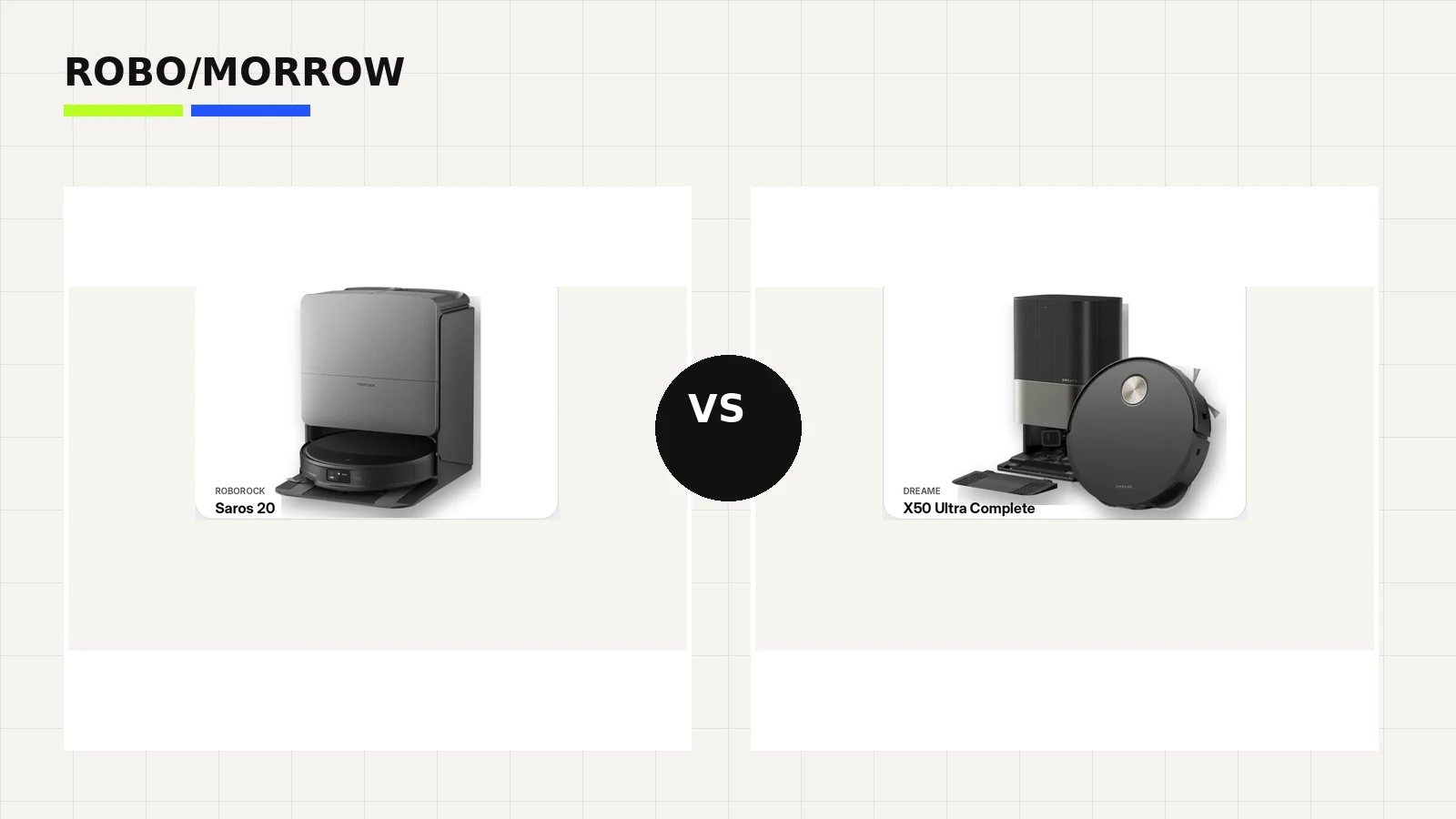
Short answer: by 2026 Roborock and Dreame are mature enough that “which brand is better?” is too broad. Roborock often stands out for a coherent app and dock ecosystem, while Dreame aggressively develops chassis mechanics, extending cleaning hardware and dock automation. At any given price point, the value winner can change within weeks.
This article does not replace our existing Saros 20 vs X50 Ultra Complete comparison, which looks at two specific flagships. Here we compare the wider ownership experience: app, dock philosophy, mopping, thresholds, carpets, pet hair, service and long-term maintenance.
Roborock vs Dreame 2026 — quick difference map
| Area | Roborock | Dreame | Buying implication |
|---|---|---|---|
| App | mature mapping, SmartPlan, zones and automation | rich CleanGenius/AI settings and model-specific options | both are strong; workflow details matter |
| Thresholds | AdaptiLift 3.0; Saros 20 two-layer 4.5 + 4.3 cm claim | ProLeap; X50 4.2 cm single / 6 cm two-step claim | do not compare two-step totals as one vertical sill |
| Mopping | rotating pads, VibraRise or SpiraFlow depending on series | rotating pads with MopExtend/Dual Flex; rollers in other lines | compare the actual model, not the badge |
| Hair | DuoDivide and newer dual anti-tangle systems | HyperStream and other anti-tangle brush designs | hair type and carpet matter more than the marketing name |
| Dock | RockDock / Multifunctional Dock with high automation | PowerDock with similarly broad automation | check tray cleaning, temperatures, bags and access |
Roborock: the value of a coherent ecosystem
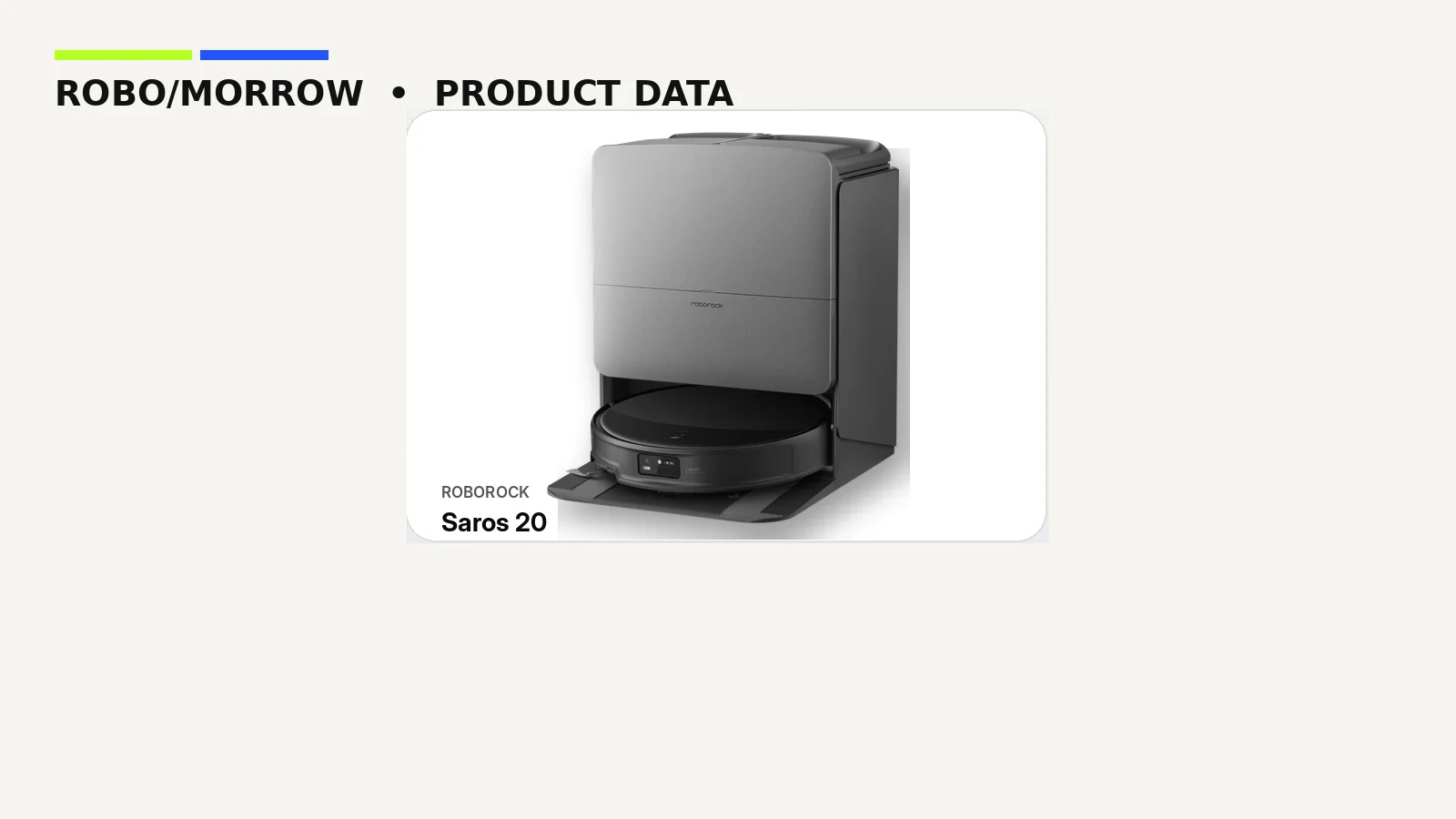
Roborock has spent years building products around a recognisable mapping and app logic. For an owner upgrading after several years, that continuity has real value: maps, routines and room-based controls feel familiar. Saros 20 adds SmartPlan 3.0, StarSight 2.0, 36,000 Pa and AdaptiLift 3.0. Qrevo Curv 2 Flow also shows that Roborock is not tied to one mopping philosophy; it introduces the continuously refreshed SpiraFlow roller.
Smart-home integration is another part of that coherence. Saros 20 lists Matter compatibility alongside Siri Shortcuts, Alexa and Google Home. Not every buyer needs it, but in a larger home-automation setup consistency can be more valuable than one extra cleaning mode.
Dreame: mechanical innovation and a dense flagship feature set
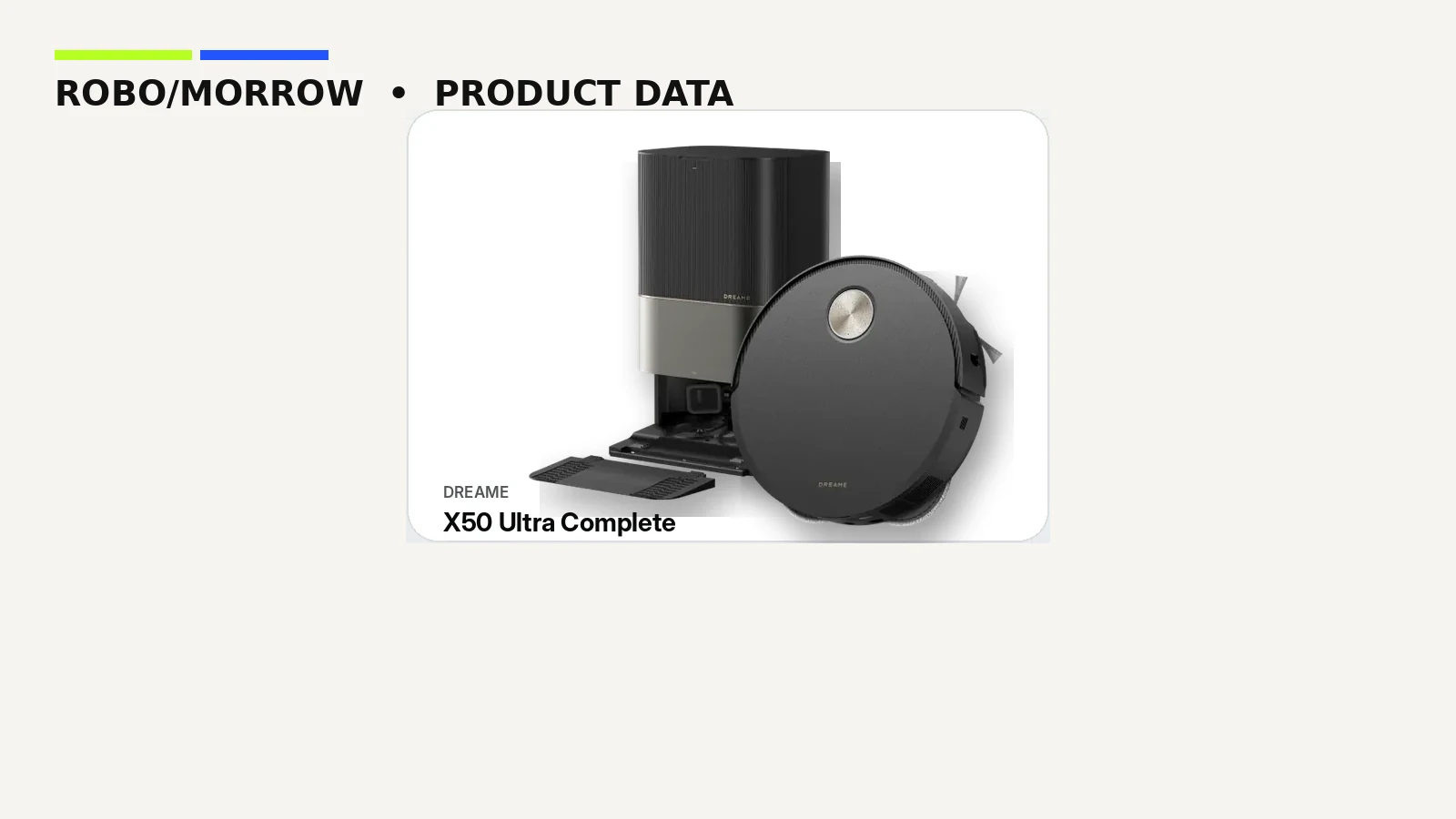
X50 Ultra Complete illustrates Dreame’s philosophy. ProLeap raises the chassis, VersaLift retracts the DToF sensor, HyperStream targets hair tangling, SideReach extends the side brush, MopExtend reaches under furniture and PowerDock washes and dries the pads. Dreame tends to move new mechanics between generations quickly and often competes with aggressive promotional pricing.
The trade-off can be complexity. More moving hardware means more mechanisms the owner needs to understand and clean. RoboMorrow is not claiming higher failure rates — that would require service data — but parts availability, warranty handling and the price of a full consumables set deserve attention.
The app is the most important feature you cannot see in a product photo
A premium robot with a poor app is simply an expensive vacuum moving around a map. Daily ownership depends on room selection, order, suction, water level, no-go zones, carpet settings and schedules. Pet households use repeated entrance-zone jobs; families may need to exclude a toy-filled room at short notice.
Roborock is widely associated with a logical map-and-routine workflow; Dreame offers equally deep controls, although names and locations change between generations. Before buying, look at current app screenshots for the exact model rather than a two-year-old review. Firmware can materially change behaviour after launch.
Navigation and obstacle avoidance
Saros 20 uses StarSight 2.0 without a conventional protruding LiDAR tower; Roborock currently says its software can recognise more than 300 obstacle types. X50 combines RGB, 3D structured light and retractable DToF, with Dreame stating up to 200 recognised object categories. It would be wrong to conclude that 300 automatically beats 200. Category count does not describe thin-cable detection, low-light behaviour or how close the robot cleans around an object.
Those are exactly the scenarios RoboMorrow Labs should test: USB-C cable, sock, small toy, feeding bowl, dark object and an obstacle against a wall. Until we have that joint test, manufacturer object counts indicate system ambition rather than a quality ranking.
Thresholds: two different mechanical answers
Roborock communicates a 4.5 + 4.3 cm two-layer threshold for Saros 20. Dreame states 4.2 cm single and 6 cm two-stage for X50. This is not a simple “8.8 beats 6” table because geometry differs. If thresholds are the main reason for upgrading, read our 2026 high-threshold guide.
Mopping: brand history no longer predicts the mechanism
A few years ago it was tempting to summarise Roborock as vibration and Dreame as twin rotating pads. That is outdated in 2026. Saros 20 uses rotating pads, Saros 20 Sonic uses VibraRise and Qrevo Curv 2 Flow uses a SpiraFlow roller. X50 remains a twin-pad Dreame flagship but adds extension, detachment and automated washing. Buyers need to compare architectures, not brand stereotypes.
For repeated dried stains, a continuously refreshed roller is interesting. For lots of carpet, mop detachment/lifting may matter more. For delicate wood, water control matters. There is no universal winner without a defined floor and test.
Dock hygiene
Both brands offer auto-emptying, mop washing/drying, detergent management and intelligent re-cleaning in premium models. Roborock states up to 100°C mop washing for Saros 20, while Dreame states up to 80°C for X50. These are manufacturer conditions and should not be interpreted as sterilisation of the entire floor. Owners should care about how easily dirt leaves the dock tray and how accessible filters and tanks are.
Consumable pricing also matters. A promotional robot can be cheap to buy and expensive to maintain. Over four or five years, bag, brush, filter and mop availability is more important than a about €50 launch-week difference.
Pets
Both brands now put heavy emphasis on anti-tangle brushes and obstacle recognition. If this is the main use case, see our robot vacuum for dogs and cats guide. Pet owners should judge brush access, carpet behaviour and small-object safety rather than suction alone.
Price can reverse the verdict
On 18 August 2026, official Polish stores showed Saros 20 around about €850 and X50 Ultra Complete around about €800. The relationship has changed before and can change again during the next promotion. A useful ranking therefore needs a “value at today’s price” layer rather than a permanent brand winner.
Choose Roborock when…
- you value a highly coherent app and mapping ecosystem;
- you specifically need the low Saros 20 body plus advanced lifting chassis;
- you already own Roborock products and understand the workflow;
- a Roborock-specific feature such as Matter or SpiraFlow matches your home.
Choose Dreame when…
- the current X50 price is meaningfully lower for a similar automation tier;
- you need ProLeap for a difficult single sill around four centimetres;
- you value mop detachment and detailed carpet strategies;
- your local Dreame seller/service gives better support terms.
What specifications cannot answer
How reliably the robot avoids your USB cable, how much hair is on the roller after a week, whether a black tile shows streaks, how loud the dock sounds at night and how the robot behaves on your rug cannot be settled by a spec table. Those are RoboMorrow Labs questions. This is an architecture and ownership comparison, not a pretend hands-on review.
RoboMorrow verdict
Roborock and Dreame are closer in capability than brand-war discussions suggest. Reduce the decision to an exact model, current price and two or three problems in your home. Saros 20 is a strong example of Roborock’s coherent ecosystem and advanced chassis; X50 Ultra Complete shows Dreame’s pace of mechanical innovation. When prices are close, decide on app, thresholds, carpets and service — not the logo.
Service in Poland: the brand is also a sales and support channel
On a about €750–€1,250 robot, product quality is only part of ownership. The other part starts when a consumable breaks, the app stops seeing the dock or you need a warranty claim. Confirm official Polish distribution, who handles the warranty and whether pickup and repair are straightforward. A table winner loses its value if bags, brushes or tanks become difficult to buy after two years.
Both Roborock and Dreame now have broad Polish availability, but retailer bundles, accessory packs and promotional terms differ. Keep proof of purchase and serial numbers and check spare-part availability before purchase rather than after the first fault.
Noise: robot and dock are two different questions
The most disruptive sound is often the dust-emptying burst rather than the robot driving. Mop washing and drying can run for much longer. If the dock sits near a bedroom, open-plan living room or child’s room, check quiet-hour controls and whether automatic dock operations can be delayed overnight.
Multi-level homes
Neither brand can make the robot climb stairs. Multi-floor ownership therefore depends on multiple maps, cleaning without a dock on another level and reliable floor recognition after manual carrying. If both floors need full mopping with frequent pad washing, one ground-floor dock limits autonomy regardless of brand.
The ecosystem three years from now
When buying a premium robot, ask not only what it can do today but whether you would be comfortable staying in this ecosystem for your next robot. App history, software activity, the number of products using similar consumables and an official local channel all reduce ownership risk. RoboMorrow cannot promise identical support lifetimes from either brand, but a broad active portfolio is still a useful signal.
A seven-day test you can run at home
Day 1: map and clean normally without helping the robot. Day 2: carpets and edges. Day 3: a controlled cable and a few small objects. Day 4: a dried kitchen stain. Day 5: the hardest threshold. Day 6: a full unattended mission. Day 7: clean the brushes and dock and count how much manual work remains. That week tells you more about fit than an hour of specification reading.
If a robot fails one mission-critical scenario, do not rationalise the purchase because its headline specs look better. A premium device should remove problems from your home rather than create new chores.
Three-year ownership cost: look beyond the robot price
When two premium brands are close, a modest price difference of launch-price difference can dominate the decision. Over three years, however, you also buy bags, filters, main and side brushes, mop pads, detergent and potentially dock parts. RoboMorrow does not assume one fixed cost because usage and parts prices vary. A better method is to build your own annual basket before purchase: two filter sets, brushes, mops and a realistic supply of bags, then multiply it across three years.
Check third-party consumables too, but do not assume automatically that fit and quality equal the original parts. A heavy-pet-hair home may consume brushes and filters faster than a small flat cleaned three times per week. Dock automation also has its own trade-off: more consumables and mechanisms, but less daily manual work.
Privacy, cameras and remote features
Flagship robots increasingly use RGB cameras and advanced object recognition. Some buyers value the extra obstacle awareness; others treat a mobile camera as a privacy consideration. Before purchase, check which video features the app exposes, which can be disabled, how remote access works and whether everyone in the home is comfortable with it. The presence of an RGB sensor alone does not determine risk — settings, manufacturer policy and user behaviour all matter.
In a business or home-office environment, separate convenience from necessity. If you do not need remote viewing, do not enable it just because the feature exists. Keep firmware and apps updated, use a strong account password and enable multi-factor authentication where available. This does not make Roborock or Dreame the automatic winner, but it belongs in a mature comparison of cloud-connected camera-equipped devices.
Sources
Where to buy models from this article
We show only exact verified Amazon product pages. Before purchase, confirm the variant, seller, warranty and box contents.
Exact Amazon links. Where a verified RoboMorrow marketplace tracking ID is active, the link is an affiliate link and we may earn from qualifying purchases. Price and availability can change after you click.