Choosing a robot vacuum for pets: hair, rugs and everyday upkeep
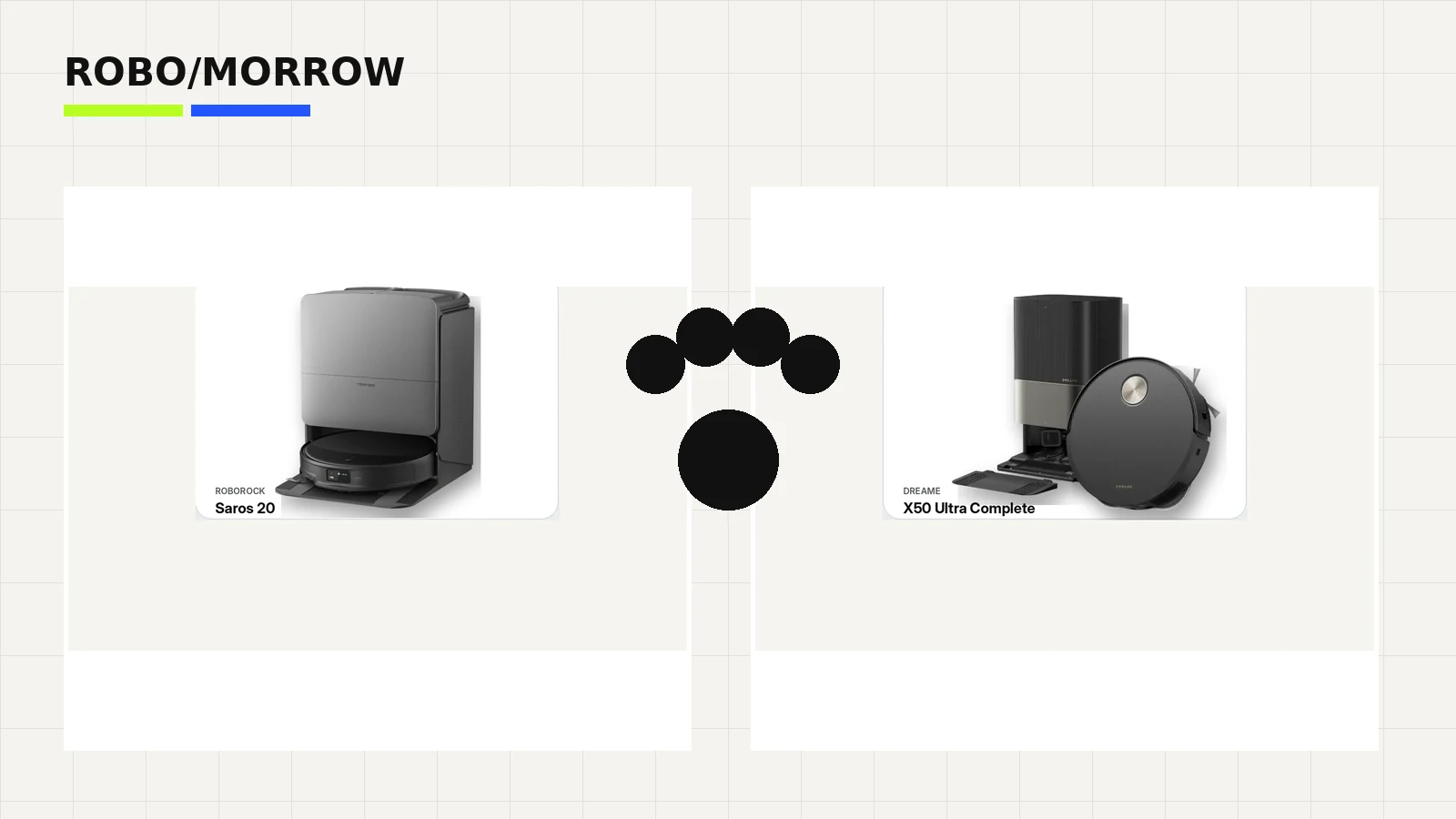
A pet label is less important than whether the robot regularly collects what actually lands on your floor. Long hair in a rug, short hair on tiles and litter beside a tray are different jobs. Start with a map of the mess.
This guide helps select useful features and evaluate them at home. It is not a performance ranking based on RoboMorrow hardware measurements.
Map four locations
Inspect the pet bed, entrance, feeding area and litter tray. Record the debris, flooring and frequency. A rug may cover only a small part of the home but be the most important cleaning area if the dog spends most of the day there.
| Main problem | Selection priority | Check at home |
|---|---|---|
| Loose hair on hard floors | Edge collection and the path into the bin | Remaining hair and blockages |
| Hair embedded in rugs | Brush, pile compatibility and vacuum mode | Result after one and additional passes |
| Litter near the tray | Permitted debris and zone control | Collection versus scattering |
| Paw marks | Floor-compatible mopping | Marks and streaks after drying |
Do not try to solve every problem with the highest suction number. A robot that cannot enter the rug or has a blocked brush needs a different correction.
Inspect the brush, not just the anti-tangle claim
Check removal of the main brush and access to its ends, axle and small wheel. Hair can accumulate outside the central roller. Read the manual or watch the user-maintenance procedure.
An anti-tangle design can help without eliminating inspection. After several ordinary cycles, record whether hair needs manual removal, where it accumulates and how long cleaning takes. A manufacturer’s demonstration with human hair does not establish performance with your pet’s coat in a particular carpet.
Also check the supply of compatible brushes and filters. Convenient maintenance is less useful if a worn component cannot be replaced.
Treat carpet cleaning and moisture protection separately
Confirm compatibility with pile and fringes. Decide whether you need vacuum-only operation, carpet exclusion during mopping, mop lifting or leaving wet components at the dock. Implementations differ between models.
After the first cycle, inspect the rug edge and surface. Small mop-lift clearance does not guarantee that high pile stays dry. If the manual supports a no-mop zone, configure it and verify the behaviour.
Assess rug cleaning separately from hard-floor cleaning. Good collection on tile is not evidence that embedded hair has been removed from carpet.
The dock reduces tasks; it does not remove all upkeep
Automatic emptying can reduce manual bin opening. With substantial pet hair, still monitor bin filling and the suction path. A claim of many days without emptying is not a universal pet-household schedule.
Mopping adds dirty water, the tray and wet components. Follow the manual and record hands-on minutes. Consider emptying noise and choose a time that suits both household members and the animal.
The best arrangement may be a short daily run in the busiest zone rather than cleaning every room at every opportunity. Confirm that the result improves without excessive disturbance or upkeep.
Bowls, toys and pet waste
Inspect the floor before starting. Remove pet waste, spills and objects the robot must not collect. Do not conduct an AI demonstration using biological contamination. Obstacle recognition has operating conditions and limitations.
Supervise initial sessions and let the animal move away. Avoid a route that blocks access to bedding or water. If the robot causes distress, change the timing or area rather than forcing contact.
Near the litter tray, assess the ordinary condition without spreading extra material. Check whether the particular debris is permitted for collection by the device.
A seven-day observation
After comparable intervals, inspect the same locations and record four things: remaining hair, brush condition, interventions and maintenance minutes. Note unusual events, such as an especially muddy walk.
Midweek, change one setting only, perhaps cleaning frequency in the busiest zone. Observe whether less accumulated hair improves results and whether the change adds unacceptable noise or maintenance.
Do not erase failed runs. A robot that works only after extensive floor preparation may still be useful, but that preparation belongs in the decision.
When paying more is justified
An upgrade is useful when it removes a specific recurring problem: daily brush detangling, inability to vacuum an important rug without a wet mop, or awkward dock cleaning. A camera for viewing the pet is a separate feature and does not replace vacuum performance.
Write two acceptance criteria before purchase, such as independent living-room completion and an upkeep limit you choose. There is no universal acceptable number of minutes: home size, pet and cleanliness expectations vary.
Use the complete home protocol and human-workload calculation. The selection criteria are editorial analysis. Verify features and maintenance in the exact device documentation; construction examples include Roborock and MOVA.