Robot mower narrow passages: what to measure before buying
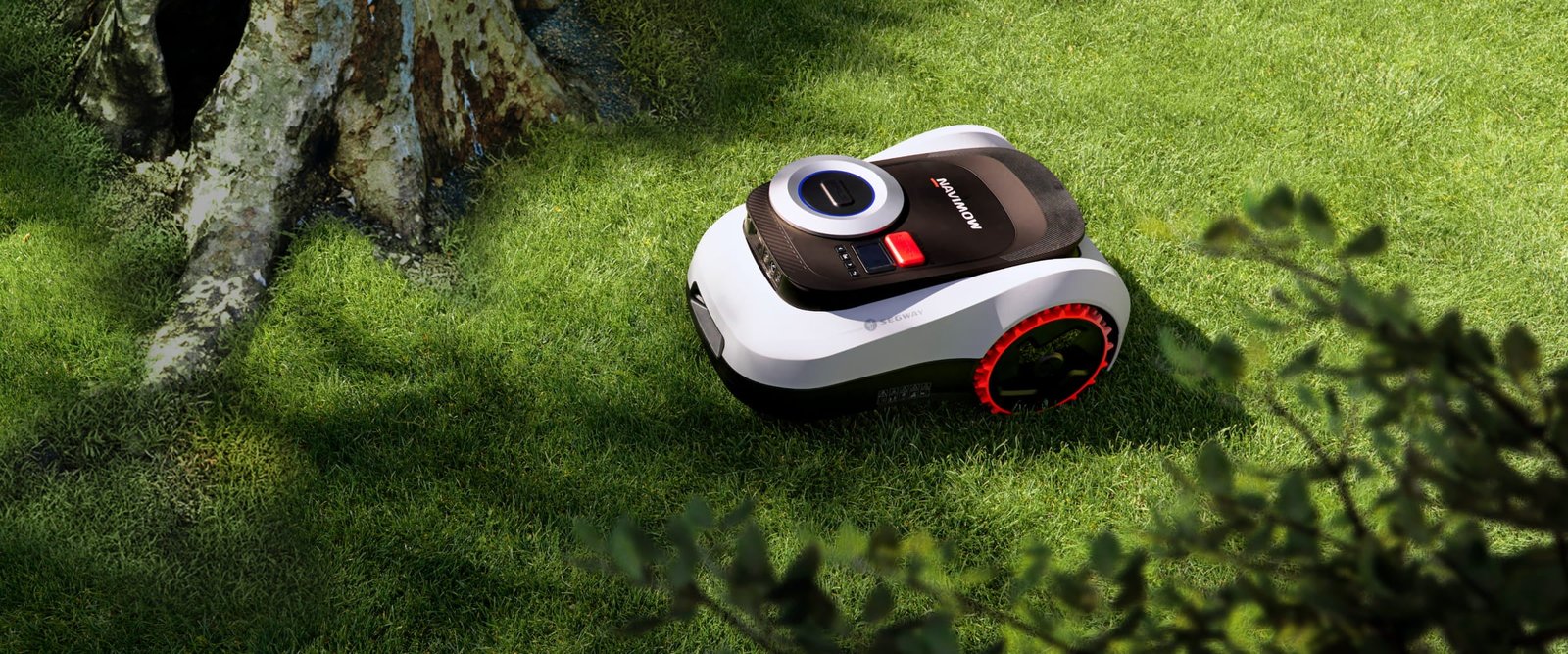
A mower fitting between two posts may still fail to use the complete passage. Turns, surface, map boundaries and repeatable docking also matter. Prepare a route record before selecting a model, rather than comparing body width alone.

Three different widths
| Measurement | Meaning | Use |
|---|---|---|
| Machine outline | Physical body width | Rules out an obviously undersized gap |
| Clear opening | The smallest unobstructed space along the route | Includes hinges, plants and edging |
| Required channel | The installation requirement for the exact model | Check the manual, including surfaces and turns |
The Navimow i2 LiDAR Pro manual specifies a channel wider than 1 m. This applies to that manual, not every Navimow mower or every LiDAR machine. Marketing language about narrow passages does not replace the instructions for the variant you are buying.
Record the route from lawn A to lawn B
- Draw the route and number its bottlenecks. Measure each with the gate in its normal open position.
- Measure the space before and after turns. Mark posts, stops and protruding hinges.
- Describe the surface: grass, paving, loose gravel or another material. Mark kerbs and uneven sections.
- Record slopes along and across the route, plus locations where water collects.
- Establish who opens the gate and whether it stays open during scheduled mowing.
Illustrative example: a passage is 120 cm wide, but the gate leaf and plants reduce one section to 92 cm. Assess 92 cm, not the distance between posts. This does not establish that another model will succeed; its own instructions and a route trial are still needed.
Test the return journey too
Ask the installer to demonstrate travel in both directions and a return to charging from the distant zone. Agree the number of repeat runs and representative conditions beforehand. Log turning back, getting stuck, human assistance and route obstruction. One successful run cannot establish everyday scheduling reliability.
Keep children, animals and vehicle traffic clear during the trial. Do not bypass safeguards or disable obstacle detection merely to obtain a successful result. If the manufacturer permits a special passage mode, have the installer confirm its use and limitations.
If the requirements are not met
Consider widening a safe route, changing station placement or using an isolated area with manual transport if the model supports it. Do not assume free autonomous travel across a public road or shared vehicle access. The garden plan must account for physical site restrictions.
Attach a sketch, minimum clear width, turn photographs and surface description to the quote request. Ask for the exact model, mapping approach and acceptance criterion for this route in writing.
Continue with the next step
Sources and scope
Documentation checked on 11 September 2026. Worked examples and worksheets are RoboMorrow editorial work, not results from hands-on device tests we performed.