Robot mowers around dogs, cats and hedgehogs: safe operating rules
BUYING IN YOUR MARKET
Availability in your country
Sales, delivery and support can differ by country and exact model. Choose your market to see the evidence we have checked.
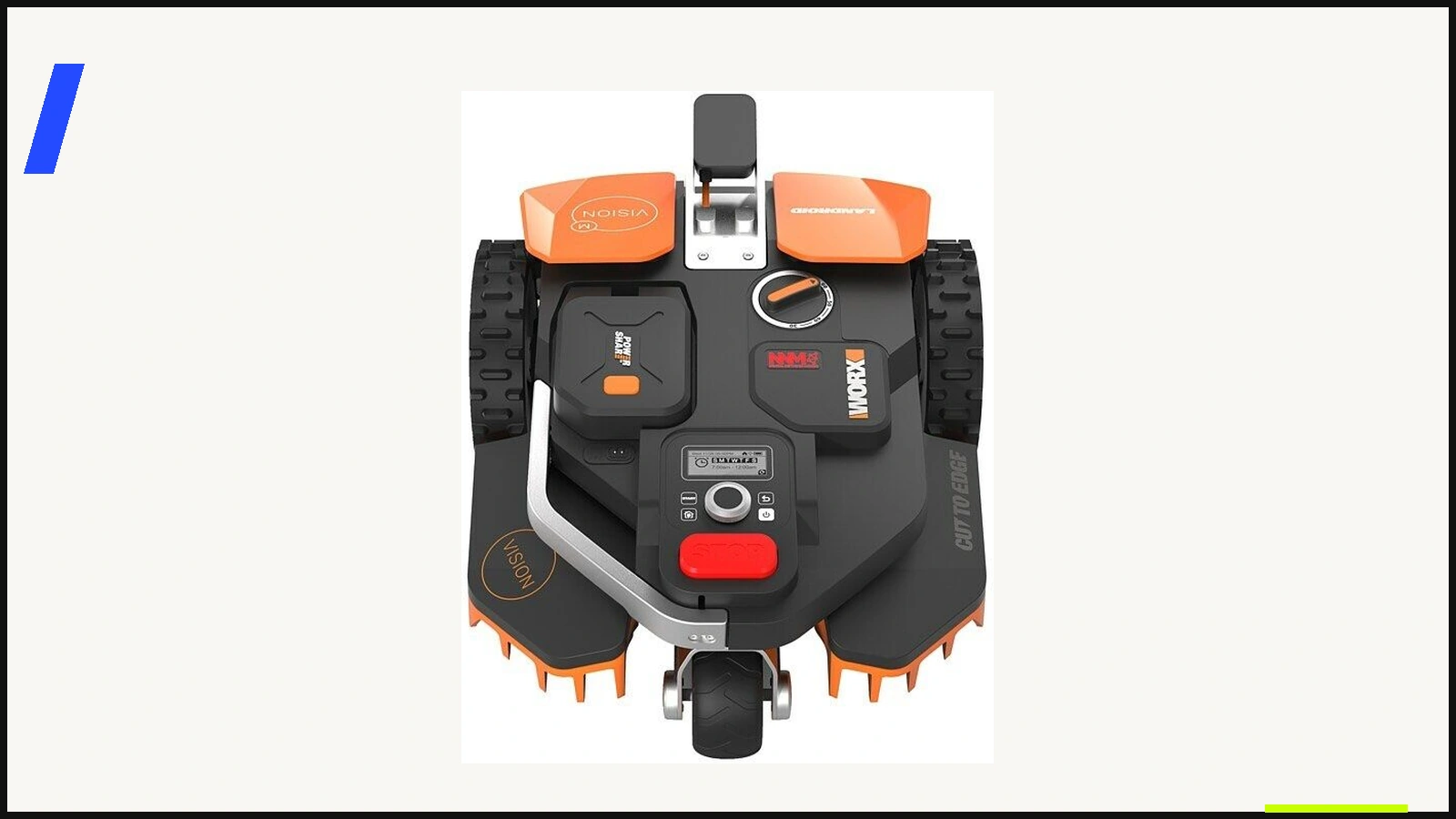
WORX Landroid Vision AI M600 WR206E
Germany
Local store offer — check checkout availability
- Seller / sales channel
- WORX Germany
- Price
- See the local offer for the current price and exact bundle
- Delivery
- Confirm stock and the delivery date for your address with the seller
- Warranty and service
- Confirm written warranty terms, parts and service coverage for your address
WORX Germany lists this exact model for this market. A listing is evidence of a buying route, not a delivery commitment.
Evidence checked: · Not a live stock feed
WORX Germany: check local offer ↗No verified local offer in this dataset
No country-specific offer for this exact model has been established in our current sources. This is a gap in our research, not a statement that the robot cannot be bought here. Use the manufacturer’s sales contact to request a supplier serving your address; confirm configuration, imports, warranty and service.
- Price
- No verified local price in this dataset
- Delivery
- No confirmed date for your address
- Warranty and service
- Local coverage not verified
EUFY Robot Lawn Mower E15
United States
Local store offer — check checkout availability
- Seller / sales channel
- eufy US
- Price
- See the local offer for the current price and exact bundle
- Delivery
- Confirm stock and the delivery date for your address with the seller
- Warranty and service
- Confirm written warranty terms, parts and service coverage for your address
eufy US lists this exact model for this market. A listing is evidence of a buying route, not a delivery commitment.
Evidence checked: · Not a live stock feed
eufy US: check local offer ↗eufy EU — supported destinations
Regional store lists this model — delivery country supported
- Seller / sales channel
- eufy EU
- Price
- See the linked offer for the current price, configuration and taxes
- Delivery
- Seller lists this country as a delivery destination; confirm postcode, model stock and dispatch at checkout
- Warranty and service
- Confirm warranty territory, local service and return shipping with the seller
Delivery countries: Austria, Bulgaria, Croatia, Czechia, Estonia, Greece, Hungary, Latvia, Lithuania, Poland, Portugal, Romania, Slovakia, Slovenia
Exact model listing and the store’s delivery policy are linked separately. Supported delivery is not proof of current stock or local service.
Evidence checked: · Not a live stock feed
eufy EU: model offer ↗Supported delivery countries ↗No verified local offer in this dataset
No country-specific offer for this exact model has been established in our current sources. This is a gap in our research, not a statement that the robot cannot be bought here. Use the manufacturer’s sales contact to request a supplier serving your address; confirm configuration, imports, warranty and service.
- Price
- No verified local price in this dataset
- Delivery
- No confirmed date for your address
- Warranty and service
- Local coverage not verified
ECOVACS GOAT O800 RTK
Germany
Local store offer — check checkout availability
- Seller / sales channel
- Coolblue Germany
- Price
- See the local offer for the current price and exact bundle
- Delivery
- Confirm stock and the delivery date for your address with the seller
- Warranty and service
- Confirm written warranty terms, parts and service coverage for your address
Coolblue Germany lists this exact model for this market. A listing is evidence of a buying route, not a delivery commitment.
Evidence checked: · Not a live stock feed
Coolblue Germany: check local offer ↗No verified local offer in this dataset
No country-specific offer for this exact model has been established in our current sources. This is a gap in our research, not a statement that the robot cannot be bought here. Use the manufacturer’s sales contact to request a supplier serving your address; confirm configuration, imports, warranty and service.
- Price
- No verified local price in this dataset
- Delivery
- No confirmed date for your address
- Warranty and service
- Local coverage not verified
HUSQVARNA Automower 410VE NERA
Germany
Local manufacturer catalogue — ask about ordering
- Seller / sales channel
- Husqvarna Germany
- Price
- See the local offer for the current price and exact bundle
- Delivery
- Confirm stock and the delivery date for your address with the seller
- Warranty and service
- Confirm written warranty terms, parts and service coverage for your address
Husqvarna Germany lists this exact model for this market. A listing is evidence of a buying route, not a delivery commitment.
Evidence checked: · Not a live stock feed
Husqvarna Germany: check local offer ↗No verified local offer in this dataset
No country-specific offer for this exact model has been established in our current sources. This is a gap in our research, not a statement that the robot cannot be bought here. Use the manufacturer’s sales contact to request a supplier serving your address; confirm configuration, imports, warranty and service.
- Price
- No verified local price in this dataset
- Delivery
- No confirmed date for your address
- Warranty and service
- Local coverage not verified
“Listed” confirms a product page or sales route, not stock, delivery to every address or local service. “Pre-order” is not immediate availability. Unverified means we lack evidence; it does not mean unavailable. Prices belong to the named market and currency. Confirm the exact version, tax, shipping and support before ordering.
The robotic mower works low to the ground and has fast-rotating blades. Crash sensors, cameras and lifting systems reduce risk, but do not eliminate it in every situation. Small animals, young animals and hedgehogs require special caution as they may curl up into a ball instead of running away.
Hedgehogs: the most important rule is no night mowing
Hedgehogs are active mainly after dark. The RSPCA recommends inspecting areas before mowing and caution under hedges and bushes. A robot working at night increases the risk of encountering an animal, so set a daily schedule, even if the manufacturer allows work in the dark.
Is an AI camera enough?
WORX declares that Landroid Vision AI recognizes obstacles, animals and hedgehogs. This is a valuable layer of protection, but conditions in the garden are variable: the animal may be partially hidden, motionless, obscured by tall grass, or invisible in the shade. The vision system should support the secure schedule, not replace it.
Dogs and Cats
- for the first few days, observe the animal's reaction to the robot;
- do not allow your dog to bite, knock over or block the device;
- set the forbidden zone for the bowl, bed and toys;
- do not run the robot during intense play of children and animals;
- protect the start button with a parental lock or PIN.
Small animals and amphibians
Frogs, lizards, young birds and rodents may not be detected by a system designed primarily to avoid larger objects. Hedge edges, tall grass and leaf piles are particularly risky. Exclude such places from the map or leave a strip of natural vegetation that the robot cannot enter.
Secure Configuration
- Mow in daylight, preferably after a morning tour of the garden.
- Keep the grass short so sensors can see obstacles.
- Create no-go zones under hedges and near animal habitats.
- Do not set a schedule when the garden is used by children.
- Regularly test the lift sensor, STOP and obstacle response.
- After software update, observe the first runs.
Low Inertia Blades
The lightweight, rotating blades have less energy than the heavy bar of a classic lawn mower, but they can still cause injury. Do not put your hand under the robot until it is turned off, secured and stopped as instructed.
Verdict
The best animal protection is a combination of sensors, daytime operation, short grass, no-go zones and physical control of the garden. Don't take the marketing slogan "AI obstacle avoidance" as a guarantee that every small animal will be detected.
Why "Deny Night Mowing" is better than an additional sensor
Scheduling eliminates a significant portion of encounters with nocturnal animals regardless of the brand of robot. The camera may become dirty, a small animal may be hidden, and an update may change the behavior of the system. A simple organizing principle works regardless of technology.
Obstacle Reaction Test
Do not test the robot on a live animal. Use an object of similar size and low profile, placed in a highly visible location, and then observe the reaction from a safe distance. The test does not guarantee detection under other conditions, but may reveal incorrect settings or a dirty sensor.
Children in the garden
The robot should be stopped when children are playing on the lawn. Toys, strings, small balls and clothes can get under the housing. Turn on the lock, PIN and alarm, and set the station outside the main play zone.
Pet-friendly garden
- Leave a strip of tall vegetation out of reach of the robot.
- Do not mow under thick hedges without first checking.
- Remove nets and loose strings in which the animal or robot could become entangled.
- Place waterers and bowls outside the map.
- Check the lawn after strong winds and before the first mowing after a break.
What to do after a collision
Stop and secure the robot immediately. Do not restart it before checking the blades and sensors. Provide treatment to the injured wild animal as recommended by your local rehabilitation center or veterinarian; don't leave it unrated.
FAQ: animals
Can a cat ride a robot?
This should not be allowed. Additional weight, animal movement and the possibility of touching device components create a risk of injury and damage to the robot.
Will the pet's GPS collar interfere with the robot?
Usually no, but this is not a security method. The robot should not rely on collar identification and the pet should not be in the work area unattended.
Should the robot mow under a hedge?
This is a place of particular risk for hedgehogs and other animals. It is safer to leave the lane off the map and maintain it manually after inspection.
Related tabs in Robot Database
- WORX Landroid Vision AI M600
- eufy Robot Lawn Mower E15
- ECOVACS GOAT O800 RTK
- HUSQVARNA Automower 410VE NERA
See the entire RoboMorrow Robot Database.
Related guides
Sources and verification date
The article was prepared based on manufacturer data and institutional materials available on August 3, 2026. Software parameters, prices, availability and functions may change.
- RSPCA – hedgehogs in the garden and safety when mowing
- WORX – Vision AI and Active Safety
- WORX – Vision system operation
Where to buy models from this article
We show only exact verified Amazon product pages. Before purchase, confirm the variant, seller, warranty and box contents.
Exact Amazon links. Where a verified RoboMorrow marketplace tracking ID is active, the link is an affiliate link and we may earn from qualifying purchases. Price and availability can change after you click.