Roller mop or spinning pads? Choose for floors, rugs and upkeep
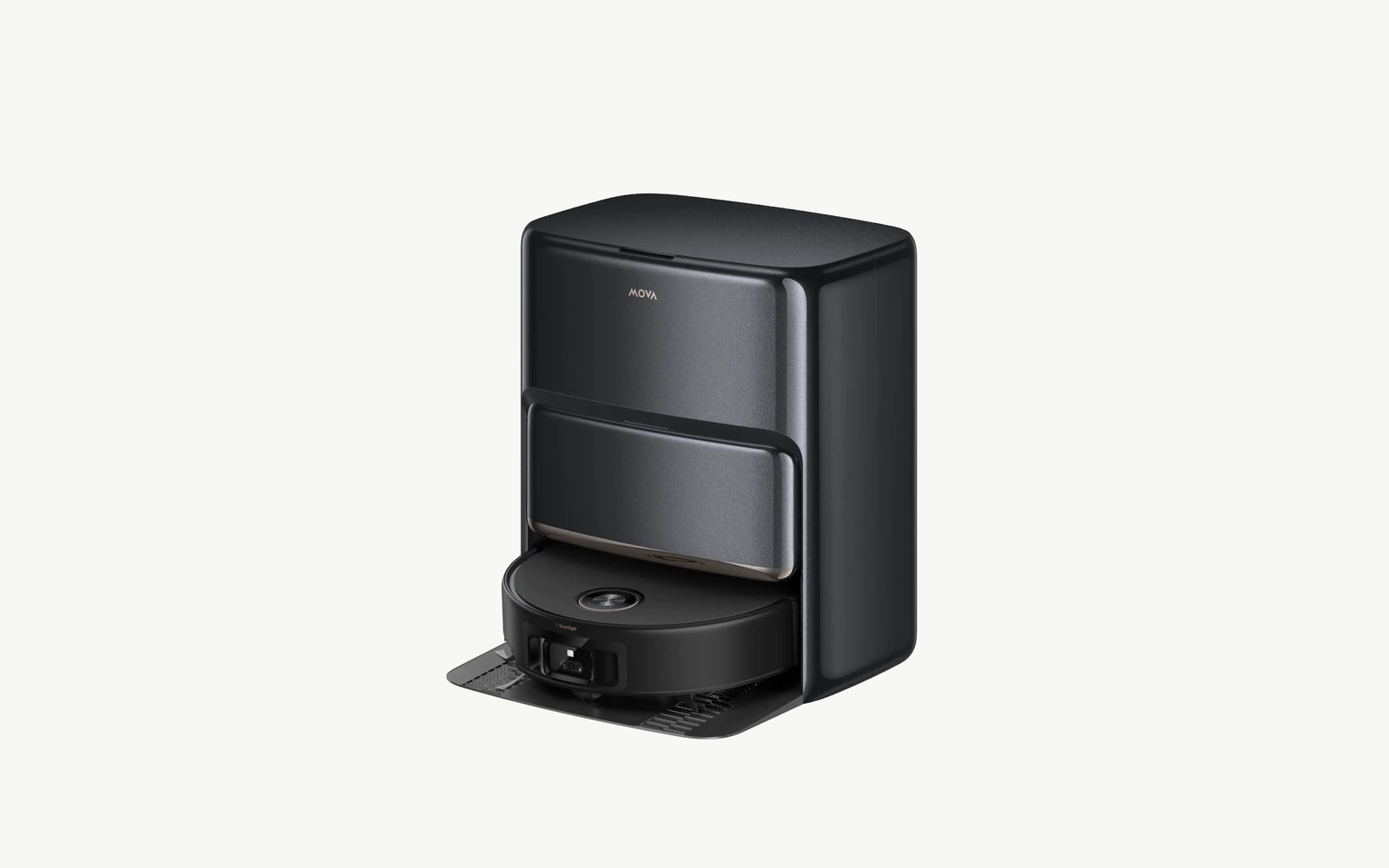
There is no defensible rule that every roller mop outperforms every spinning-pad system. Mop construction is the start of the comparison. Water delivery, dirt removal, floor contact, wash returns and dock upkeep also matter.
For mostly hard floors and frequent mopping, examine how the cleaning element stays clean during the run. For a home with many rugs, start with separation between wet components and carpet. Different homes can favour different arrangements.
Understand the mechanism
A roller mop uses a rotating cylinder in contact with the floor. For designs rinsed during operation, check how clean water reaches it and where dirty water goes. A spinning-pad design uses separate rotating pads; wetting and rinsing methods depend on the model.
Do not assume every roller is continuously washed or every pad system follows the same rinse schedule. Similar-looking hardware can implement a different cleaning process.
Compare six practical criteria
| Criterion | Roller system | Spinning-pad system |
|---|---|---|
| Dirt removal | How is dirt removed from the roller? | When are pads returned for rinsing? |
| Clean water | How is supply regulated? | How is pad wetting controlled? |
| Rugs | Lift, shield or avoidance? | Lift, detachment or avoidance? |
| Edges | How close does the cleaning element reach? | Does a pad extend towards the wall? |
| Upkeep | Roller removal and accessible dirty-water path | Pad removal and tray cleaning |
| Supplies | Correct roller price and availability | Correct pad price and availability |
A video of actual user maintenance is more useful for this question than an animation of water flow.
Tiles and everyday food marks
Assess ordinary dirt and whether the cleaning element remains effective across the required area. On-the-go rinsing is worth investigating, but it is not itself a measured cleaning result.
With pads, check whether washing frequency can be set for the room. More frequent returns may help maintain pad condition but also add dock operations and elapsed time. Compare the dried result and post-cycle work, not only travel time.
Avoid using an extreme stain that would not normally be present or that could damage the floor. The test should represent the job you want the robot to take over.
Homes with rugs
Pile compatibility and transitions come first. A stated lifting distance does not establish that every rug stays dry. Rug position and the robot’s behaviour at the edge also matter.
Check actual features: vacuuming before mopping, no-mop zones, carpet avoidance or leaving mops at the dock. Do not assume every product provides every option. Inspect the rug after the first run rather than relying solely on the app map.
Where the rug is the main hair-collection problem, prioritise acceptable vacuuming and moisture protection before extra mop features.
Wood and sensitive flooring
Confirm the flooring manufacturer’s permitted care method first. Wood types, finishes and joints do not respond identically to moisture. Robot instructions do not replace floor-care requirements.
Mop-washing temperature at the dock is not automatically the temperature applied to the floor. Greater pressure does not establish compatibility with every finish either. If compatibility is uncertain, do not experiment in a prominent area.
Run a fair comparison
Choose similar permitted areas with ordinary dirt. Do not let the second robot benefit from a floor already partly cleaned by the first. With only one device, compare settings across similar sessions and state that limitation.
Record mode, water setting, solution, passes and mop condition. After drying, inspect remaining marks, streaks and the strip beside the skirting board. Time the cleaning needed to prepare the equipment for its next run.
Illustrative example: system A needs two minutes of manual floor touch-up and eight minutes of upkeep. System B needs four minutes of touch-up and three minutes of upkeep. With otherwise comparable conditions, their human workloads are ten and seven minutes. The first-pass result alone does not capture the whole decision.
Repeat the observation before concluding that a setting consistently performs better. Record failures rather than keeping only the best run.
Decide for the household, not the label
Choose a system that reaches the required result, protects the relevant surfaces and leaves acceptable maintenance. For frequent mopping, investigate cleaning-element rinsing. For rugs, examine actual wet-component separation.
Do not declare an entire technology the winner without comparable testing of specific devices. Examples of different implementations are documented on the MOVA Z60 and Roborock Saros 20 pages. These are manufacturer descriptions, not RoboMorrow performance measurements.
Use the seven-day protocol and running-cost guide to complete the comparison.
Where to buy models from this article
We show only exact verified Amazon product pages. Before purchase, confirm the variant, seller, warranty and box contents.
Exact Amazon links. Where a verified RoboMorrow marketplace tracking ID is active, the link is an affiliate link and we may earn from qualifying purchases. Price and availability can change after you click.