Robot mop on wood flooring: checks before the first cycle
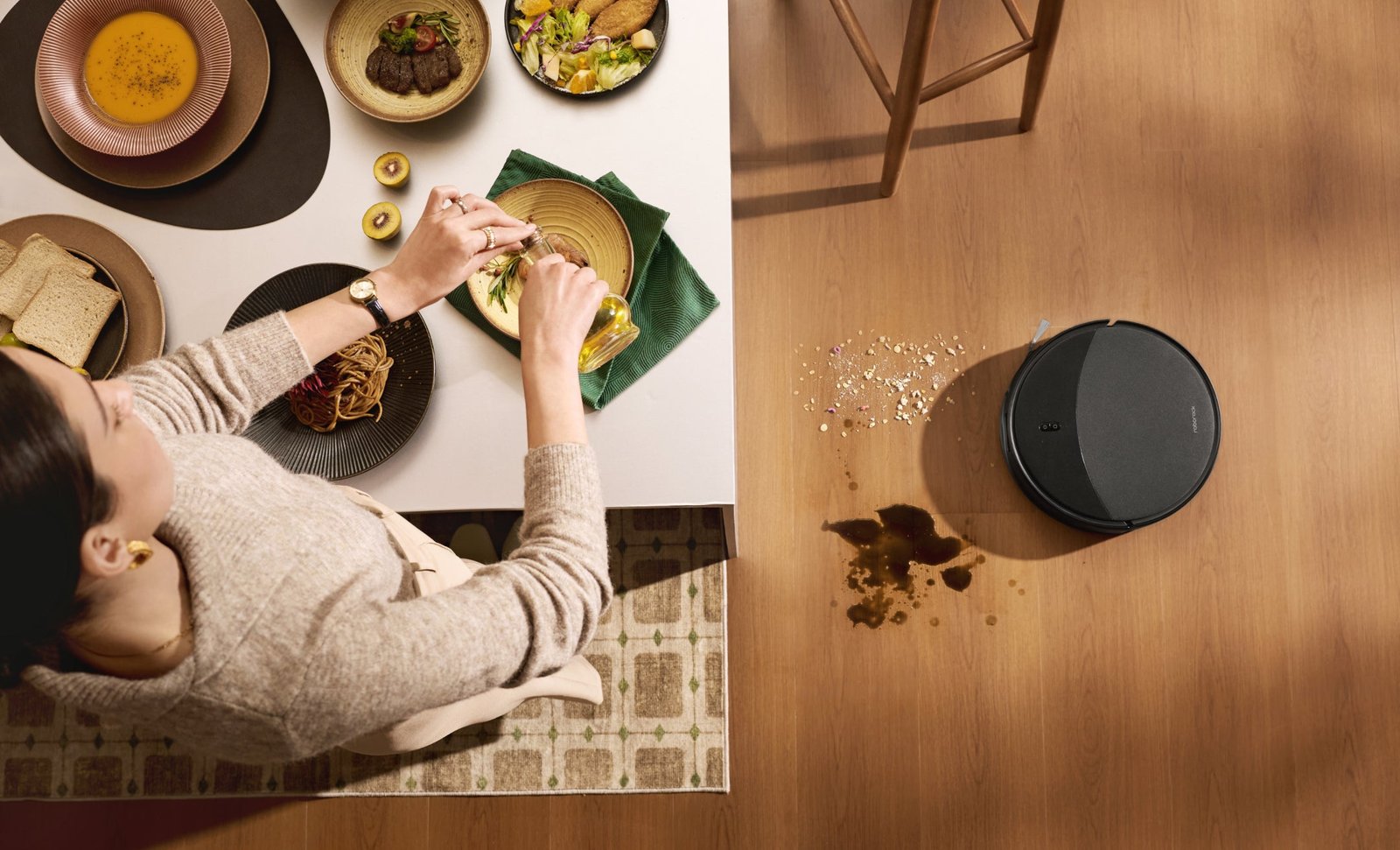
A robot mop’s suitability for parquet depends on the exact floor’s care requirements and how the machine delivers moisture. “For hard floors” is not enough. First establish whether the surface is oiled wood, lacquered wood or a wood-look alternative. If its manufacturer does not permit the cleaning method, leave compatible vacuuming to the robot and wash the floor as directed.
On this page
Identify the floor before choosing an app setting
Quick-Step gives separate care instructions for oiled and lacquered wood, distinguishing dry dirt removal from sparing use of moisture. That does not approve every robot mop. A product recommended for a manual mop is not automatically approved for a robot’s tank or detergent dispenser.
| Surface | Establish | Do not assume |
|---|---|---|
| Oiled wood | Cleaner, moisture method and surface maintenance | A lacquer-care product also suits oil |
| Lacquered wood | Coating condition and permitted care | A scratch or open joint resists moisture like intact flooring |
| Laminate or vinyl | Exact collection and manufacturer instructions | A wood appearance means wood-care requirements |
| Unknown flooring | Documents, installer or material identification | The lowest water setting guarantees compatibility |

Minimum water is not a standard measurement
Level “1” in two apps need not leave the same amount of moisture on the floor. Pad preparation, repeated passes, travel speed and returns from washing can change the result. A setting that works on kitchen tiles should not automatically be applied to parquet elsewhere in the same home.
Roborock’s wood-care guidance also discusses controlling moisture and using a slightly damp mop. This concerns the cleaning method; it does not establish compatibility between every machine and finish. If the floor instructions are unclear, send its manufacturer the device name and cycle description rather than only asking whether water is allowed.
The first cycle, when both instructions allow it
- Remove dry grit and inspect wheels and pads. Dirt carried from the hallway can change the cleaning result.
- Choose a small, accessible area without damage. A trial is not permission to ignore a floor-care restriction.
- Select an allowed, restrained mopping routine with one pass. Stay nearby to observe what happens.
- Inspect turns, pauses and the first stretch after the mop returns from washing at the dock.
- If excessive moisture appears, stop and follow the floor manufacturer’s care instructions.
There is no universal drying time in minutes that establishes safety for every wood product, coating and room. No visible puddle is not proof that the surface will tolerate daily intensive washing. Include joints, edges and the docking area when assessing the first cycle.
An observation sheet beats guesswork
| Stage | Record | Decision |
|---|---|---|
| Before starting | Finish, board condition, mode and pad cleanliness | Use only a permitted method |
| After pad washing | The trail across the first few metres | Check for excess moisture |
| After finishing | Surface, joints and docking area | Assess against floor-care instructions |
| Next permitted trial | One setting change | Do not change solution, pad and pass count together |
Separate parquet from tiles and carpets
If the app supports room settings, create separate tasks for wood and tiles. Check the connecting routes too: a robot can return with a wet pad through an area you never intended to mop. A room label on a map does not establish transit behaviour.
The dock also needs suitable flooring and room for inspection. Do not insert an improvised mat that changes its docking height. Use a solution permitted for the station and compatible with the floor. When parquet compatibility remains uncertain, a useful division of work is regular robot vacuuming and less frequent manual cleaning according to the floor instructions.
Finally, judge the whole routine rather than the appearance of one cleaned patch. Emptying the robot, washing pads and keeping grit away from its wheels are still part of maintaining a wooden floor. Automation is valuable when its normal cycle fits the material, without requiring constant corrections after every room.
Your next step
Record the flooring manufacturer, finish and approved cleaning method before selecting robot settings and cleaning solution.
Sources and method
Documentation checked on 12 September 2026. Model information comes from manufacturer materials. Acceptance sheets, comparison procedures and worked examples are RoboMorrow editorial analysis, not results of our hands-on device tests. Confirm requirements for the exact variant and market.