Robot mop cleaning solution: tanks, dosing and dilution
Use only a cleaning solution approved for your robot model, and follow both its label and the robot's manual. First establish whether the machine has an automatic dispenser. A product intended for that compartment may need different preparation from a solution mixed into a clean-water tank. There is no single dilution ratio for every robot, and ordinary floor cleaner is not automatically an equivalent.
Documentation checked on 4 September 2026. This guide draws on the named manufacturers' instructions. It is not a chemical product test and does not replace your exact robot's manual or your flooring manufacturer's requirements.
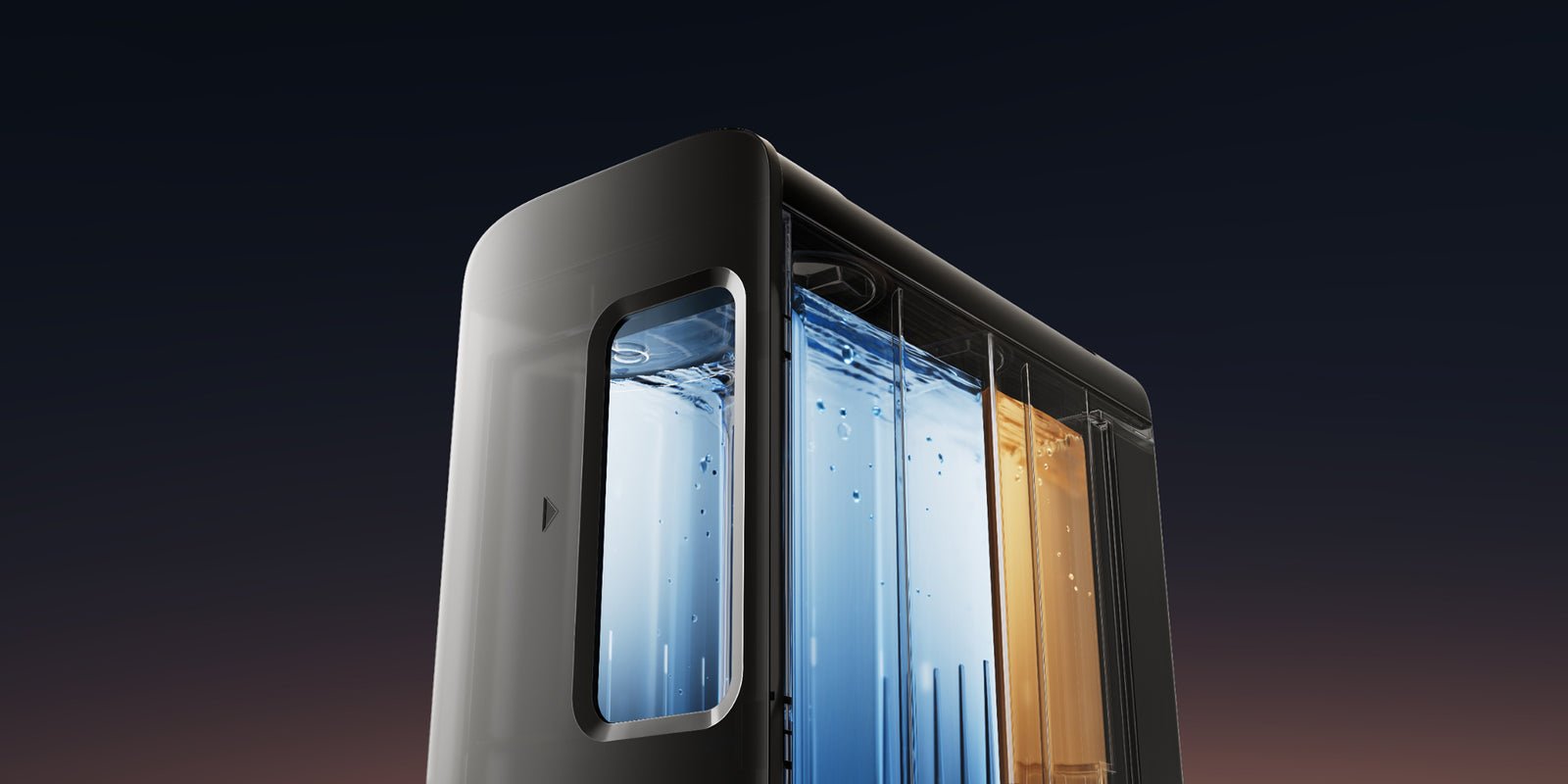
Featured image: MOVA Z60 dual-dispensing illustration, official MOVA material. It shows one example of a dock design, not a universal tank arrangement.
Start by identifying three different containers
| Container | Purpose | Common mistake |
|---|---|---|
| Clean-water tank | Supplies the mopping or washing system, depending on the design | Adding cleaner by eye despite an active automatic dispenser |
| Solution compartment or cartridge | Holds a product that the machine doses | Diluting a product that should be added undiluted to that dispenser |
| Dirty-water tank | Collects used water | Treating it as a compartment for detergent or fragrance |
The largest tank is not necessarily where the cleaner goes. Read the setup instructions and the markings on the dock. If you buy a used machine, also verify that its fitted dispenser is the version described in the documentation. The outside appearance of a station does not establish how its solution is dosed.
Why “always use 1:300” is poor advice
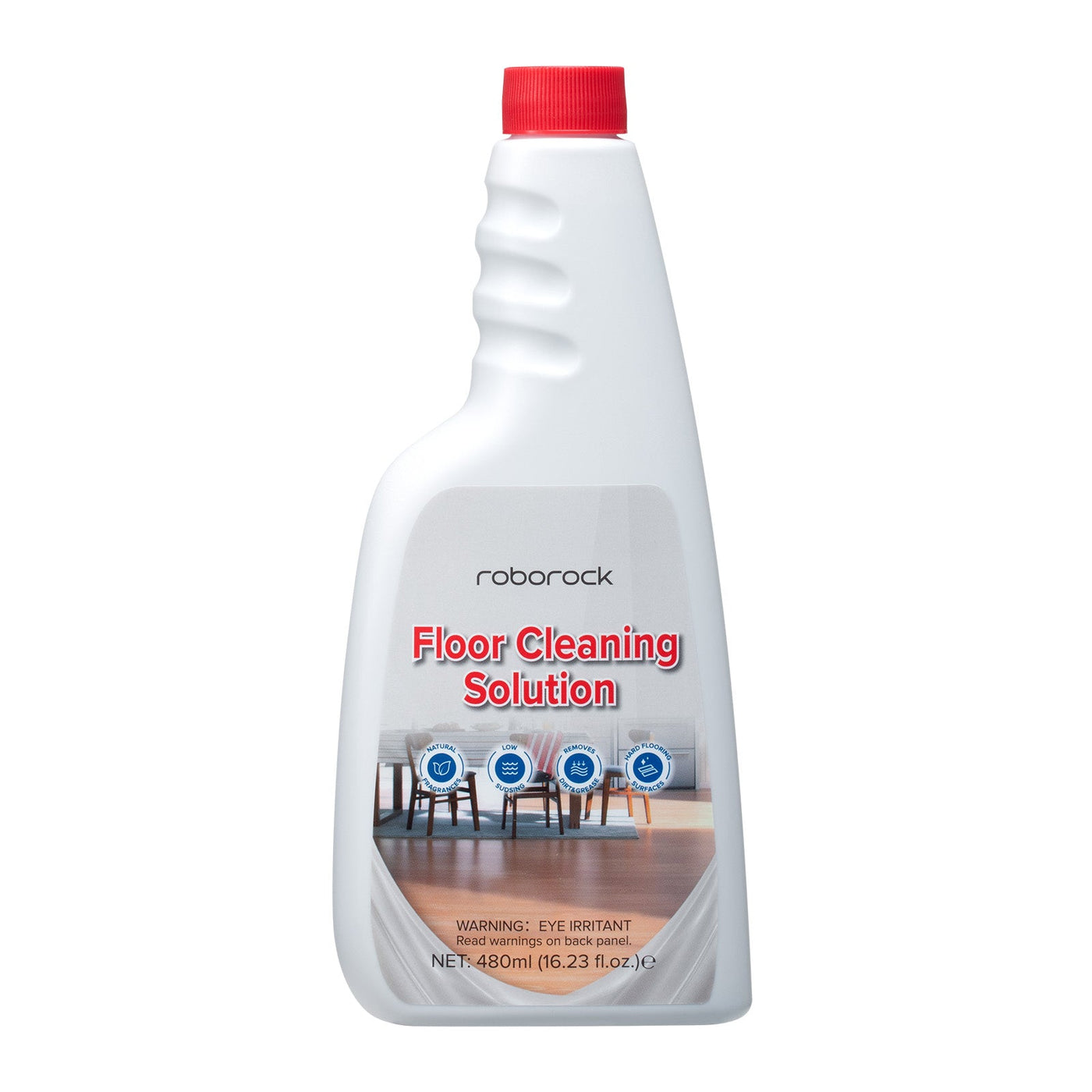
A Roborock support answer specifies a 1:300 dilution for its recommended solution. However, the UK listing for a particular Roborock 480 ml cleaner gives 1:200 for a water tank and undiluted use in an automatic dispenser. These are product and application instructions, not permission to choose any ratio you prefer.
The practical lesson is to stop memorising one number for an entire brand. Read the bottle you actually own and check compatibility with your machine. If its label and the model's manual conflict, pause and resolve that conflict with the manufacturer or seller. Do not guess, add extra concentrate or combine formulations to compensate.
How to calculate a dose when the label permits mixing with water
The following values demonstrate arithmetic for the stated ratios only. They do not mean every robot allows detergent in its large water tank. Establish the correct dosing location before calculating millilitres.
| Label ratio | Water | Cleaning solution |
|---|---|---|
| 1:200 | 1 litre | 5 ml |
| 1:200 | 4 litres | 20 ml |
| 1:300 | 1 litre | Approximately 3.33 ml |
| 1:300 | 3 litres | 10 ml |
Divide the water volume in millilitres by the second number in the ratio. For example, 4,000 ÷ 200 = 20. Use a measure reserved for the product and do not exceed the tank's maximum fill line. A capful is not a standard unit: different packaging can have different cap capacities.
Do not repeatedly add a fresh dose of concentrate to a tank containing a mixture of unknown strength. Record the correct quantity for the fill volume you use and keep the instructions with the bottle. If several people maintain the robot, a short label next to the dock can prevent accidental double dosing.
Automatic dispensers: do not dilute “just to be safe”
The referenced Roborock product illustrates that one cleaner can require different preparation depending on where it is used: diluted in water, but undiluted in the appropriate cartridge. Do not transfer this rule automatically to another solution or machine. The product, compartment and dosing function must all be compatible.
The Dreame Aqua10 Ultra Roller manual describes separate compartments: A for cleaning solution and B for the specified pet-odour solution. It warns against mixing or interchanging them. This is an instruction for a particular system, not permission to pour an arbitrary deodoriser into a robot dock.
If your app has an automatic solution setting, check what it does in the manual. Do not compensate for an unfamiliar dispenser by also adding a dose to the clean-water tank. Establish the configuration first. More detergent is not the default solution to disappointing mopping results.
What should stay out of the system?
Do not substitute washing-up liquid, a general bucket-cleaning concentrate, fragrance oil, alcohol or disinfectant for an approved robot solution. Roborock warns that unsuitable products can cause foaming and tank problems. The Aqua10 manual restricts additives to an officially approved solution and excludes liquids such as alcohol and disinfectant.
A label saying “for hard floors” describes the surface, not verified compatibility with your robot's pump, seals or dispenser. Likewise, low-foaming does not automatically mean suitable. MOVA's own cleaning-solution guidance also directs users to the appropriate dilution instructions; it is not a common recipe for every brand.
What about vinegar and descaling?
Do not add vinegar or descaler to the clean-water tank because an online tip recommends it. The Aqua10 manual contains an important distinction: it describes local scale removal from a particular heating-module surface while explicitly prohibiting vinegar or descaler in the clean-water tank. Cleaning a specified component is not the same as flushing that substance through the system.
If your model's manufacturer permits descaling, follow its exact procedure, approved product and safety conditions. Do not generalise one robot's maintenance instructions to another. Where the documentation is unclear, ask support instead of devising a mixture or combining cleaning chemicals.
Streaks, smells or foam: extra detergent is not the first answer
Streaks do not automatically prove there is too little cleaner. Check product compatibility, dosage, mop condition, water settings and the requirements of your flooring. Change one permitted setting at a time so that you can understand what affected the result. Do not add a second cleaning product to an existing mixture.
If you see foam, a leak or an error message, stop operation and follow the manual and support guidance. Do not keep running cycles in the hope that foam disappears, and do not improvise a chemical neutraliser. First establish the cause and the safe way to remove an unsuitable product.
Do not cover a dirty-water-tank smell with perfume. Emptying and cleaning that tank are separate maintenance tasks. Our robot dock cleaning guide covers that routine. For budgeting, pair it with the guide to annual ownership costs.
How to compare cleaning-solution value
Confirm the exact product's compatibility before comparing its price per litre of concentrate. A larger bottle is not necessarily better value if it requires another dilution or does not suit your dispenser. Compare identical formulations and the number of permitted fills they provide, not just the volume printed on the packaging.
For example, if the approved dose is 20 ml per fill, a 480 ml bottle provides 24 such doses arithmetically. That is not a prediction of how many months it will last: consumption depends on the model, area and cleaning schedule. Store the solution in its labelled container as directed, away from children and pets.
For an EU purchase, use your local delivered price in euros and divide it by the relevant number of doses; do not compare an imported bottle's headline price without checking delivery and the formulation. A familiar brand name on another national storefront does not establish identical instructions.
If you are still choosing a machine, compare the Dreame Aqua10 and MOVA Z60 and read what a robot dock actually automates. Automatic dosing can reduce manual measuring, but it does not remove the need for a compatible product.
Frequently asked questions
Can I mop with water alone?
Yes, where the model's instructions allow it. Check the flooring requirements and any relevant dispenser setting as well. Running out of the right solution is not a reason to replace it with a random household cleaner.
Can I use another brand's solution?
Do not infer compatibility from its smell, colour or a generic “for robots” label. You need confirmation for your device and the correct dosing method. Without that, choose the product specified by the robot manufacturer.
Does a robot cleaning solution disinfect the floor?
That does not follow from mopping or from the temperature used to wash a mop inside the dock. Do not treat an ordinary cleaning solution as a disinfectant or add another chemical to try to achieve that effect.
A dosing record: copy the label, do not guess the ratio
Record the exact machine, solution, dosing location and unit. A product for a separate concentrate dispenser is not automatically suitable for pouring straight into a water tank. The machine instructions and product label must describe compatible use.
| Field | Check |
|---|---|
| Label dose | Per litre of water, full tank or dispenser cycle? |
| Actual water volume | The fill level, not the empty tank’s maximum capacity |
| Dosing location | Tank, cartridge or separate dispenser as instructed |
| Result | Residue, foam, moisture and pad condition on the same route |
If the label explicitly gives millilitres per litre of water, multiply that dose by the actual litres. Do not independently convert a ratio such as 1:200 without establishing whether the manufacturer refers to water or final solution. Ask the manufacturer about conflicting instructions. A larger dose does not demonstrate better cleaning.
Sources and method
Specifications are manufacturer claims. Buying judgements are editorial inferences; external test findings are attributed to their authors. Last checked: 4 September 2026.