XcanMow Mix 2000 Debuts in Europe With LiDAR + Vision and No RTK
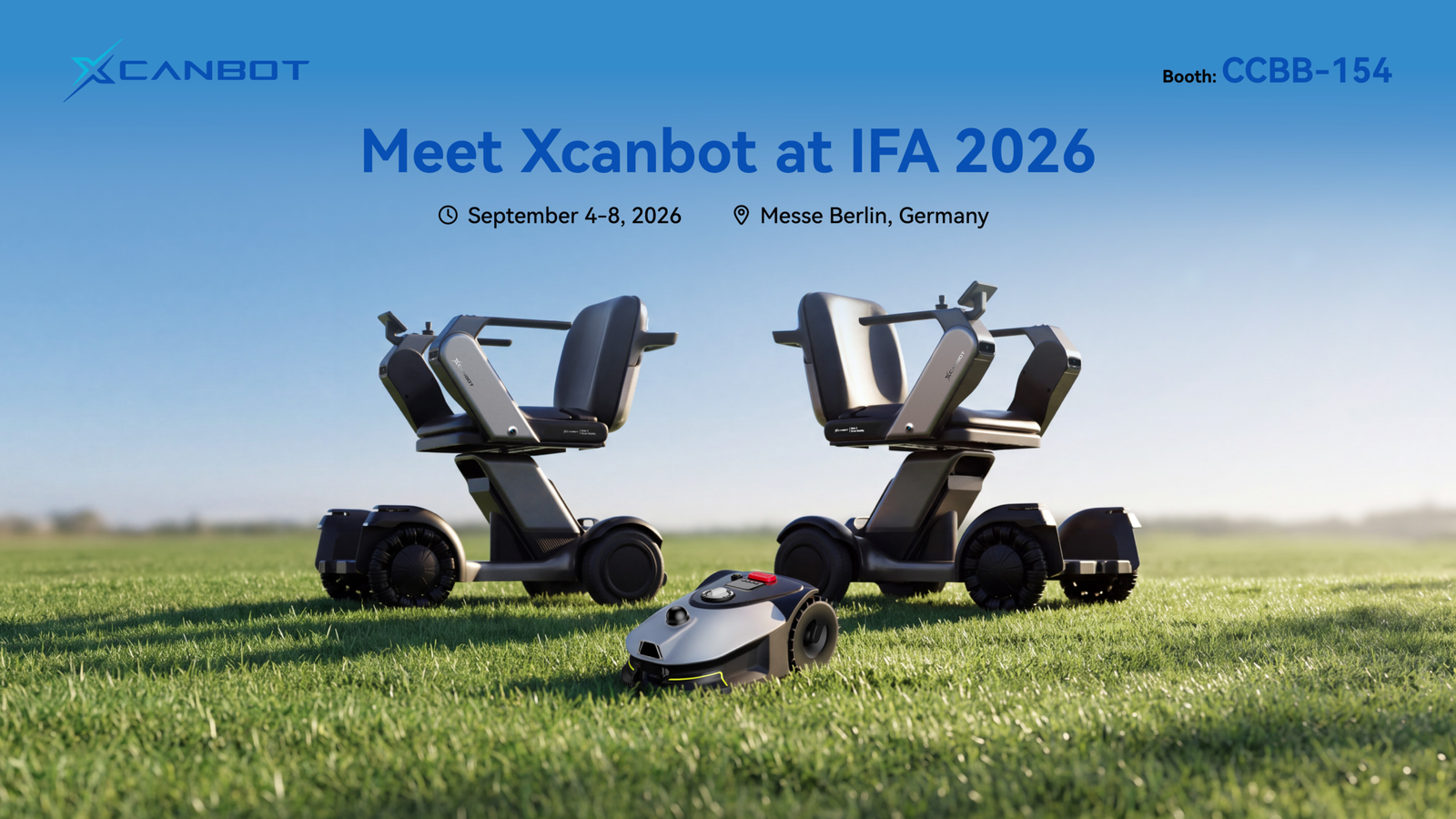
Xcanbot is targeting one of the most interesting parts of the robot-mower market: navigation without a perimeter wire and without a local RTK antenna. XcanMow Mix 2000 combines LiDAR with cameras, is designed to build a 3D map on its first run and, according to the company, maintain roughly 2 cm positioning accuracy in shade, next to walls and after dark.
On paper, that sounds like a direct response to the real-world places where satellite-heavy systems can struggle: tree cover, narrow passages and buildings. Before IFA, however, there is no representative independent operating test. RoboMorrow therefore treats the Mix 2000 as an interesting product preview, not a review and not a buying recommendation.
What Xcanbot claims for the Mix 2000
- Navigation: proprietary XcanSense combining LiDAR and camera vision.
- No boundary wire, RTK antenna or separate base station.
- Roughly 2 cm positioning in difficult conditions — manufacturer claim.
- Up to 2,000 m² and around 180 m²/hour.
- 55 cm narrow passages, slopes up to 25 degrees and obstacles up to 5 cm.
- 30–60 mm cut height, three-blade disc and a claimed 61 dB operating level.
- multi-zone mapping, rain sensor, IPX6 body, swappable battery and resume-after-charge behavior.
- 4G and GPS as standard, with PIN and lift alert.
The most interesting feature is what it does not need
The market moved from perimeter wires to RTK and is now adding systems designed to reduce dependence on satellites. RTK can be excellent in open conditions, but practical performance depends on sky visibility, plot geometry, multipath and implementation. Tall trees, walls and narrow returns beside a house are common edge cases.
RoboMorrow has a guide focused on that exact problem: robot mowers under trees and weak RTK. Mix 2000 fits the LiDAR/vision branch because it tries to localize from the environment itself. That does not mean LiDAR + vision automatically wins. Long-term testing still needs to examine rain, dirty sensors, repeated visual patterns, low and thin obstacles, garden changes and boundary accuracy.
“2,000 m²” does not automatically mean an easy 2,000 m²
Maximum area ratings always need margin. A divided garden with narrow connectors, many obstacles and aggressive grass growth creates a different workload from a simple open rectangle. Our guide to choosing a mower around the 2,000 m² class explains why effective throughput, charging and navigation complexity matter alongside the catalog maximum.
Xcanbot quotes about 180 m²/hour and automatic resume after charging. Independent testing will need to show the real effective rate after turns, obstacle avoidance, docking and replanning are included.
IFA is the first useful checkpoint
The Mix 2000 is scheduled for live demonstrations at booth CCBB-154 from 4 to 8 September. That should make it possible to verify basic behavior such as initial mapping, narrow-passage navigation and obstacle response. A trade-show demo still cannot replace weeks of outdoor testing across weather and grass conditions.
Xcanbot plans crowdfunding later in 2026 and has not announced the price. That is a major missing variable. Robot-mower ownership depends on service, spare parts, warranty, software stability and long-term support as much as the navigation stack. Kickstarter also adds delivery-timing and final-specification risk.
What about Poland and the EU?
A European IFA debut signals market intent, but it does not equal normal retail availability. There is currently no confirmed European price, Polish retailer, local service structure or delivery date. Mix 2000 should therefore not yet be treated as a fully available contender in a “best robot mowers 2026” ranking. It belongs in an upcoming/watchlist section until the commercial details become real.
For readers comparing navigation approaches now, see our guide to network RTK, LiDAR and vision without a local RTK base and the broader 2026 robot-mower buying guide.
RoboMorrow status
Publish as an IFA preview. The architecture is interesting because it targets a genuine RTK weakness, but we assign no review score and make no hands-on claim. The next material updates are price, final specification, EU sales start and independent real-garden testing.
Sources
Xcanbot / GlobeNewswire — official IFA release · XcanMow — launch page