Robot vacuum running cost over 5 years: bags, filters, repairs
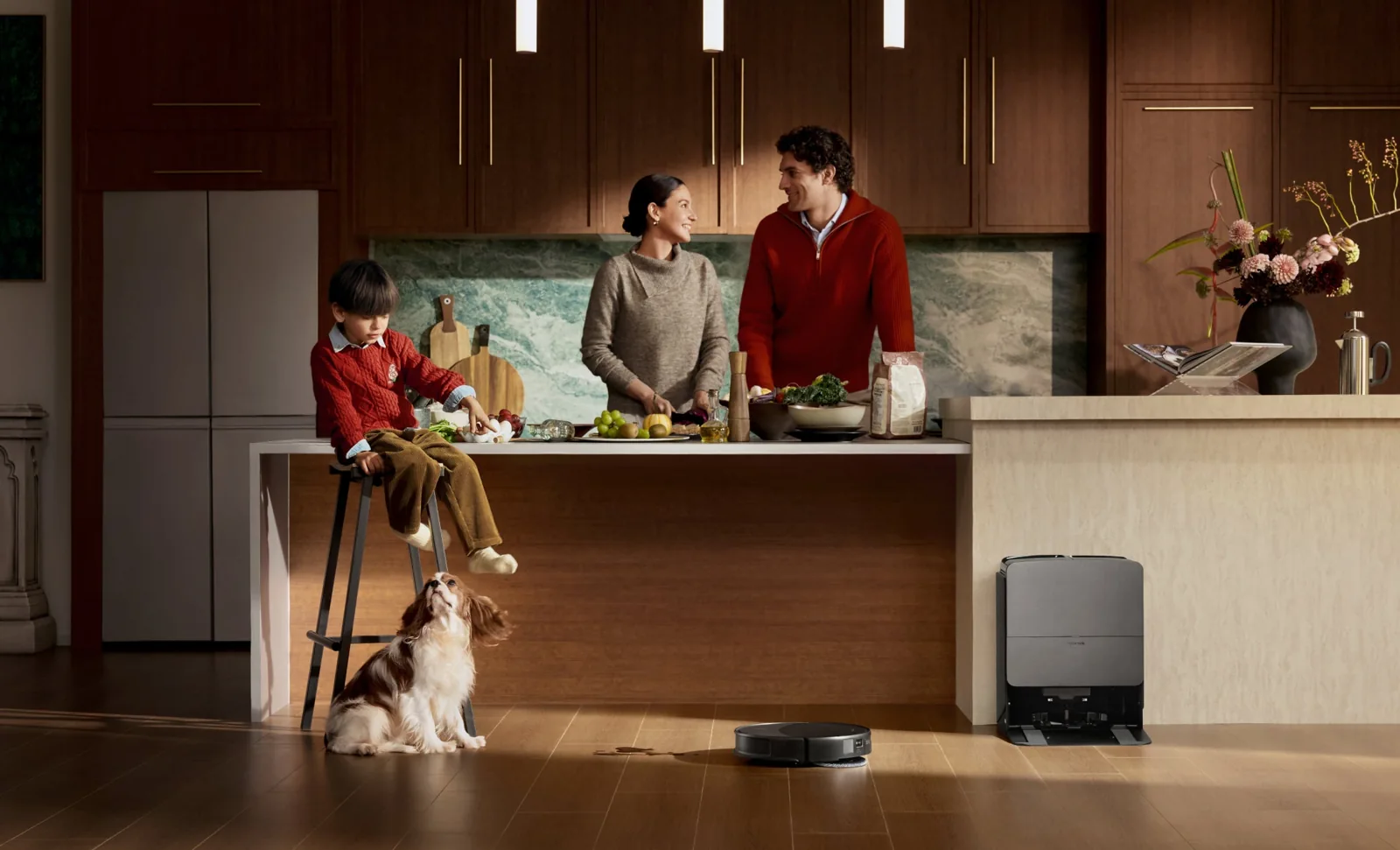
A €500 robot vacuum may cost more to keep running than a pricier model. The sticker price excludes dust bags, filters, mop pads, brushes, approved solution and potential dock repairs. This is a transparent way to estimate five-year total cost of ownership, without guessing exact component life or passing fictional numbers off as actual European retail offers.
Watch the actual maintenance operations
Roborock Support demonstrates Saros 20 upkeep. This is not a RoboMorrow cost test or universal replacement schedule.
First principle: a five-year budget does not guarantee five years of operation
Total cost of ownership (TCO) is the purchase price plus actual consumables, energy, servicing and the owner’s time. Part intervals differ across models and conditions. Some machines last beyond the period; others may need work sooner. The five-year horizon is a planning device, not a product durability prediction.
Separate actual planned spend from a repair contingency. A battery replacement is a risk scenario, not a forecast of failure. Read warranty terms before assigning a repair cost and do not include a guessed value for your own time as though it were money paid to a supplier.
| Component | Five-year calculation | Typical trap |
|---|---|---|
| Robot and dock | Actual checkout price plus delivery or installation | Comparing different dock bundles |
| Disposable bags or bin | Annual changes × actual local pack price × 5 | Heavy pet hair changes replacement rate |
| Pads, brushes, filters | Use model-manual intervals plus physical inspection | Assuming all compatible parts work equally |
| Cleaning solution, water and power | Annual use × applicable local tariff | Heated washing and drying use additional energy |
| Service and repair | Confirmed repair spend plus separate contingency | A contingency is not an actual invoice |
Three illustrative ownership budgets — not price quotes
These are editorial hypothetical scenarios, not market prices or model scores. Equipment price and yearly material/energy totals are shown as rounded EUR equivalents of the PLN calculation at a fixed editorial conversion of about €1 per EUR. They are not a spot exchange rate, a Polish shop converted into an EU offer or a promise of delivery. No resale value or financing is assumed.
| Scenario | Initial hardware | Consumables + power / year | Five-year repair reserve | 5-year TCO |
|---|---|---|---|---|
| A — simple flat | €450 | €55 | €100 | €825 |
| B — family dock system | €900 | €90 | €175 | €1,525 |
| C — intensive wet cleaning | €1,375 | €150 | €300 | €2,425 |
Example B: €900 + 5 × €90 + €175 = €1,525. The €175 reserve is a planning assumption, not a payment that has occurred. Without it the five-year estimate would be €1,350. Replace every assumption with your own current local price.
Replacement frequencies: read the exact regional manual
The Roborock Saros 20 European manual describes a filter cleaning schedule around two weeks and a replacement window of roughly six to twelve months; mop cloths have a shorter one-to-three-month replacement guidance depending on condition. Those are model-specific recommendations, not a universal industry standard. Roborock Support suggests roughly eight weeks between disposable-bag changes but warns that actual use varies.
Before buying multi-packs, check the component part number and the dock variant. Retain your invoice and verify what is actually covered for the battery, pumps and dock electronics. Monitor the first month of real use before annualising parts purchases; some households replace items far more often than others.
Bagged versus bagless docks: convenience is a cost too
A sealed disposable bag may reduce contact with fine dust, at the expense of recurring purchases. A bagless cyclone avoids buying bags but needs the owner to open and clean a dusty container. Allergy concerns and the time needed to wash internal surfaces belong in the decision.
A dock plumbed into water can reduce carrying containers while adding installation dependencies, filters and leak management. There is no free automation. Compare the chores removed each week with the chores moved to the station.
Build your own ten-minute worksheet
Record the checkout price and three annual baskets: dry-cleaning consumables, wet-cleaning consumables and actual servicing. Keep a replacement log for the first quarter, then revise the annual estimate. If you buy parts in advance and do not use them all, distinguish the stock still on hand from used components.
Do not use a currency conversion as evidence of an available local offer. Confirm spare parts and local warranty service in your country before ordering. If a model is sold with region-specific detergent, plugs or cleaning accessories, price that exact version.
Decision: annual ownership is more useful than a discount banner
A good five-year purchase is one whose recurring costs you understand, with the after-sales support and maintenance routine you are willing to accept. The cheapest device may not win on upkeep, but an expensive flagship will not save enough to justify itself if you never use its differentiating functions. Compare the actual job completed, not the feature list.
Pre-purchase checklist: calculate the exact model, not the marketing family
Before comparing two promotions, write down the precise robot-and-dock variant, the price of a pack of genuine dust bags, replacement filters, mop pads and post-warranty servicing. If the seller cannot identify the part number, request it. A consumable listed for a similarly named model is not evidence of compatibility.
- Choose replacement frequency using the exact manual and the first 30–90 days of household use.
- Separate heavy wet-cleaning months from ordinary vacuuming.
- Measure power use where the station heats water or dries pads instead of borrowing figures from another model.
- Keep statutory/manufacturer warranty separate from any paid retailer extension.
- Recalculate with the less expensive robot: recurring materials may change the ranking.
Should you bulk-buy consumables?
A large spare-parts kit may look economical, but confirm exact fit, storage conditions and local service availability before stocking five years of supplies. A brush or bag in the same product family is not necessarily interchangeable. Consider a checked annual supply, then revise after observing actual usage.
Compare a real model and local consumables — market matters
Use an exact robot-and-dock bundle when estimating ownership. For US readers only: Roborock Saros 20 — Amazon (affiliate link, US). The exact listing was checked on 20 October 2026; prices, current stock and delivery for your address must be rechecked at checkout. For European readers: use the RoboMorrow country-specific buying guide to find a documented local seller; a US listing is not an EU offer, and it is not converted into euros. Do not import a US dock variant without confirming voltage, tax, warranty and service.
Amazon affiliate disclosure: as an Amazon Associate, RoboMorrow may earn from qualifying purchases. This link is specifically to Amazon.com; it does not silently direct readers to Amazon Poland. No EU price or stock is implied.
Related tools and articles
Sources and method
Original manufacturer video: Roborock Saros 20 — Routine Maintenance (Roborock Support) (2026-07-14).
Primary documents and manufacturers’ manuals checked on 20 October 2026. This is an editorial analysis, not a RoboMorrow hands-on laboratory test. Scenario amounts are not store prices.
- Roborock Saros 20 — CE user manual
- Roborock support — dust-bag interval
- Roborock Saros 20 — model and documentation
Where to buy models from this article
We show only exact verified Amazon product pages. Before purchase, confirm the variant, seller, warranty and box contents.
Exact Amazon links. Where a verified RoboMorrow marketplace tracking ID is active, the link is an affiliate link and we may earn from qualifying purchases. Price and availability can change after you click.