Window-cleaning robot power: cord, battery or emergency backup?
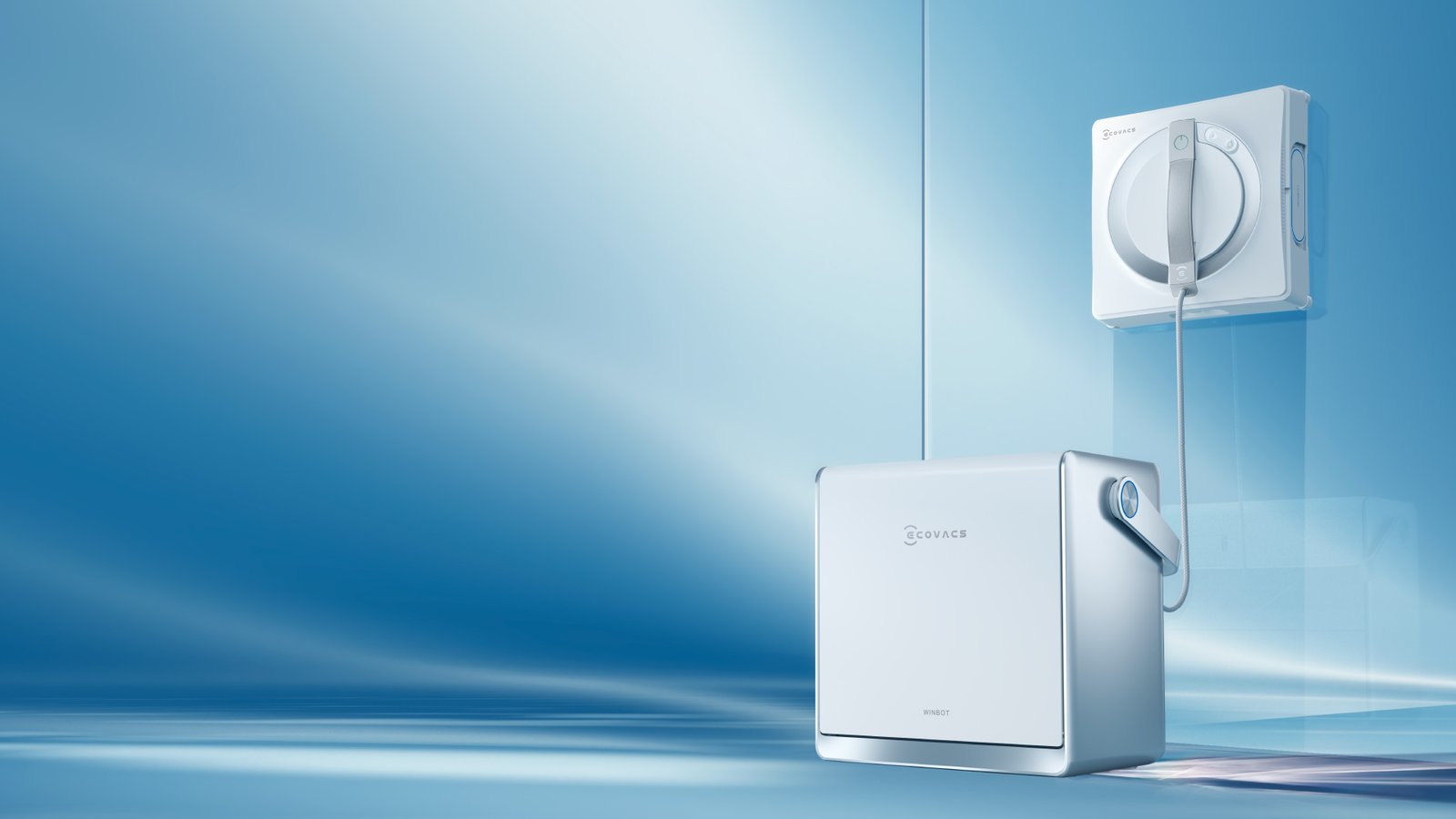
A battery in a window-cleaning robot may power cleaning or provide emergency attachment support only. Separate those functions before buying. Even a battery station that works away from a socket can remain connected to the robot by a cable. Portable does not necessarily mean cordless on the glass.
On this page
Three power arrangements
| Arrangement | Normal operating power | What to establish |
|---|---|---|
| Mains adapter with backup | A socket during ordinary cleaning | Whether the battery is reserved for a power failure |
| Battery station | A charged station connected to the robot | Usable session, cable routing and moving the complete set |
| Station supporting mains operation too | A manufacturer-approved powered mode | Whether operation while charging is allowed and under which conditions |
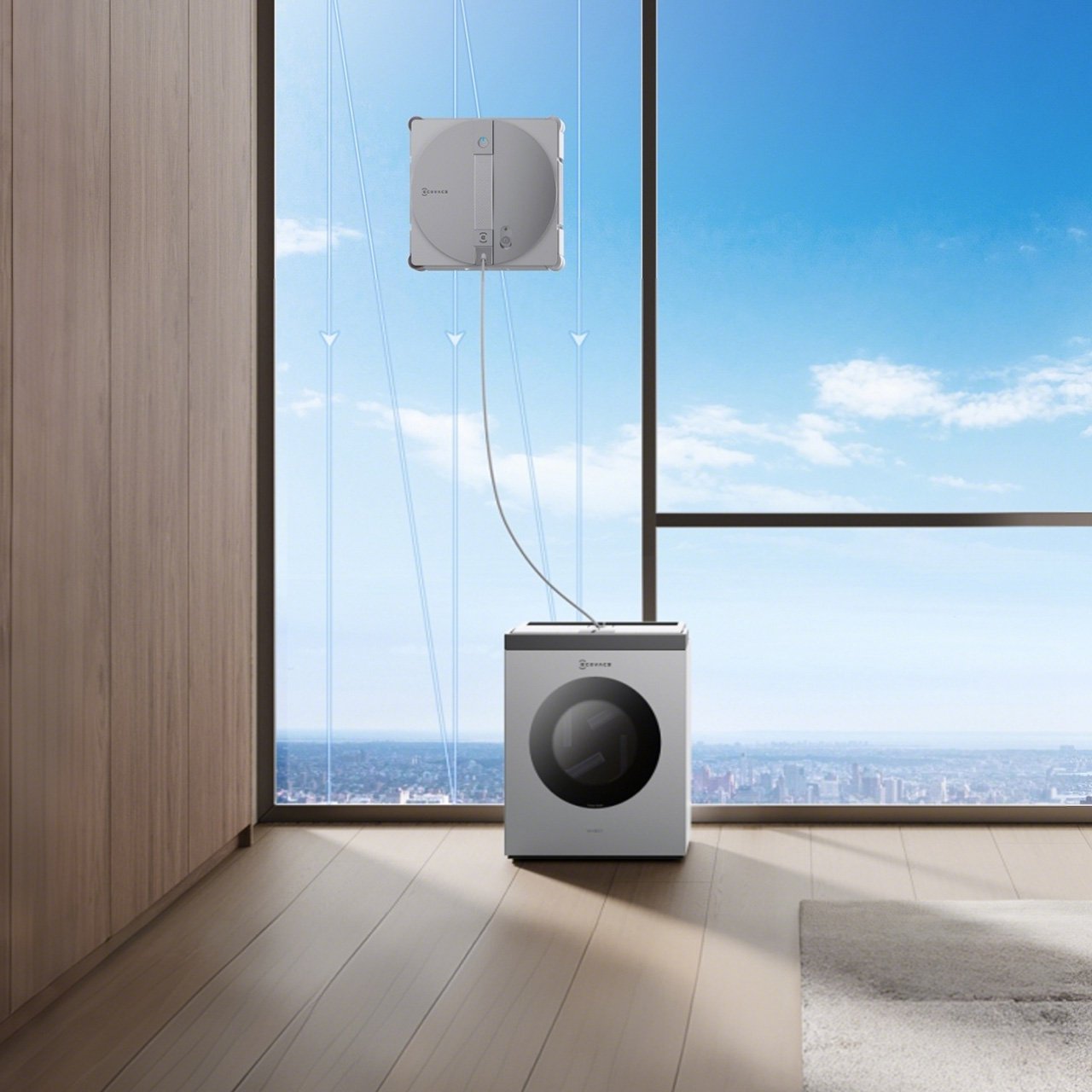
A capacity expressed in mAh is not enough to compare these arrangements. The station battery and an emergency battery serve different purposes. Look for the normal source of operating power, the emergency behaviour and a diagram of the complete station-to-robot connection.
W2 PRO OMNI: operating time versus power-loss protection
ECOVACS’ US W2 PRO OMNI page lists 110 minutes of battery operation and 30 minutes of protection after a power loss. The operating figure carries a manufacturer tolerance and is not our measurement. Its guide describes battery-powered and plugged-in station operation. Do not add the protection period to the cleaning runtime.
For session planning, backup exists to allow the prescribed response to a fault, rather than to clean the next window. Look up separate figures for another model. A similar station name does not establish an identical power system.
Cable length is not the height of accessible glass
Draw the full route from the station to the furthest working point. Part of the cable follows the sill, the safe routing and the geometry of the open sash. A length in the specifications cannot automatically be treated as vertical reach.
Check each window: where the station stands, how the cable runs, whether a sash can trap it and whether the return position remains accessible. Do not extend proprietary connections using arbitrary cables or pull the robot by its cable to compensate for poor station placement.
An illustrative six-pane session
Suppose six glass surfaces each need eight minutes of travel, with five transfers taking three minutes each. That gives 48 minutes of travel and 15 minutes of handling: 63 minutes before setup and final clearing away. This is arithmetic, not a measured WINBOT result or a promise that a particular battery will cover the session.
| Item | Your record | Why it matters |
|---|---|---|
| Travel across glass | Time for the chosen mode and dirt level | Main operating workload |
| Transfers | Number of window changes and handling time | Extends the session even while the robot is not cleaning |
| Rework | Which panes need another pass | Changes demand compared with a single cycle |
| Break | Permitted charging or workstation change | Avoids planning around emergency backup |
Choose for your window layout
With accessible sockets and a long session, a practical cable route and the set’s permitted continuous operation matter. Across several separated windows, a battery station may reduce adapter changes, but the equipment and restraint still need moving. Measure that handling step instead of judging only the advertised runtime.
Before ordering, request a picture of the complete connection: socket, adapter, station, robot and restraint. If the description does not explain what happens when power is lost or the battery runs low, obtain that answer from the manufacturer. Do not assume that “UPS” means normal battery-powered cleaning.
Your next step
Draw the cable route at the most difficult window and count transfers. Compare complete sets, keeping operating power and emergency backup separate.
Sources and method
Documentation checked on 12 September 2026. Model information comes from manufacturer materials. Acceptance sheets, comparison procedures and worked examples are RoboMorrow editorial analysis, not results of our hands-on device tests. Confirm requirements for the exact variant and market.