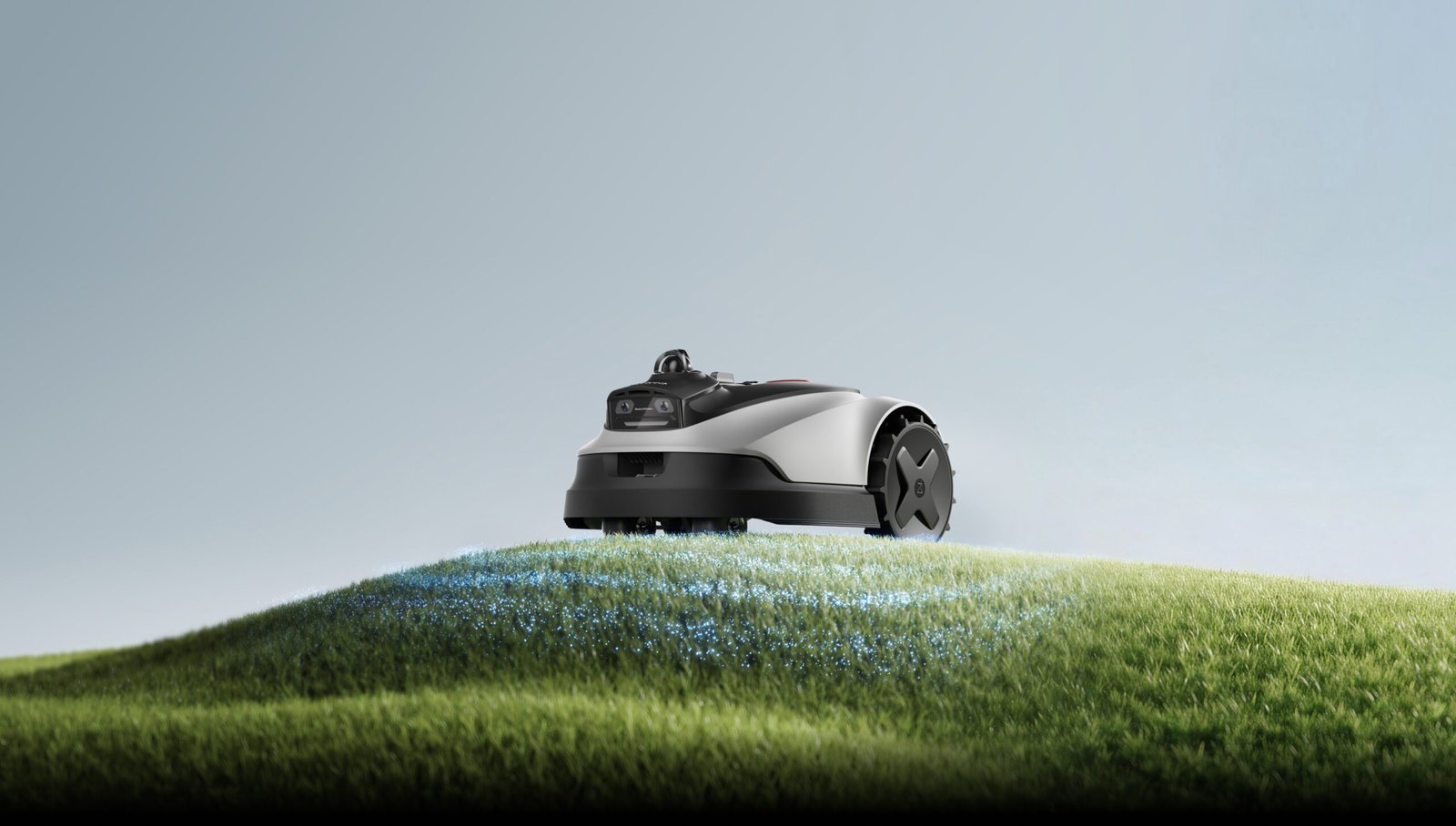
Roborock RockNeo Q2 LiDAR: 360° LiDAR, 3 cm edge and 45% slopes
BUYING IN YOUR MARKET
Availability in your country
Sales, delivery and support can differ by country and exact model. Choose your market to see the evidence we have checked.
Roborock RockNeo Q2 LiDAR: 360° LiDAR, 3 cm edge and 45% slopes
No verified local offer in this dataset
A current local sales offer, exact regional variant, delivery date and service coverage have not been verified for this country in the regional dataset. This does not mean that the robot is unavailable.
- Price
- No verified local price in this dataset
- Delivery
- No confirmed date for your address
- Warranty and service
- Local coverage not verified
“Listed” confirms a product page or sales route, not stock, delivery to every address or local service. “Pre-order” is not immediate availability. Unverified means we lack evidence; it does not mean unavailable. Prices belong to the named market and currency. Confirm the exact version, tax, shipping and support before ordering.
Verified 3 September 2026 from Roborock's official European product page. RockNeo Q2 LiDAR is a new robotic mower built around Sentisphere LiDAR Environmental Perception: 360° LiDAR combined with dual-camera vision. Roborock is targeting automatic wire-free mapping, vision obstacle avoidance and easier setup in gardens where relying on one positioning source can be limiting.
Short answer
Q2 LiDAR is designed to identify lawn boundaries automatically, build its own map and operate without a perimeter wire. Roborock specifies passages down to 0.6 m, slopes up to 45% and vertical obstacles up to 4 cm. Built-in PreciEdge has a 3 cm structural hardware distance to the boundary, while Roborock itself notes that real edge results also depend on lawn geometry and software.
Key RockNeo Q2 LiDAR specifications
| Positioning / perception | 360° LiDAR + dual-camera vision |
|---|---|
| Mapping | AI-powered automatic boundary identification; no perimeter wire |
| Obstacle avoidance | ReactiVision — RGB camera + algorithms per manufacturer |
| Edge system | PreciEdge; 3 cm structural hardware distance to boundary |
| Cutting system | three blades; bidirectional rotating cutting deck |
| Narrow passages | from 0.6 m — manufacturer test |
| Slope | up to 45% — manufacturer test |
| Vertical obstacle | up to 4 cm — manufacturer test |
| Connectivity | charging station also acts as a Wi-Fi amplifier module |
| Price / full specification | not yet published; Roborock says a fuller reveal is coming |
Why combine LiDAR and two cameras?
No single localisation technology is perfect in every garden. RTK is strong in open areas but depends on signal conditions. Vision can classify objects but depends on light and scene quality. Q2 combines 360° LiDAR with two cameras so the mower has more information about geometry and obstacles.
That does not automatically mean “better autonomy.” A serious test should check behaviour under trees, beside hedges, in corners and around low-contrast objects. Useful sensor fusion should reduce the number of map corrections and manual rescues rather than simply add more sensors to the specification list.
Wire-free automatic mapping
Q2 is designed to recognise lawn boundaries and create a map automatically during setup. The app can then apply different schedules and mowing frequencies to zones. The quality of that first map matters because “wire-free” only saves installation time if the user does not spend the same time fixing boundaries in software.
ReactiVision obstacle avoidance
An RGB camera and algorithms are designed to identify obstacles and boundaries in real time and adapt avoidance behaviour. The current official page does not publish a complete object-class list or an independent success rate, so RoboMorrow will not claim that Q2 “recognises everything.”
A useful field test should include a thin hose, toy, low bowl, pine cone, branch and moving person or animal, with repeated runs rather than one staged demonstration.
The important 3 cm PreciEdge footnote
PreciEdge is the built-in edge-cutting module. Roborock quotes 3 cm as the structural hardware distance to the boundary and explicitly notes that real cutting results also depend on edge type and software logic that can change through OTA updates.
That is more useful than a generic “zero edge” slogan. A flat paved border can allow a mower to overlap farther than a vertical wall. Real uncut-strip width should therefore be measured on several boundary types.
Three blades and bidirectional rotation
Q2 uses a three-blade cutting system and a deck that rotates in both directions. Roborock says this improves efficiency and distributes blade wear. Long-term use will be needed to show whether that translates into meaningfully longer blade life or more consistent cutting.
0.6 m, 45% and 4 cm: read the numbers together
The compact chassis is rated for passages down to 0.6 m. Large wheels and a floating deck are rated for slopes up to 45% and vertical obstacles up to 4 cm. All three are manufacturer-test specifications and can depend on surface, moisture, direction of travel and real garden conditions.
For a buyer, the important question is not whether the mower completes one maximum-condition test but whether it repeatedly crosses the same difficult section without slipping or damaging turf.
The charging station as a Wi-Fi amplifier
Roborock describes a Wi-Fi amplifier module in the charging station, intended to extend app connectivity, scheduling and status updates deeper into the garden. That can be useful on larger properties where the home router does not reliably reach remote lawn zones.
Price and availability
The official European Q2 LiDAR page does not yet show public pricing or a complete specification table. It ends with “More to Come”. RoboMorrow therefore does not convert an assumed price to EUR/PLN or publish an unverified delivery date.
At verification time we did not find an exact confirmed Q2 LiDAR listing on Amazon.com or Amazon.pl. The absence of an affiliate link is deliberate.
Q2 LiDAR vs Q105/Q110: is this the same buying decision?
No. Yesterday's RockNeo Q105 vs Q110 comparison serves a different intent: choosing between specific existing-family variants. Q2 LiDAR is a new IFA model and needs its own profile first. A direct comparison becomes useful once final price, area rating and regional differences are confirmed.
What kind of garden looks like the best Q2 LiDAR fit?
The most logical use case is a medium-size garden with several zones, a narrow passage, trees or buildings where the owner wants to avoid a boundary wire and reduce manual setup. The quoted 0.6 m passage capability may matter along side access between front and rear lawns, while the charging-station Wi-Fi amplifier can help when the home router is far from remote zones.
The case is less clear for a very large, open property. Roborock has not yet published the full area rating, battery or runtime, so we do not know exactly where Q2 sits against larger RockMow models or RTK competitors. For the same reason, RoboMorrow is not creating a premature “Q2 vs every 1,500 m² mower” comparison before the final specification arrives.
How to test sensor fusion rather than just the LiDAR label
A useful Q2 test should deliberately make one part of the sensing stack work harder: shade and harsh sun for cameras, dense shrubs and narrow corridors for geometry, and repeated obstacles in different positions. The key metric is not sensor count but false stops, map corrections and human interventions per ten hours of mowing.
It is also worth changing the garden after mapping: move a trampoline, add a temporary bed, open a gate or place furniture on the lawn. If the mapping and perception adapt without a complete new setup, “AI-powered mapping” becomes a meaningful user benefit rather than a launch phrase.
RoboMorrow verdict
RockNeo Q2 LiDAR looks like an attempt to build a simpler wire-free experience around sensor fusion instead of one positioning system. The strongest ideas are automatic mapping, LiDAR + dual camera, narrow-pass navigation and Roborock's unusually explicit 3 cm hardware edge caveat. The largest gaps remain price, full area rating, battery specification and final availability. Until the fuller reveal, it would be premature to pretend this is a complete buying test.
Sources
Where to buy
We do not yet have a verified exact Amazon product page for this model. Check the official source above.
News about this robot and brand
No related news is available yet.
Guides
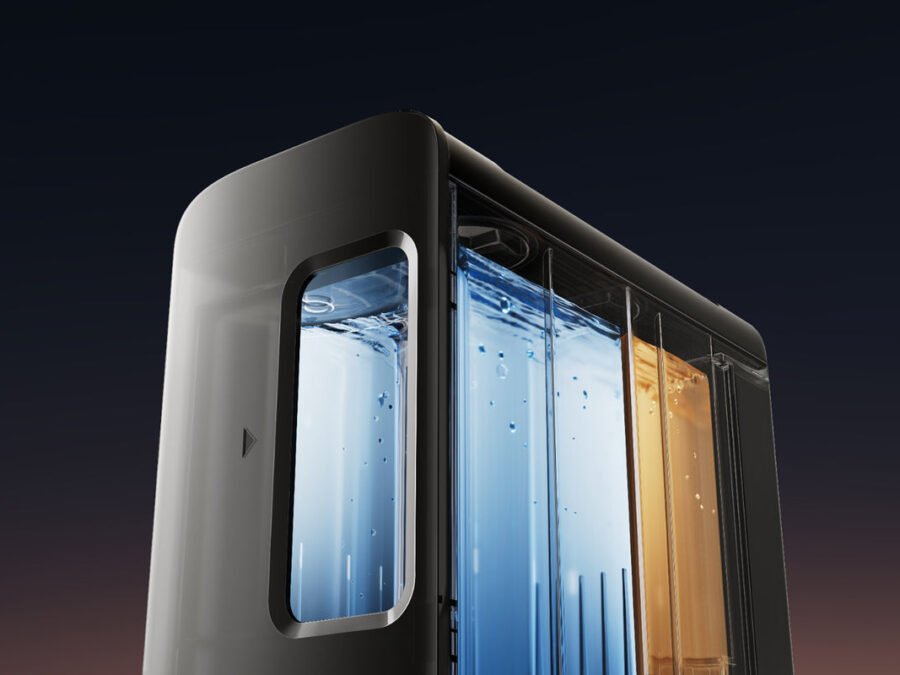
Robot mop cleaning solution: tanks, dosing and dilution
There is no universal robot-mop dilution ratio. Identify the right compartment, check the exact product label and avoid common dosing mistakes.Read more →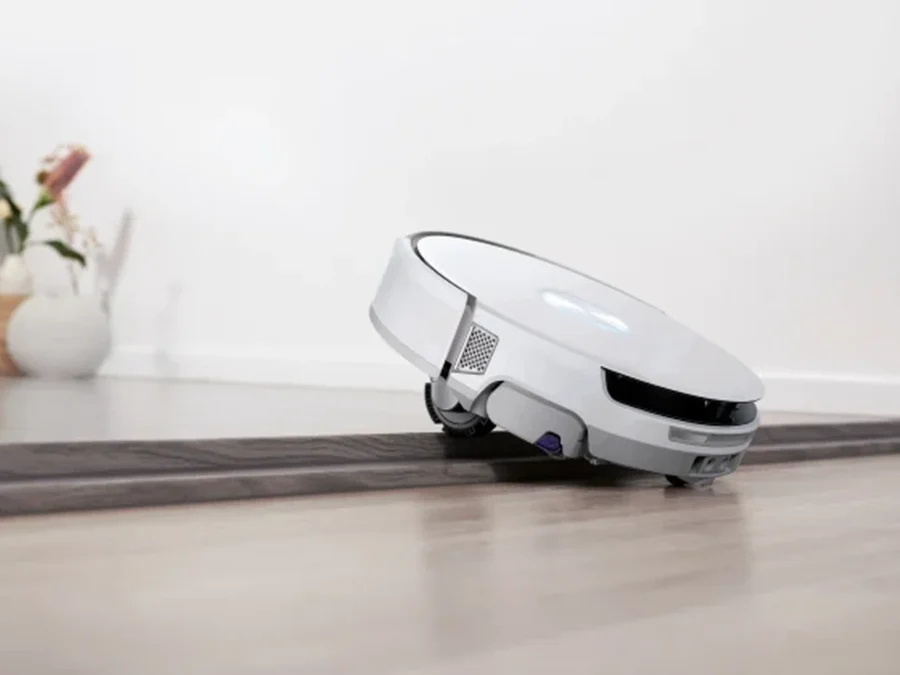
Robot vacuums and thresholds, carpets, cables and pets
How to evaluate thresholds, carpets, cables, low furniture and pet conditions before purchasing a robot vacuum cleaner.
Read more →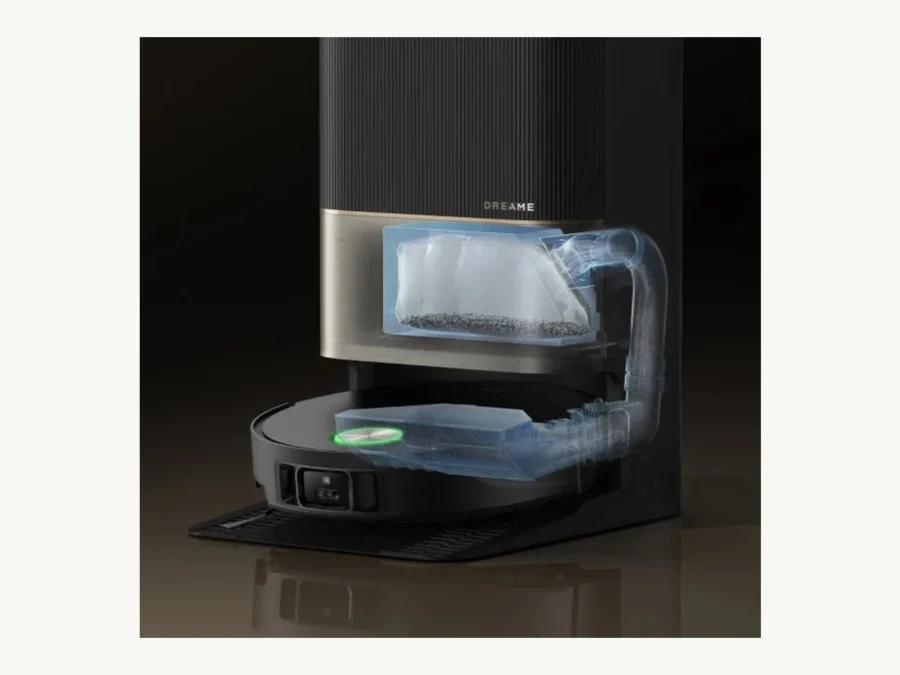
Robot vacuum stations: what they really do and what you are paying for
Auto-empty, mop washing and drying, hot water, detergent, bags or cyclones: what a modern robot-vacuum dock actually automates.Read more →Comparisons and rankings
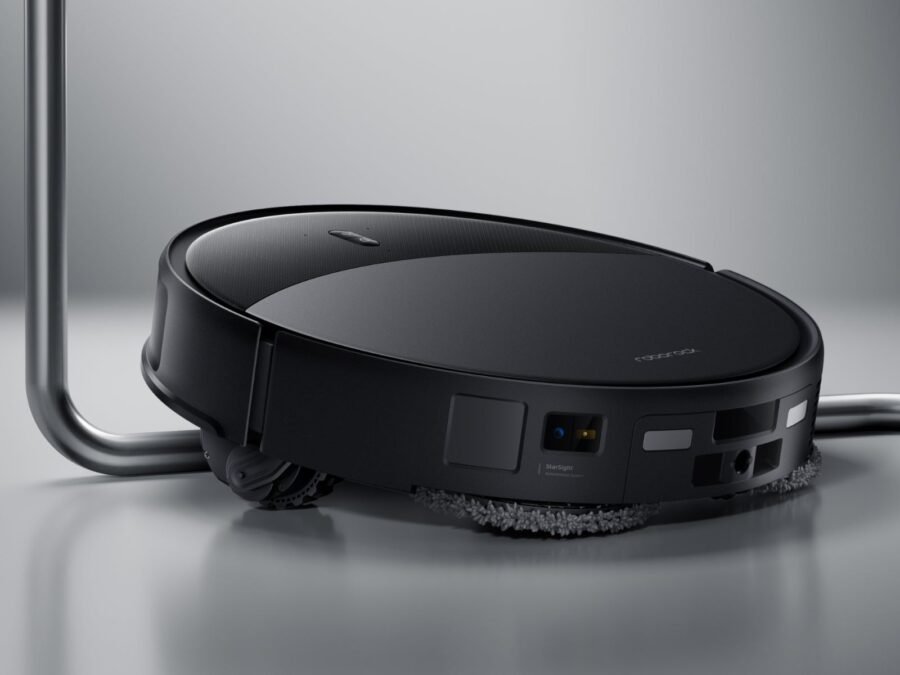
Best low-profile robot vacuums for low furniture (2026)
A slim body does not guarantee access under a sofa. Compare four models and learn which measurements and manufacturer footnotes matter before buying.Read more →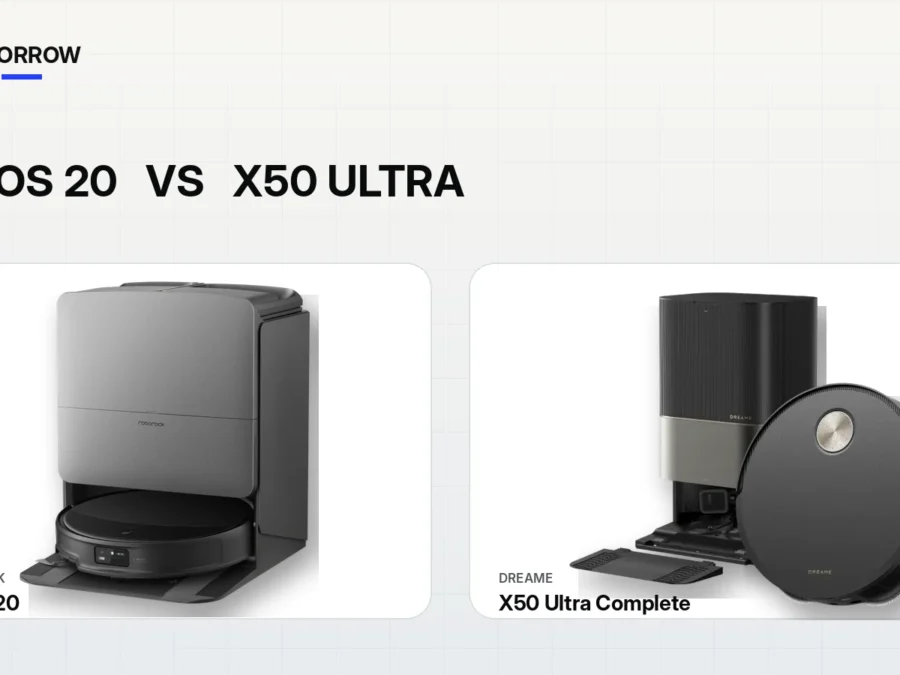
Roborock Saros 20 vs Dreame X50: Which Fits Your Home?
Saros 20 or X50 Ultra Complete? Compare thresholds, low furniture, mopping and the dock. Match the robot to your home and verify the offered bundle.Read more →