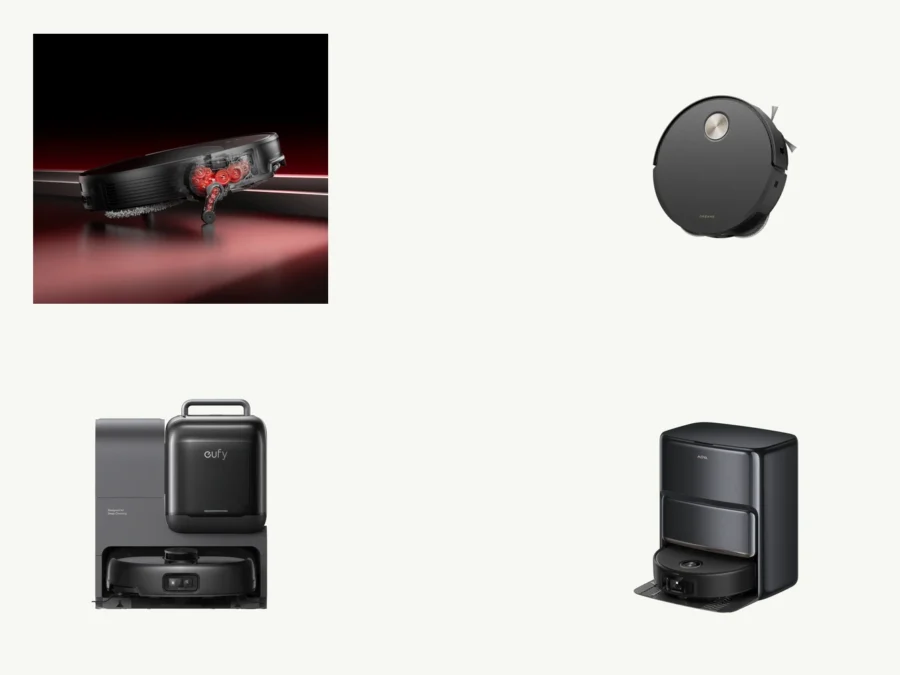
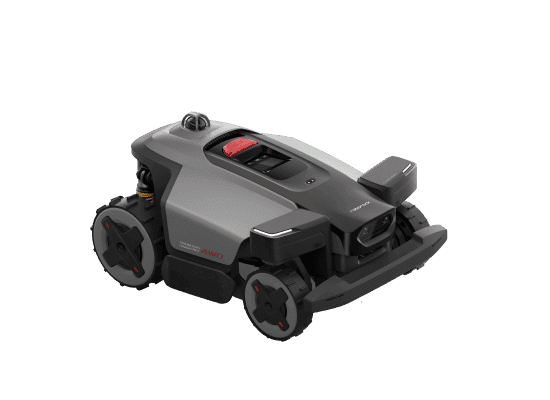
Roborock RockMow Z120 LiDAR (Z1 LiDAR): price and specs
BUYING IN YOUR MARKET
Availability in your country
Sales, delivery and support can differ by country and exact model. Choose your market to see the evidence we have checked.
Roborock RockMow Z120 LiDAR (Z1 LiDAR): price and specs
Germany
Local store offer — check checkout availability
- Seller / sales channel
- Roborock Deutschland specialist dealer
- Price
- See the local offer for the current price and exact bundle
- Delivery
- Confirm stock and the delivery date for your address with the seller
- Warranty and service
- Confirm written warranty terms, parts and service coverage for your address
Roborock Deutschland specialist dealer lists this exact model for this market. A listing is evidence of a buying route, not a delivery commitment.
Evidence checked: · Not a live stock feed
Roborock Deutschland specialist dealer: check local offer ↗No verified local offer in this dataset
No country-specific offer for this exact model has been established in our current sources. This is a gap in our research, not a statement that the robot cannot be bought here. Use the manufacturer’s sales contact to request a supplier serving your address; confirm configuration, imports, warranty and service.
- Price
- No verified local price in this dataset
- Delivery
- No confirmed date for your address
- Warranty and service
- Local coverage not verified
“Listed” confirms a product page or sales route, not stock, delivery to every address or local service. “Pre-order” is not immediate availability. Unverified means we lack evidence; it does not mean unavailable. Prices belong to the named market and currency. Confirm the exact version, tax, shipping and support before ordering.
Verified 26 August 2026. Roborock RockMow Z120 LiDAR is arguably the most technologically distinctive mower in Roborock's new garden line, not because it covers the largest area but because it changes the positioning architecture. Instead of the conventional Z1 setup with an external RTK reference station, Z120 uses built-in 360° 3D LiDAR + VSLAM. Roborock recommends it for lawns up to 2,000 m².
Z120 LiDAR — key specification
| Recommended area | 2,000 m² |
|---|---|
| Navigation | 360° 3D LiDAR + VSLAM |
| Scanning | 200,000 points/s; detection range up to 70 m — manufacturer data |
| Drive | AWD + Active Steering |
| Slope | up to 80% / 38.7° manufacturer claim |
| Battery | 6 Ah |
| Cutting | 24 cm; 20–70 mm |
| Weight | about 21.7 kg |
| European launch-price context | about €3,000 |
The biggest difference: no external RTK antenna
Roborock's support documentation separates Z120 LiDAR from Z115/Z130/Z150 very clearly: the LiDAR version uses active navigation with the onboard scanner and does not require an external RTK antenna. That can be decisive where it is difficult to find a good satellite-reference location, such as near a tall house, dense trees or multiple buildings. LiDAR is not magic and still needs useful environmental geometry, but it removes one installation constraint.
200,000 points per second and 70 m: what do those numbers mean?
Roborock states 360° scanning, 200,000 captured points per second and up to 70 m detection range. These numbers describe the sensor, not cutting quality. Their practical value is a dense 3D representation of the environment that can help the mower build a map and maintain position where purely satellite-dependent positioning might have a harder job.
Important 2026 caveat: some Vision-LiDAR functions are future OTA features
On its official product page Roborock marks several capabilities as coming through OTA updates. These include parts of Vision-LiDAR Fusion obstacle behaviour, AI automatic boundary detection and some custom pattern-mowing functions. RoboMorrow therefore treats them as announced rather than guaranteed to be available on every unit today. This distinction matters when AI is a major part of the product story.
AWD and terrain geometry
Z120 LiDAR uses the Z-platform approach: AWD, Active Steering and dynamic suspension. Roborock claims 80% slopes and obstacles up to 8 cm. Support documentation also specifies 5 cm vertical-obstacle clearance with PreciEdge installed and 8 cm without it. Real crossing ability depends on obstacle shape, traction and approach angle.
6 Ah and 2,000 m²: an intentional trade-off
Z120 uses a 6 Ah battery, less than Z150's 10 Ah. Roborock explicitly positions the LiDAR version for medium lawns up to 2,000 m², while conventional Z1 variants scale to 5,000 m². Driving speed is 0.45 m/s in Daily mode and 0.6 m/s in Efficient mode. If maximum area is the priority, Z150 is more logical; if RTK installation is the problem, Z120 LiDAR has the unique advantage.
Cutting, noise and protection
The cutting system is 24 cm wide with a 20–70 mm height range and six blades on the Z platform. Technical data lists 62 dB(A) sound power LWA and 54 dB(A) sound pressure LpA. The mower and dock are IPX6 and the charger IP67. With no RTK base station the installation kit is simpler, although the LiDAR assembly makes the mower taller: the European Z120 is about 661 × 475 × 332 mm.
4G and theft protection
Z120 supports cellular connectivity and real-time location tracking. On a machine around the about €3,000 launch level it is worth configuring this immediately alongside PIN and alarm settings. 4G does not replace physical property security, but it gives an additional response layer if the mower is moved.
When does LiDAR make more sense than RTK?
The strongest use case for Z120 is not “I want the most expensive technology”; it is “my garden makes satellite positioning awkward.” Dense tree canopies, walls close to the lawn, narrow passages and multiple buildings are situations where removing the external RTK reference station can simplify installation. On a very open and much larger lawn, conventional Z150 may be the more rational choice because it offers a larger area class and you are not paying primarily for the LiDAR architecture. In either case, manufacturer specifications describe system capability rather than a guarantee of identical behaviour in every garden.
If you are choosing between the two architectures, see the RockMow Z150 database card; the pair makes the area-versus-positioning trade-off much clearer.
Price and warranty
The European launch-price context was about €3,000. Roborock's limited warranty lists three years for the Z120 LiDAR main unit and two years for the battery. At this price point it is also worth asking the dealer about LiDAR service procedures and parts availability because the scanner is a critical navigation component.
See our best robot mowers of 2026; for smaller gardens use the up-to-500 m² guide. Primary references: Roborock Z1 LiDAR plus Roborock Help Center and warranty documentation.
RoboMorrow verdict
Z120 LiDAR is not a Z150 with a better sensor. It is a different choice: a smaller area class in exchange for onboard 3D navigation without an external RTK antenna. On heavily wooded or built-up properties, that architecture can matter more than another 3,000 m² of theoretical capacity.
Where to buy
We do not yet have a verified exact Amazon product page for this model. Check the official source above.
News about this robot and brand
No related news is available yet.
Guides
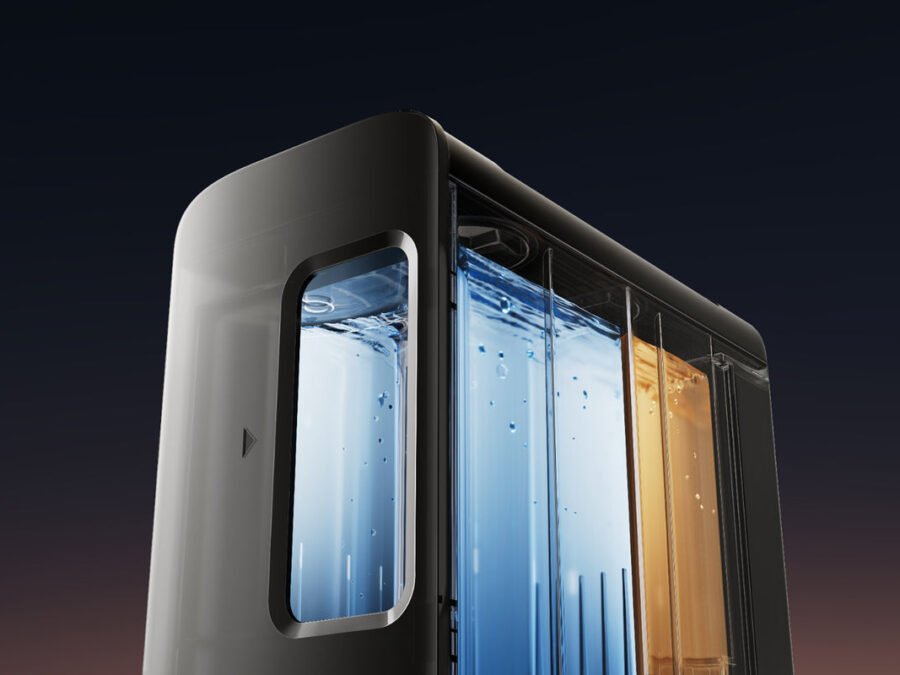
Robot mop cleaning solution: tanks, dosing and dilution
There is no universal robot-mop dilution ratio. Identify the right compartment, check the exact product label and avoid common dosing mistakes.Read more →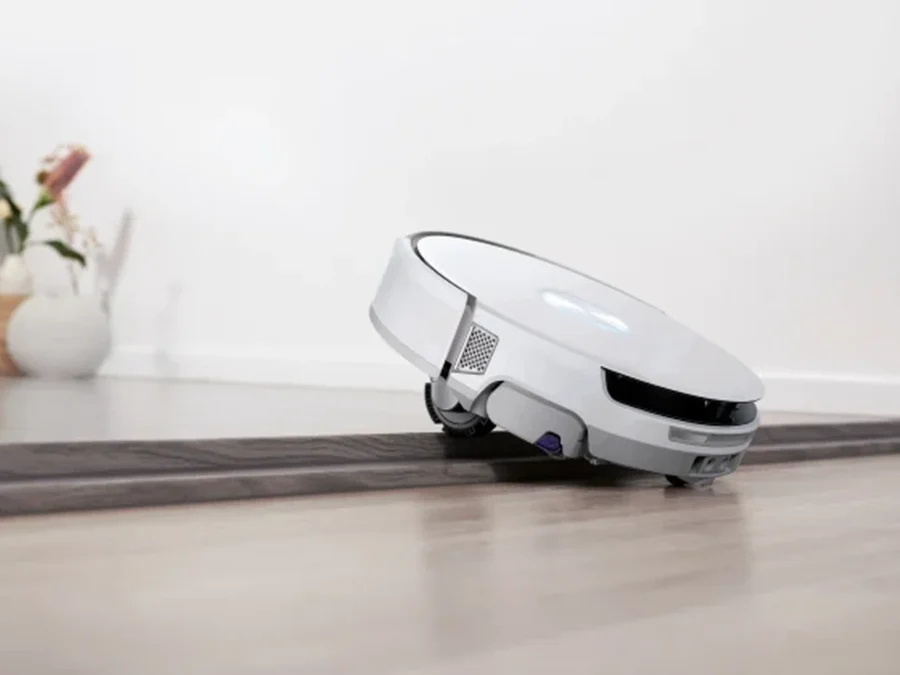
Robot vacuums and thresholds, carpets, cables and pets
How to evaluate thresholds, carpets, cables, low furniture and pet conditions before purchasing a robot vacuum cleaner.
Read more →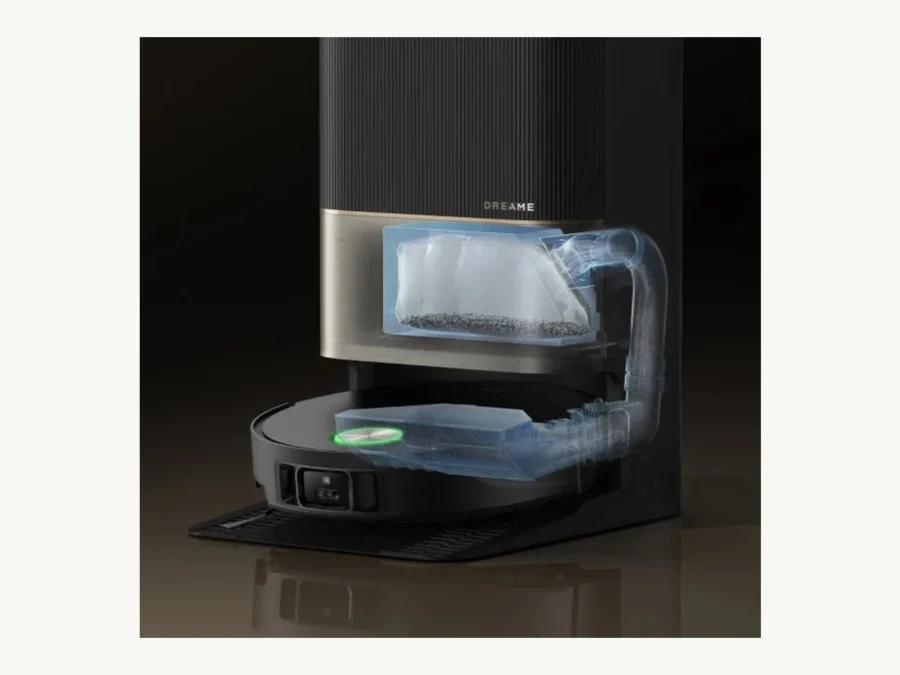
Robot vacuum stations: what they really do and what you are paying for
Auto-empty, mop washing and drying, hot water, detergent, bags or cyclones: what a modern robot-vacuum dock actually automates.Read more →Comparisons and rankings
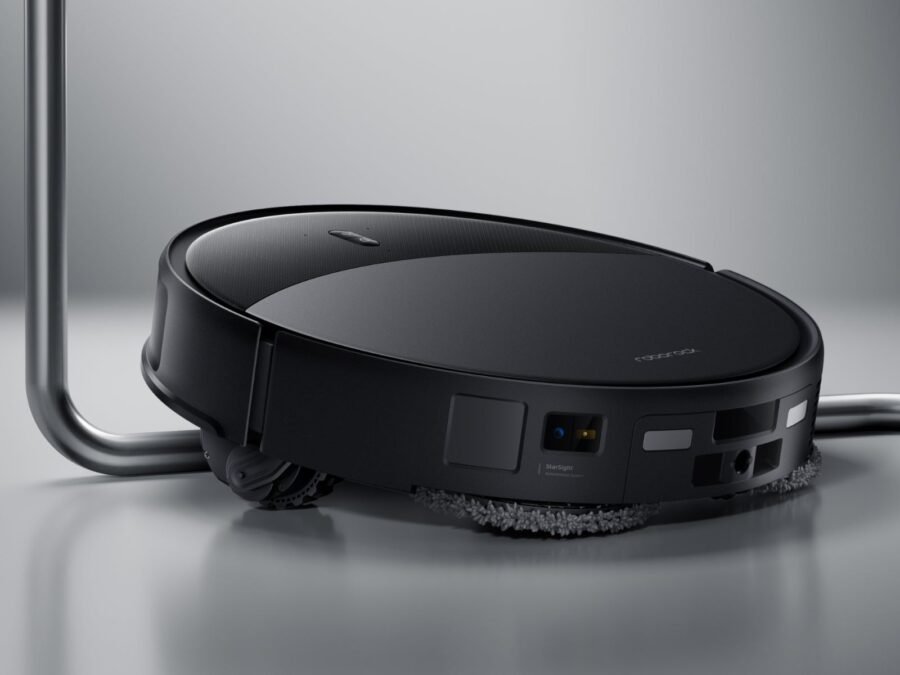
Best low-profile robot vacuums for low furniture (2026)
A slim body does not guarantee access under a sofa. Compare four models and learn which measurements and manufacturer footnotes matter before buying.Read more →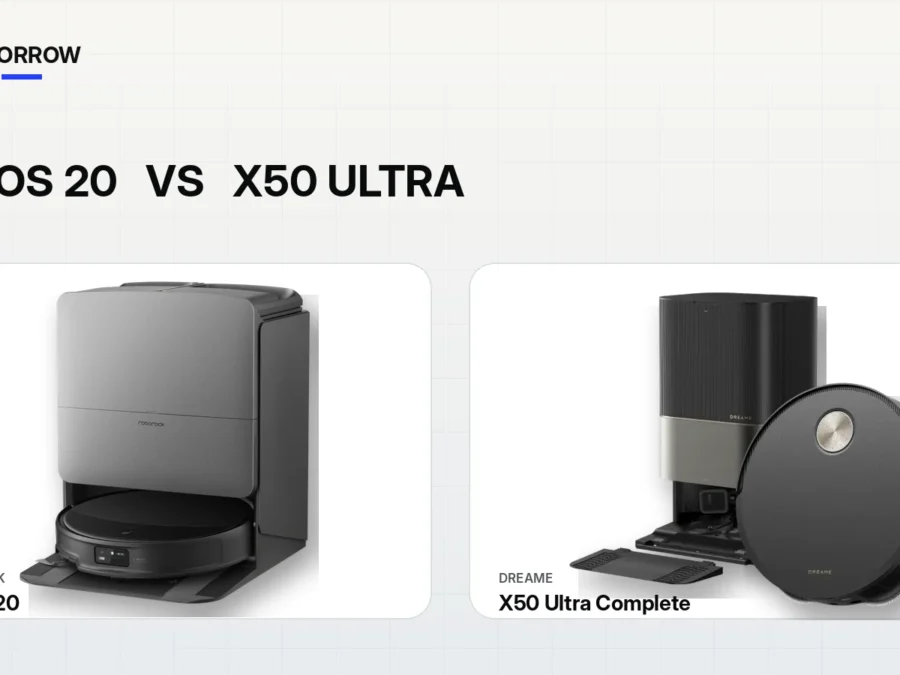
Roborock Saros 20 vs Dreame X50: Which Fits Your Home?
Saros 20 or X50 Ultra Complete? Compare thresholds, low furniture, mopping and the dock. Match the robot to your home and verify the offered bundle.Read more →