MAMMOTION LUBA 4 AWD: Quad-Vision, active steering and 12,000 m²

BUYING IN YOUR MARKET
Availability in your country
Sales, delivery and support can differ by country and exact model. Choose your market to see the evidence we have checked.
MAMMOTION LUBA 4 AWD: Quad-Vision, active steering and 12,000 m²
No verified local offer in this dataset
A current local sales offer, exact regional variant, delivery date and service coverage have not been verified for this country in the regional dataset. This does not mean that the robot is unavailable.
- Price
- No verified local price in this dataset
- Delivery
- No confirmed date for your address
- Warranty and service
- Local coverage not verified
“Listed” confirms a product page or sales route, not stock, delivery to every address or local service. “Pre-order” is not immediate availability. Unverified means we lack evidence; it does not mean unavailable. Prices belong to the named market and currency. Confirm the exact version, tax, shipping and support before ordering.
Verified 3 September 2026 after the official IFA reveal. MAMMOTION LUBA 4 AWD is the 2027 generation of the flagship mower for medium and large lawns. The major changes are no longer about proving wire-free mowing works. They target what happens during turns, under trees and at borders: four cameras instead of two, 360° LiDAR + NetRTK, independent front-wheel steering, bidirectional driving and an optional edge-trimming module.
Short answer
LUBA 4 AWD looks like a LUBA 3 evolution focused on less turf damage and less manual border work. The range includes 3000F, 6000F and 12000F for roughly 3,000–12,000 m². MAMMOTION rates the AWD system to 80% slopes, obstacles up to 60 mm and mowing speed up to 1.0 m/s. Pricing is not public yet; the company says pricing and channel availability will be announced later in 2026.
Key LUBA 4 AWD data
| Variants | 3000F / 6000F / 12000F |
|---|---|
| Declared coverage | roughly 3,000–12,000 m² depending on model |
| Positioning | 360° LiDAR + NetRTK + Quad-Camera AI Vision |
| Cameras | four wide-angle cameras covering front, sides and rear |
| Drive | AWD with active steering |
| Steering | independent front-wheel steering motors |
| Direction | bidirectional driving without a conventional U-turn |
| Slope | up to 80% / 38.6° per manufacturer |
| Obstacle crossing | up to 60 mm per manufacturer |
| Mowing speed | up to 1.0 m/s per manufacturer |
| Cutting motors | 165 W per disc; two discs on 3000F/6000F, three on 12000F |
| Charging | 210 W with adaptive “charge enough to finish” logic |
| Edge trimmer | optional extra; not compatible with 12000F |
| Price | not announced as of 3 Sep 2026 |

Quad-Vision: four cameras instead of two
LUBA 3 combines 360° LiDAR, NetRTK and dual-camera vision. LUBA 4 adds side and rear cameras, creating a four-camera perception system around the machine. MAMMOTION says it can recognise 300+ object types and recalculate paths around moving obstacles.
The meaningful part is not the “300+” number. Rear perception is required because LUBA 4 is designed to travel in both directions. When a completed lane ends and the mower treats the rear as the new front, backward sensing becomes a navigation component rather than a parking aid.
360° LiDAR + NetRTK: redundancy rather than one technology
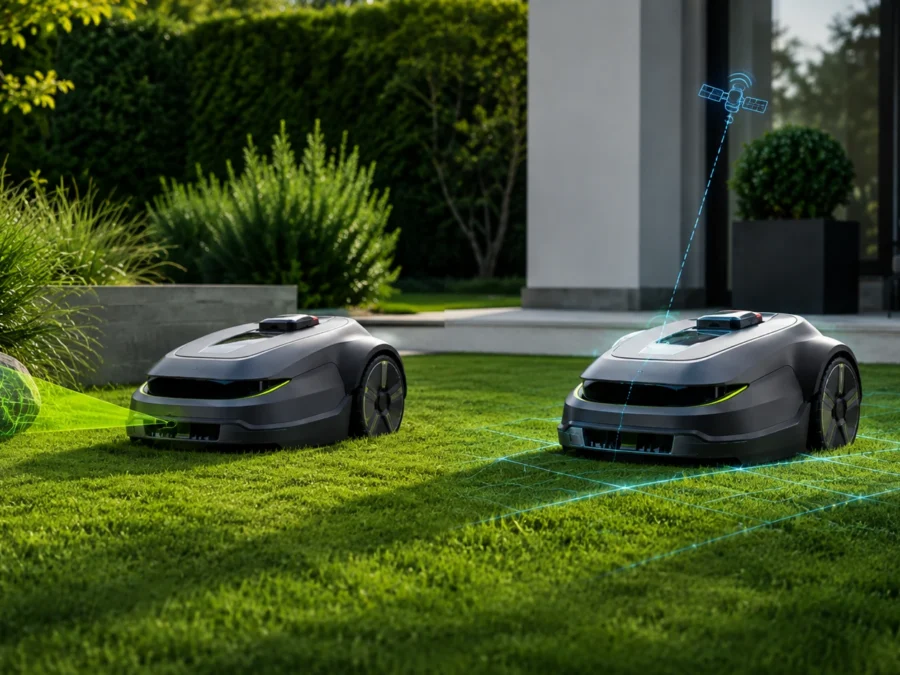
MAMMOTION describes Tri-Fusion as a layer where LiDAR, network RTK and vision back each other up. That is sensible in gardens with trees and buildings. GNSS can degrade near obstructions, cameras depend on lighting, and LiDAR is excellent at geometry but does not always understand what an object is.
The company claims centimetre-level positioning and lifetime iNavi / NetRTK access where service coverage exists. Buyers still need to check local coverage: “no RTK antenna” only helps if Network RTK is available at the property.
The biggest mechanical change: independent front-wheel steering
Many AWD robot mowers turn by varying wheel speed or pivoting. On wet or delicate turf that can leave marks. LUBA 4 gives each front wheel its own steering motor so the wheel follows an arc rather than scrubbing sideways across grass.
This should be tested in the same turning areas for weeks, not during one IFA demo. If it meaningfully reduces brown rings and turf scuffing, it may matter more to lawn quality than another navigation algorithm generation.
Bidirectional driving: why does a mower need two “fronts”?
Front and rear cameras plus active steering allow the mower to change its logical direction without a classic U-turn. It completes one lane, reverses orientation and begins the next. In theory this reduces dead movement, soil compaction and turning space.
In a complex garden, the test is behaviour near corners, narrow passages and small grass islands. Only field use will show whether this is faster than a good pivot strategy and how often software still chooses a turn.
80% AWD, 60 mm obstacles and adaptive suspension
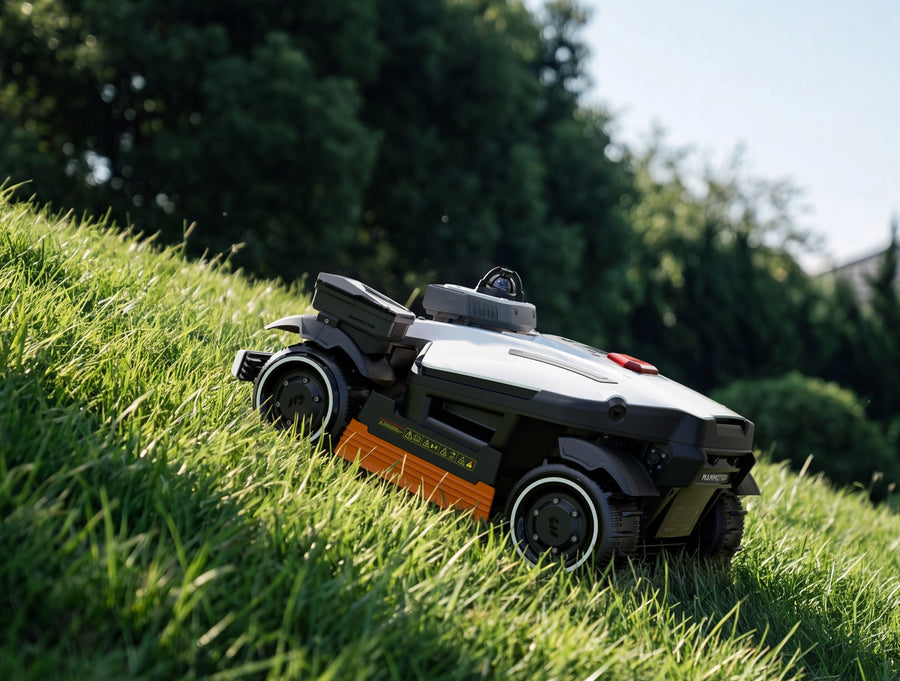
MAMMOTION rates LUBA 4 to 80% / 38.6° slopes and vertical obstacles up to 60 mm. These are manufacturer-test maxima, not a guarantee for a wet bank covered in roots and loose soil at the same time.
AWD remains a real advantage where 2WD mowers tend to spin or dig into turf. Per-wheel torque control and adaptive suspension are designed to maintain traction over uneven terrain.
Two or three 165 W cutting discs
3000F and 6000F use two discs; 12000F uses three. Each disc has its own 165 W motor and six blades. MAMMOTION says users can favour high RPM for maximum throughput or slower operation for lower noise and longer battery life.
A wider cutting deck is useful on large properties but also changes manoeuvrability in narrow sections. The 12000F should therefore be treated as a different application class, not simply “the best LUBA 4”.
Edge trimmer: important, but not standard
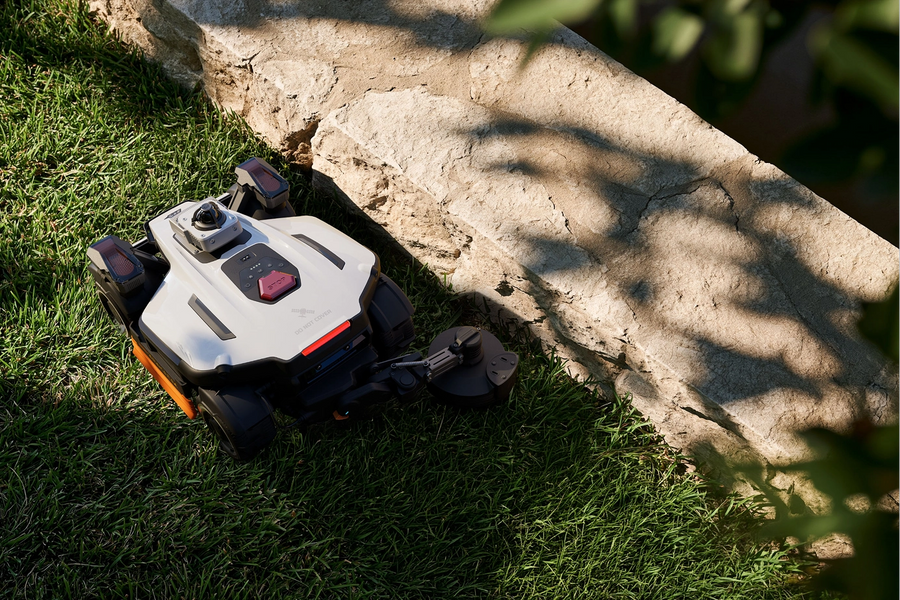
The optional side-mounted edge-trimming module is intended to finish grass beside walls, fences and borders. It addresses the same pain point that Navimow H5 Pro attacks with an integrated EdgeMaestro arm.
Two caveats matter: the trimmer is an extra-cost accessory and is not compatible with 12000F. The whole LUBA 4 family should not be described as having a built-in edge trimmer.
210 W adaptive charging
The dock uses a 210 W charger. Software estimates the remaining area, charges only enough to finish the job and resumes automatically. This makes more sense than always waiting for 100% when only a small area remains.
MAMMOTION has not yet published complete battery capacities and real runtime for every variant, so RoboMorrow does not calculate speculative cycle counts for 3,000, 6,000 or 12,000 m².
Price and availability
MAMMOTION describes this as its 2027 generation. The IFA release says pricing and channel availability will be announced later in 2026. There is no public LUBA 4 AWD price at this verification point, and we did not verify an exact Amazon listing. We therefore do not place a random LUBA 3 affiliate link under the new product card.
What to verify before buying
- which 3000F / 6000F / 12000F variants will be sold in your market;
- final price and the cost of the optional edge trimmer;
- mowing area per charge and adaptive recharge time;
- local iNavi / Network RTK coverage;
- how active steering affects turf after weeks of repeated turns;
- whether bidirectional driving actually reduces mowing time in a complex garden.
RoboMorrow verdict
LUBA 4 AWD does not look like a cosmetic “+1”. Navigation gains four cameras, but the more important changes are mechanical: steerable front wheels and bidirectional driving. Those directly target a weakness of heavy AWD mowers — turn marks. The optional edge trimmer may also reduce manual finishing. The biggest unknown is price and whether those benefits justify an upgrade from the already very capable LUBA 3 AWD.
Sources
- MAMMOTION — LUBA 4 AWD official product page
- MAMMOTION — IFA 2026 press release
- RoboMorrow — MAMMOTION LUBA 3 AWD 3000
- RoboMorrow — IFA 2026 Live Desk
Before buying: variants, offers and further comparisons
Where to buy
We do not yet have a verified exact Amazon product page for this model. Check the official source above.
News about this robot and brand
Vision AI or RTK for a robot mower? Choosing a navigation system
The camera can read the surroundings and RTK precisely determines the position. The best choice depends on the borders, trees, light and structure of the garden.
Read more →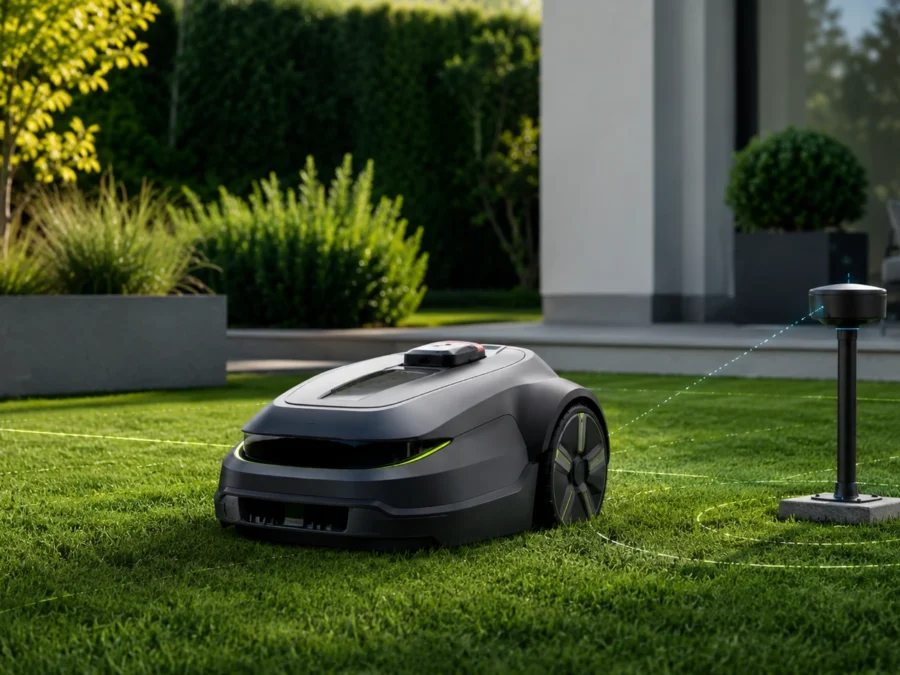
How RTK works in a robot mower: accuracy, base stations and limitations
RTK is not a separate GPS, but a way to correct positioning errors. We show the entire process from satellites to the virtual border in the application.
Read more →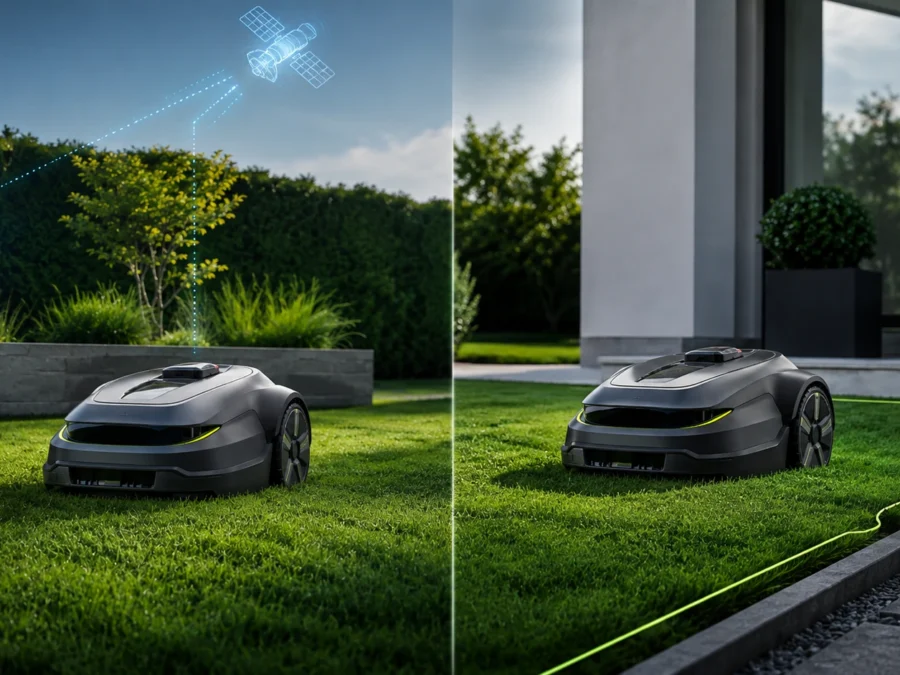
RTK or boundary wire? Robot mower systems compared
RTK gives you flexible maps and a cable-tested boundary. We explain which solution is better suited to a specific garden.
Read more →Guides
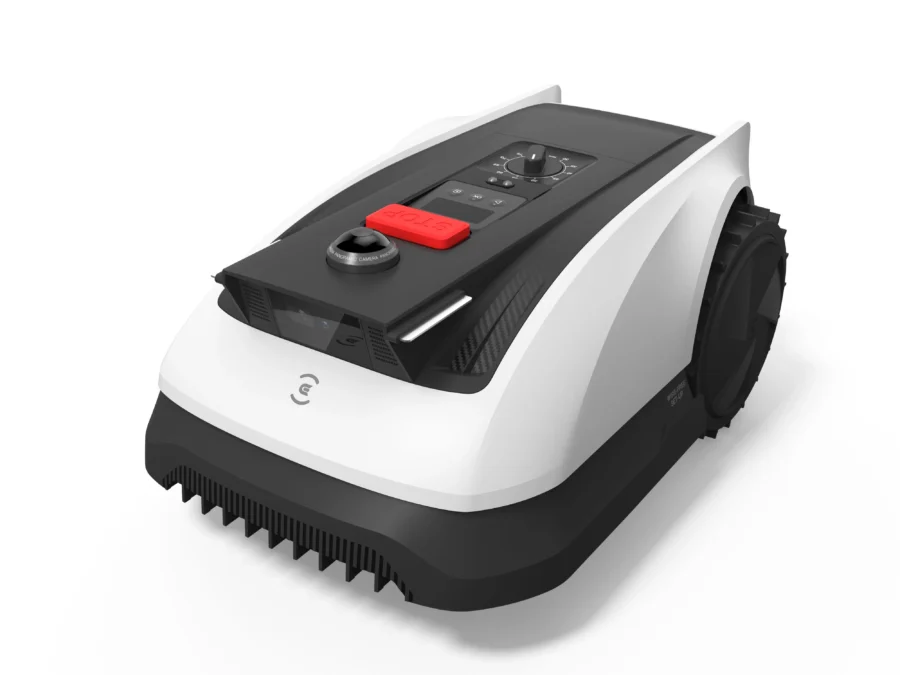
Robot mower for up to 500 m²: choosing a model for a small garden
Best robot mower route for up to 500 m²: GOAT O500, Navimow i205 AWD, GARDENA free/sense or a boundary wire, matched to slopes, trees and passages.Read more →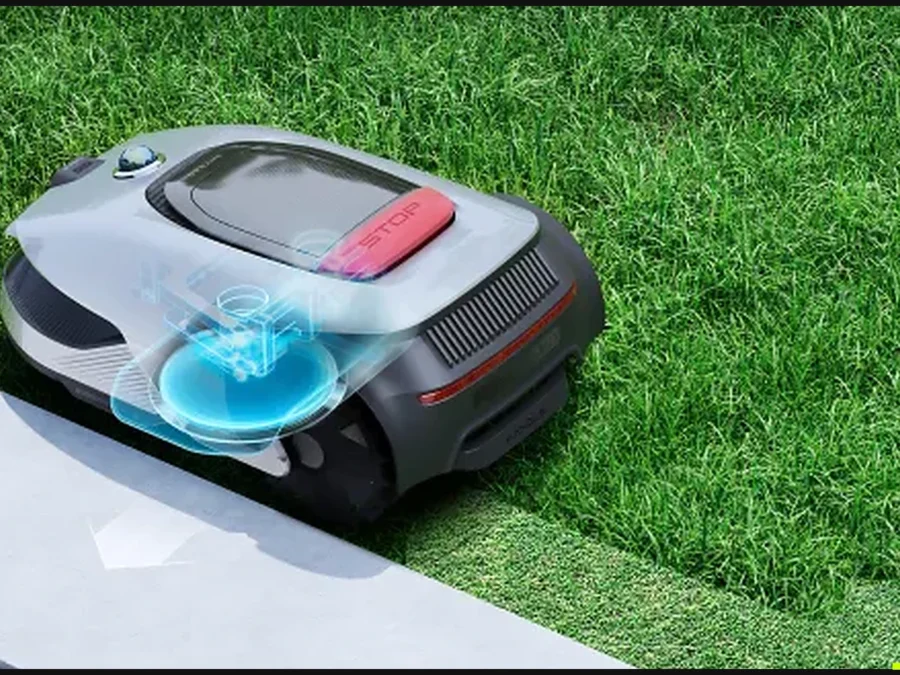
Robot mower for up to 2,000 m²: capacity, margin and navigation
For a lawn of approximately 2000 m², not only the declared area is important, but also the charging time, the number of zones, terrain and resistance to signal loss.
Read more →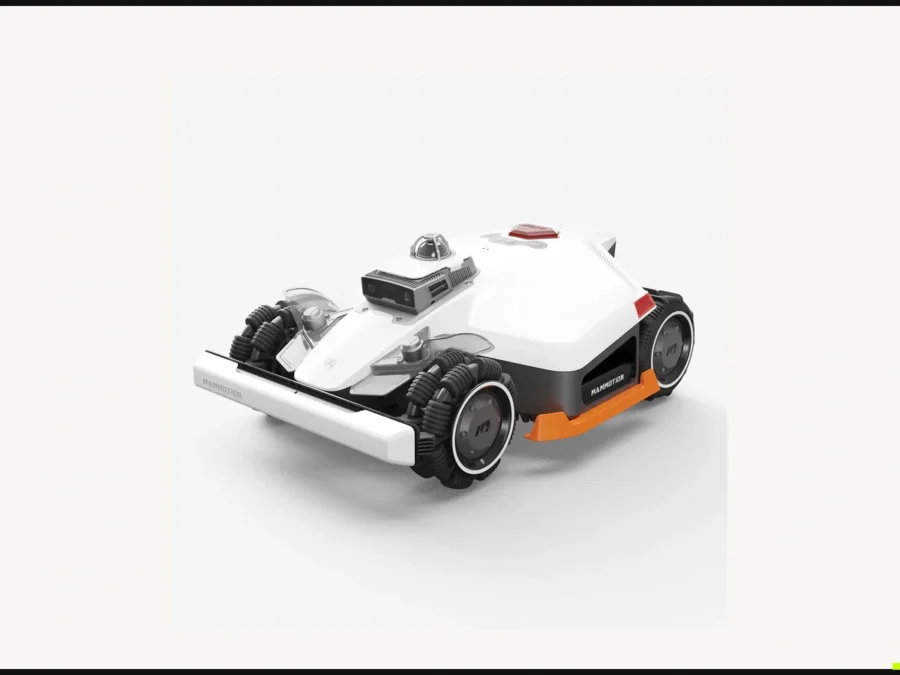
Robot mower for up to 3,000 m²: drive, margin and navigation
On 3000 m² cutting width, AWD, multiple zones and daily efficiency are more important than the area declared on the box.
Read more →Comparisons and rankings
Best robotic pool cleaners 2026: ranking, comparison and buying guide
Full 2026 pool-cleaner ranking: Beatbot, Dreame, Mammotion and ECOVACS, covering floor, walls, waterline, filtration, chemistry, costs and service.Read more →
Mammotion vs Navimow: choose for your lawn and support
Compare specific Mammotion and Navimow mowers by lawn size, terrain, navigation and local support. Use a checklist for demonstrations and complete quotes.Read more →